Get up to 10% OFF! with coupon PBP10

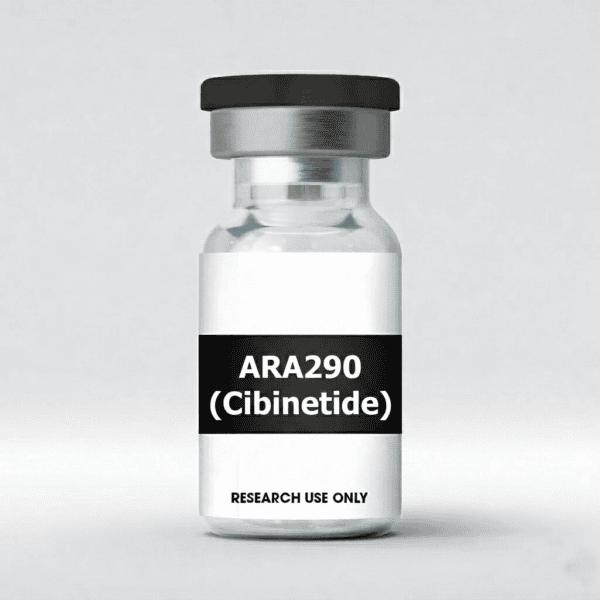
ARA290 (Cibinetide) Peptide
Price range: $73.00 through $87.00
Powerful ARA290 Peptide: Complete Research & Scientific Guide | Premium Bio Peptides
ARA290, also known as an erythropoietin-derived peptide, has attracted scientific interest because of research examining its relationship with tissue-protective signaling, cellular stress responses, inflammation-related pathways, and neurobiology. Unlike erythropoietin (EPO), ARA290 was designed as a non-hematopoietic EPO-derived peptide intended to investigate selected protective signaling mechanisms without reproducing the conventional erythropoietic effects associated with EPO.
For researchers, ARA-290 provides an interesting model for investigating how EPO-related signaling can influence cellular pathways independently of classical red-blood-cell production.
Research note: ARA-290 remains an experimental research compound. Preclinical and clinical research findings should not be interpreted as evidence of established therapeutic efficacy or suitability for human use.
What Is ARA290?
ARA-290 is a synthetic peptide derived from the structure of erythropoietin. It was developed to investigate biological signaling associated with the tissue-protective properties of EPO while separating these effects from EPO’s well-known stimulation of erythropoiesis.
Research into ARA-290 has focused on several areas, including:
- Neurobiology
- Cellular signaling
- Tissue-protective mechanisms
- Inflammation-related research
- Nerve biology
- Metabolic and vascular research
- EPO-derived signaling
This makes ARA-290 particularly interesting to researchers studying the distinction between hematopoietic EPO signaling and potentially separate tissue-protective signaling mechanisms.
ARA290 Structure and Molecular Characteristics
ARA-290 is an 11-amino-acid peptide derived from an erythropoietin region associated with tissue-protective signaling.
Its relatively small size distinguishes it from full-length EPO, which is a considerably larger glycoprotein hormone.
When evaluating ARA-290 research material, researchers should pay attention to:
- Exact amino-acid sequence
- Molecular weight
- Chemical identity
- Purity
- Batch number
- Analytical characterization
- Formulation
- Storage requirements
These characteristics are important for maintaining experimental consistency and comparing results between different research preparations.
How Does ARA-290 Work?
The proposed mechanism of ARA290 differs from conventional EPO signaling.
Traditional EPO signaling occurs primarily through the erythropoietin receptor (EPOR) and is strongly associated with erythropoiesis. Research into ARA-290 has instead focused on a proposed tissue-protective receptor complex involving EPOR and the CD131 beta-common receptor.
This signaling concept has been investigated in relation to:
- Cellular survival
- Stress responses
- Inflammation-related pathways
- Neural signaling
- Tissue protection
- Repair-associated mechanisms
The exact receptor interactions and downstream mechanisms remain areas of scientific investigation.
ARA290 and Erythropoietin Receptor Signaling
One of the most interesting aspects of ARA-290 research is its relationship with the broader EPO receptor system.
EPO has two broad areas of research interest:
Classical erythropoietic signaling
→ Primarily associated with red blood cell production.
Tissue-protective signaling
→ Investigated in relation to cellular protection and responses to injury or stress.
ARA-290 was developed as a research tool for investigating the second category.
This distinction is important because it helps researchers examine EPO-related signaling without simply equating ARA-290 with full-length EPO.
ARA290 and the Beta-Common Receptor
The beta-common receptor (CD131) has been investigated as part of receptor complexes involved in tissue-protective signaling.
Experimental research has proposed that interactions between EPOR and CD131 can produce signaling responses distinct from the classical erythropoietic pathway.
ARA-290 has therefore been studied in models designed to investigate:
- Receptor complex formation
- Cellular signaling
- Protective responses
- Inflammatory pathways
- Tissue stress
- Neural responses
Researchers should recognize that receptor biology can be highly dependent on cell type, experimental conditions, receptor expression, and molecular environment.
ARA-290 and Neurobiology Research
ARA-290 has generated considerable interest in neuroscience research.
Experimental work has investigated its relationship with neural signaling and cellular responses associated with nerve injury and stress.
Research areas include:
- Peripheral nerve biology
- Neuronal signaling
- Neuroinflammation
- Cellular stress
- Neural repair mechanisms
- Sensory nerve research
These studies provide a basis for investigating how EPO-derived signaling may influence nervous-system biology.
However, experimental observations should not automatically be translated into clinical claims.
ARA-290 and Neuroinflammation Research
Inflammation-related signaling is another area in which ARA-290 has been investigated.
Researchers can use experimental models to examine how ARA-290 interacts with pathways associated with inflammatory responses and cellular stress.
Potential research endpoints can include:
- Inflammatory signaling molecules
- Cellular stress markers
- Immune-cell responses
- Tissue signaling
- Receptor activation
- Downstream kinase pathways
The exact effects depend on the experimental system and should be interpreted according to the specific study design.
ARA290 and Cellular Protection Research
The concept of tissue-protective EPO signaling has been an important reason for studying ARA-290.
Researchers have investigated whether EPO-derived signaling can influence cellular responses under conditions involving:
- Oxidative stress
- Inflammatory signaling
- Metabolic stress
- Cellular injury
- Neural stress
ARA-290 provides an experimental framework for studying these mechanisms separately from the classical hematopoietic activity of EPO.
ARA-290 and Nerve Research
Preclinical and clinical research has investigated ARA-290 in relation to peripheral nerve function and neuropathic processes.
This research has contributed to interest in the peptide’s potential influence on neural pathways and tissue-protective mechanisms.
For an SEO page, it is more scientifically accurate to describe ARA-290 as a subject of nerve and neurobiology research rather than claiming that it treats nerve disorders.
ARA-290 and Metabolic Research
ARA-290 has also been investigated in experimental research involving metabolic and inflammatory processes.
These studies have examined relationships between tissue-protective signaling, metabolic regulation, and cellular stress.
Researchers interested in this area may investigate:
- Metabolic signaling
- Inflammation
- Cellular stress
- Insulin-related pathways
- Tissue responses
- Receptor-mediated signaling
Evidence varies significantly depending on the experimental model, so individual studies should be evaluated carefully.
ARA290 Research Applications
Neurobiology Research
ARA290 can be studied in experimental models examining neuronal signaling, nerve biology, and neuroinflammatory processes.
Cellular Signaling Research
Researchers can investigate receptor interactions and downstream molecular pathways associated with EPO-derived signaling.
Tissue-Protection Research
Experimental models can examine cellular responses to stress, inflammation, and injury-related conditions.
Peripheral Nerve Research
ARA-290 has been investigated in research involving peripheral nerve function and neural responses.
Inflammation Research
Researchers can explore relationships between ARA-290 signaling and inflammatory pathways.
Metabolic Research
Experimental studies have investigated ARA-290 in connection with metabolic and cellular signaling mechanisms.
Key Benefits of ARA-290 Research
1. Useful for EPO-Derived Signaling Research
ARA290 provides researchers with a smaller EPO-derived molecule for investigating tissue-protective signaling.
2. Supports Neurobiology Studies
Its research profile makes it relevant to experimental studies of nerve and neuronal biology.
3. Valuable for Cellular Signaling Research
ARA-290 can be investigated in models examining receptor complexes and downstream pathways.
4. Relevant to Inflammation Research
Experimental studies have explored its relationship with inflammation-associated signaling.
5. Useful for Tissue-Protection Studies
ARA-290 provides a model for examining cellular responses to injury and physiological stress.
ARA290 vs. EPO
Although ARA-290 is derived from EPO, the two molecules are not interchangeable.
| Feature | ARA290 | EPO |
|---|---|---|
| Molecular type | Short synthetic peptide | Glycosylated protein hormone |
| Primary research interest | Tissue-protective signaling | Erythropoiesis and broader signaling |
| Size | Much smaller | Larger glycoprotein |
| Hematopoietic activity | Designed to minimize classical erythropoietic activity | Strongly associated with red blood cell production |
| Research areas | Neurobiology, cellular protection, inflammation | Hematology, hypoxia, erythropoiesis, signaling |
This distinction is especially important when writing scientifically accurate product information.
ARA290 Purity and Quality Testing
Researchers evaluating ARA-290 should consider both identity and purity.
Relevant quality information may include:
- Peptide sequence
- Molecular weight
- Purity percentage
- Batch or lot number
- Analytical method
- HPLC results
- Mass spectrometry data
- Storage information
- Product specifications
Analytical characterization helps researchers determine whether a research material is consistent with its stated identity and specifications.
ARA-290 Certificate of Analysis (COA)
A Certificate of Analysis provides important batch-specific information about research material.
Depending on the supplier, an ARA-290 COA may include:
- Product name
- Peptide sequence
- Batch number
- Purity
- Molecular weight
- Analytical method
- Test results
- Testing date
- Applicable specifications
Researchers should always verify that the COA corresponds to the specific batch under evaluation.
ARA-290 Storage and Handling
Because ARA-290 is a peptide research material, researchers should follow the specific storage instructions supplied with the product.
Factors that can influence peptide stability include:
- Temperature
- Moisture
- Light exposure
- Freeze-thaw cycles
- Formulation
- Storage duration
- Container conditions
Researchers should avoid assuming that storage conditions for one peptide automatically apply to another.
ARA-290 Scientific Research Limitations
Although ARA-290 has generated substantial scientific interest, researchers should distinguish between experimental evidence and established clinical conclusions.
Important considerations include:
- Different studies use different experimental models.
- Preclinical findings cannot automatically be generalized to humans.
- Mechanisms observed in laboratory systems may not fully represent human physiology.
- Long-term effects require appropriate investigation.
- Product purity and formulation can influence experimental outcomes.
A balanced research page should therefore present both the scientific interest and the limitations of the current evidence.
Why Choose Premium Bio Peptides?
At Premium Bio Peptides, our goal is to provide clear, informative, research-focused resources covering peptides and related scientific compounds.
We emphasize:
- Detailed product information
- Scientific background
- Research applications
- Quality documentation
- Certificates of Analysis
- Educational resources
- Transparent research-use information
Our resources are designed to help qualified researchers better understand the scientific background and analytical considerations surrounding research materials.
ARA290 (Cibinetide) Peptide for Sale – High Purity Research Compound USA
If you are searching for ARA290 (Cibinetide) peptide for sale, sourcing from a verified manufacturer is essential to ensure purity, consistency, and reliable research outcomes. We supply high-quality research compounds for tissue protection studies, inflammation research, and neuroregenerative pathway analysis.
We operate under controlled laboratory standards.
We verify purity through analytical testing.
We provide full documentation for every production batch.
ARA290, also known as Cibinetide, is a synthetic peptide derived from the structure of erythropoietin (EPO). It is widely utilized in research involving innate repair receptor (IRR) activation, tissue protection mechanisms, inflammatory signaling pathways, and nerve regeneration studies. Its selective receptor activity makes it a valuable compound for investigating cellular repair processes without stimulating erythropoiesis.
What You Receive
- ≥98% purity (HPLC verified)
- Analytical validation (HPLC + Mass Spectrometry)
- Certificate of Analysis (COA) available per batch
- Laboratory-secured packaging
- Available in small batch or bulk wholesale quantities
Direct manufacturer sourcing ensures product integrity, traceability, and consistent long-term supply.
Bulk ARA290 (Cibinetide) Supply
We support:
- Biotechnology research laboratories
- Pharmaceutical R&D organizations
- Academic research institutions
- Contract research organizations (CROs)
- Neurobiology and regenerative medicine research centers
- International distributors
Frequently Asked Questions About ARA-290
What Is ARA-290?
ARA-290 is a synthetic peptide derived from erythropoietin and investigated primarily for its potential role in tissue-protective and cellular signaling research.
Is ARA-290 the Same as EPO?
No. ARA-290 is a much smaller EPO-derived peptide and has been investigated for signaling mechanisms distinct from the classical erythropoietic activity of full-length EPO.
What Is ARA-290 Studied For?
Research has examined ARA-290 in areas including neurobiology, peripheral nerve research, cellular signaling, inflammation-related pathways, and tissue-protective mechanisms.
Does ARA-290 Stimulate Red Blood Cell Production?
ARA-290 was specifically developed as an EPO-derived peptide intended to investigate tissue-protective signaling while avoiding the classical erythropoietic activity associated with full-length EPO.
What Should Researchers Check on an ARA-290 COA?
Researchers should review the peptide identity, sequence, molecular weight, purity, batch number, analytical methodology, and test results.
Why Is ARA-290 Interesting in Neuroscience?
Its relationship with EPO-derived tissue-protective signaling has led researchers to investigate its effects in experimental models involving nerves, neuronal signaling, and neuroinflammatory processes.
Is ARA290 available in bulk quantities?
Yes. We provide scalable manufacturing with volume-based pricing.
Do you provide Certificates of Analysis?
Yes. Each batch includes verifiable COA documentation.
Do you ship within the USA?
Yes. Orders are fulfilled through our U.S. distribution channel.
What purity level is provided?
≥98% purity verified via HPLC (custom specifications available upon request).
Important Research-Use Statement
This page is provided for scientific and educational purposes only. Information about ARA-290 and related research does not constitute medical advice or a recommendation for human or veterinary use.
Researchers are responsible for following applicable laws, regulations, laboratory safety procedures, and product-specific documentation.
Research materials are not intended for human or veterinary use, diagnosis, treatment, or prevention of disease.
| Dosage | 10mg*10vials, 16mg*10vials |
|---|
Related products
-

Melatonin
$72.00 -
HCG
Price range: $56.00 through $103.00Select options This product has multiple variants. The options may be chosen on the product page -
Cagrilintide
Price range: $99.00 through $148.00Select options This product has multiple variants. The options may be chosen on the product page -
CJC 1295 With DAC Peptide
Price range: $75.00 through $125.00Select options This product has multiple variants. The options may be chosen on the product page



Reviews
There are no reviews yet.