Get up to 10% OFF! with coupon PBP10
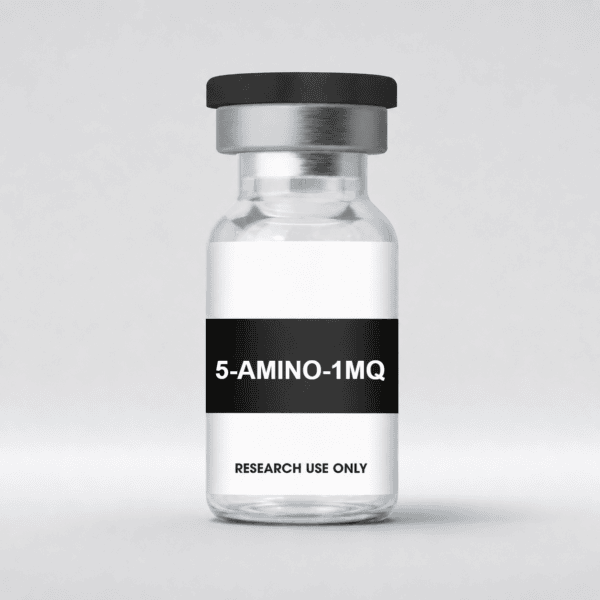
5-amino-1mq Peptide
Price range: $45.00 through $48.00
5-Amino-1MQ – Comprehensive Research Guide & Scientific Overview
What Is 5-Amino-1MQ?
5-Amino-1MQ is a small-molecule compound that has attracted scientific interest primarily because of its activity as an inhibitor of nicotinamide N-methyltransferase (NNMT). Unlike many of the compounds discussed on peptide research websites, 5-Amino-1MQ is not a peptide; it is a low-molecular-weight research compound.
NNMT is an enzyme involved in the metabolism of nicotinamide and methyl-group transfer. Because NNMT activity is connected to cellular metabolism and metabolic cofactors, researchers have investigated NNMT inhibition as a way to understand changes in metabolic pathways.
Research involving 5-Amino-1MQ has primarily been conducted in laboratory and animal models. Therefore, experimental findings should not automatically be interpreted as demonstrated effects in humans.
5-Amino-1MQ Molecular Structure and Characteristics
5-Amino-1MQ is a chemically defined small molecule rather than an amino-acid chain.
Its molecular characteristics make it suitable for controlled laboratory studies examining enzyme inhibition and metabolic pathways. Researchers evaluating a research sample may investigate:
- Molecular identity
- Molecular weight
- Chemical purity
- Chromatographic profile
- Structural confirmation
- Stability
- Degradation products
Analytical verification is particularly important when comparing research results between laboratories because purity and formulation can influence experimental outcomes.
How 5-Amino-1MQ Is Studied
Research involving this compound generally focuses on the relationship between NNMT activity and cellular metabolism.
Experimental approaches can include:
- Enzyme assays
- Cell-culture studies
- Adipocyte models
- Metabolic pathway analysis
- Gene-expression studies
- Animal models
- Biochemical measurements
These methods allow researchers to determine whether reducing NNMT activity produces measurable changes in cellular metabolism.
5-Amino-1MQ and NNMT Research
NNMT stands for nicotinamide N-methyltransferase. It catalyzes the transfer of a methyl group from S-adenosyl-L-methionine (SAM) to nicotinamide, producing 1-methylnicotinamide.
This reaction connects NNMT with both nicotinamide metabolism and methyl-group metabolism.
5-Amino-1MQ has been investigated as an NNMT inhibitor because researchers want to understand what happens when this enzymatic pathway is reduced.
Studies have reported that NNMT inhibition can alter cellular metabolic pathways, making this compound useful for investigating the biological consequences of NNMT activity.
5-Amino-1MQ and Cellular Metabolism
Cellular metabolism involves a network of biochemical reactions responsible for producing energy, building cellular components, and maintaining normal cellular functions.
Because NNMT participates in nicotinamide and methyl-group metabolism, inhibiting the enzyme can influence metabolic processes downstream of its activity.
Researchers can therefore use 5-Amino-1MQ to investigate relationships between:
- NNMT activity
- Nicotinamide metabolism
- NAD-related pathways
- Methyl-group availability
- Cellular energy metabolism
- Metabolic signaling
These relationships are complex, and experimental outcomes can vary depending on cell type, concentration, and research conditions.
5-Amino-1MQ and NAD+ Metabolism
NAD+ is an important cellular cofactor involved in energy metabolism and numerous biochemical reactions.
NNMT uses nicotinamide as a substrate, connecting its activity to pathways involving NAD+ precursor metabolism. Researchers have therefore investigated whether reducing NNMT activity can influence the cellular availability or utilization of metabolites associated with NAD+ biology.
This does not mean that 5-Amino-1MQ has been established as a method for increasing NAD+ levels in humans. Rather, the relationship provides a useful experimental framework for studying metabolic regulation.
5-Amino-1MQ and Methylation Research
NNMT uses SAM as its methyl donor. This places the enzyme at the intersection of nicotinamide metabolism and cellular methylation chemistry.
When NNMT activity changes, researchers may observe alterations in metabolites connected with methyl-group transfer.
5-Amino-1MQ can therefore serve as an experimental tool for investigating:
- SAM utilization
- Nicotinamide methylation
- Methyl-donor metabolism
- Metabolic enzyme activity
- Cellular metabolite balance
This area of research is particularly relevant to scientists studying the interaction between metabolic pathways.
5-Amino-1MQ and Energy Metabolism
Energy metabolism describes the biochemical processes cells use to generate and utilize energy.
Research into NNMT has suggested that the enzyme can interact with pathways involved in cellular energy balance and metabolic regulation. In experimental models, NNMT inhibition has therefore been studied in relation to changes in metabolic activity.
However, results observed in cell or animal models should not be presented as proof of equivalent effects in humans.
5-Amino-1MQ in Metabolic Research
One of the major reasons researchers study 5-Amino-1MQ is to investigate the broader role of NNMT in metabolic biology.
Experimental research has examined whether NNMT inhibition influences processes involving:
- Lipid metabolism
- Cellular energy expenditure
- Glucose-related pathways
- Adipocyte biology
- Mitochondrial function
- Metabolic gene expression
These studies are useful for understanding the biological role of NNMT and identifying potential areas for future investigation.
5-Amino-1MQ and Adipocyte Research
Adipocytes are specialized cells responsible for storing and regulating energy in the form of fat.
Researchers have investigated NNMT activity in adipose tissue and adipocyte models because the enzyme has been associated with metabolic processes within these cells.
5-Amino-1MQ has consequently been used experimentally to investigate how NNMT inhibition affects adipocyte metabolism and related cellular pathways.
These findings are scientifically interesting, but they should not be converted into claims that the compound produces weight-loss effects in humans.
5-Amino-1MQ and Cellular Signaling
Cellular signaling involves communication networks that regulate processes such as metabolism, growth, differentiation, and adaptation to environmental changes.
Because NNMT affects metabolic substrates and products, altering its activity can influence cellular signaling indirectly through changes in metabolite availability.
Researchers can use NNMT inhibitors to investigate these relationships and determine which metabolic changes occur when enzyme activity is reduced.
5-Amino-1MQ Research Applications
5-Amino-1MQ can be relevant to several areas of laboratory research.
NNMT Enzyme Research
Provides a tool for studying the biological function of nicotinamide N-methyltransferase.
Metabolic Biology
Can be used to investigate relationships between NNMT activity and cellular metabolism.
Adipocyte Research
Researchers can examine NNMT-related pathways in fat-cell models.
NAD-Related Research
Provides an experimental approach for investigating connections between nicotinamide metabolism and NAD-related pathways.
Methylation Studies
Can help researchers examine the relationship between NNMT activity and methyl-group metabolism.
Cellular Metabolism
Useful for investigating how enzyme inhibition influences metabolic pathways.
Small-Molecule Pharmacology
Provides a defined compound for studying enzyme inhibition, dose-response relationships, and cellular activity.
Potential Research Benefits
For an evidence-based website, these should be described as potential research applications, not proven therapeutic benefits.
- NNMT inhibition research — Helps researchers investigate the function of nicotinamide N-methyltransferase.
- Metabolic pathway studies — Provides a tool for examining changes associated with reduced NNMT activity.
- Adipocyte research — Supports experimental investigation of metabolism in fat-cell models.
- Nicotinamide metabolism research — Allows scientists to study the metabolic handling of nicotinamide.
- Methylation research — Provides an experimental model for examining SAM-dependent methylation pathways.
- NAD-related research — Helps researchers explore connections between NNMT activity and NAD-associated metabolism.
- Cellular signaling studies — Can be used to investigate downstream metabolic responses to enzyme inhibition.
Current Scientific Evidence
The scientific interest surrounding 5-Amino-1MQ comes largely from preclinical research into NNMT inhibition.
Experimental studies have investigated NNMT in adipose tissue, metabolic regulation, and cellular energy pathways. These studies have helped establish NNMT as an important research target.
However, preclinical findings are not equivalent to human clinical evidence. Differences in metabolism, exposure, dosage, tissue distribution, and biological responses can make translation from animal models to humans uncertain.
A professional research page should therefore distinguish between demonstrated enzyme activity in experimental systems and any proposed human applications.
5-Amino-1MQ Stability and Analytical Characterization
Analytical characterization is an important part of small-molecule research.
Researchers may evaluate:
- Chemical identity
- Purity
- Molecular mass
- Chromatographic profile
- Solubility
- Stability
- Degradation
- Batch consistency
High-quality analytical documentation can help researchers determine whether a material is appropriate for controlled laboratory experiments.
Where available, a Certificate of Analysis (COA) can provide batch-specific information about purity and identity.
Research Limitations and Considerations
Several considerations should be kept in mind when interpreting research involving 5-Amino-1MQ.
Preclinical evidence: Much of the scientific interest comes from laboratory and animal research rather than established human clinical trials.
Mechanistic complexity: NNMT participates in interconnected metabolic pathways, so inhibiting the enzyme can potentially affect multiple metabolites and biological processes.
Model differences: Results can vary between cultured cells, animals, and humans.
Dose dependence: Experimental concentrations may not correspond to physiologically achievable exposure.
Long-term effects: More research is needed to understand the consequences of prolonged NNMT inhibition.
These limitations are important when evaluating claims about metabolic effects.
Is 5-Amino-1MQ FDA Approved?
5-Amino-1MQ should not be described as an FDA-approved drug.
It is best characterized on a research website as an experimental small-molecule compound used to investigate NNMT and related metabolic pathways.
Regulatory status should always be distinguished from scientific interest or experimental findings.
Is 5-Amino-1MQ Intended for Human Use?
Research-grade 5-Amino-1MQ should be presented as a laboratory research compound, not as a medication or approved treatment.
Research findings involving cell cultures or animals should not be interpreted as instructions for human administration.
Researchers should follow applicable institutional procedures, laboratory safety requirements, and local regulations.
5-Amino-1MQ FAQs
What is 5-Amino-1MQ?
5-Amino-1MQ is a small-molecule compound primarily studied as an inhibitor of nicotinamide N-methyltransferase (NNMT).
Is 5-Amino-1MQ a peptide?
No. Despite appearing on some peptide research websites, 5-Amino-1MQ is a small molecule, not a peptide.
What does 5-Amino-1MQ target?
Its principal research target is NNMT, an enzyme involved in nicotinamide methylation and related metabolic pathways.
What is NNMT?
NNMT stands for nicotinamide N-methyltransferase. It catalyzes the transfer of a methyl group from SAM to nicotinamide.
Why is NNMT important in metabolic research?
NNMT connects nicotinamide metabolism with methyl-group metabolism, making it an important target for studying cellular metabolic regulation.
Has 5-Amino-1MQ been studied in adipocytes?
Yes. Experimental research has investigated NNMT inhibition in adipocyte and adipose-tissue models.
Is 5-Amino-1MQ researched for metabolism?
Yes. Metabolic regulation is one of the principal areas of scientific interest surrounding NNMT inhibition.
Is 5-Amino-1MQ a weight-loss drug?
It should not be described as an approved weight-loss medication. Research findings involving metabolic effects remain primarily experimental.
Does 5-Amino-1MQ increase NAD+?
The relationship between NNMT inhibition and NAD-related metabolism is an area of scientific investigation. It should not be presented as an established method for increasing NAD+ in humans.
How is 5-Amino-1MQ analyzed?
Researchers can use analytical techniques such as chromatography and mass spectrometry to evaluate chemical identity and purity.
Is 5-Amino-1MQ FDA approved?
No. It should be treated as an experimental research compound rather than an FDA-approved pharmaceutical.
Is 5-Amino-1MQ available in bulk quantities?
Yes. We provide scalable manufacturing with volume-based pricing.
Do you provide Certificates of Analysis?
Yes. Each batch includes verifiable COA documentation.
Do you ship within the USA?
Yes. Orders are fulfilled through our U.S. distribution channel.
What purity level is provided?
≥98% purity verified via HPLC (higher specifications available upon request).
What are the main research applications?
Major areas include NNMT enzyme research, cellular metabolism, adipocyte biology, methylation pathways, nicotinamide metabolism, and NAD-related research.
5-Amino-1MQ for Sale – High Purity Research Compound USA
If you are searching for 5-Amino-1MQ for sale, sourcing from a verified manufacturer is essential to ensure purity, consistency, and reliable research outcomes. We are a licensed manufacturer supplying high-quality research compounds for metabolic studies, enzyme inhibition research, and cellular energy pathway analysis.
We operate under controlled laboratory standards.
We verify purity through analytical testing.
We provide full documentation for every production batch.
5-Amino-1MQ (5-Amino-1-methylquinolinium) is a small-molecule compound studied as a nicotinamide N-methyltransferase (NNMT) inhibitor. It is widely utilized in research involving cellular metabolism, fat storage pathways, and energy expenditure regulation, making it valuable for metabolic and biochemical investigations.
What You Receive
- ≥98% purity (HPLC verified)
- Analytical validation (HPLC + Mass Spectrometry)
- Certificate of Analysis (COA) available per batch
- Laboratory-secured packaging
- Available in small batch or bulk wholesale quantities
Direct manufacturer sourcing ensures product integrity, traceability, and consistent long-term supply.
Bulk 5-Amino-1MQ Supply
We support:
- Biotechnology research laboratories
- Pharmaceutical R&D organizations
- Academic research institutions
- Contract research organizations (CROs)
- Metabolic and biochemical research centers
- International distributors
Why Professional Buyers Choose Us
- Transparent manufacturing processes
- Verified analytical testing
- Consistent batch-to-batch quality
- Competitive wholesale pricing
- Reliable U.S. and international fulfillment
We combine advanced chemical synthesis capabilities with a global distribution network, ensuring dependable research-grade supply at scale.
Final Thoughts on 5-Amino-1MQ
5-Amino-1MQ is a small-molecule NNMT inhibitor that has generated interest in metabolic and cellular research. Its importance comes from the role of NNMT in nicotinamide methylation and its connections with broader metabolic pathways.
Researchers can use this compound to investigate enzyme activity, adipocyte biology, methyl-group metabolism, cellular energy pathways, and relationships between NNMT and NAD-related metabolism.
The most important distinction for a professional research website is that 5-Amino-1MQ is not a peptide and should not be marketed as an established human treatment. Current scientific interest is centered on laboratory and preclinical investigation.
For Premium Bio Peptides, positioning the page around NNMT research, molecular characteristics, metabolic biology, analytical quality, and evidence limitations will make the content more authoritative while allowing related search terms to appear naturally instead of relying on excessive repetition of the exact keyword.
Research-use statement: This information is provided for scientific and educational purposes only. Experimental compounds should not be represented as approved medications or as recommendations for human or veterinary administration.
| Dosage | 5mg*10vials, 10mg*10vials |
|---|
Related products
-

Melatonin
$72.00 -
Glutathione
Price range: $44.00 through $87.00Select options This product has multiple variants. The options may be chosen on the product page -
VIP
Price range: $73.00 through $103.00Select options This product has multiple variants. The options may be chosen on the product page -
Cagrilintide
Price range: $99.00 through $148.00Select options This product has multiple variants. The options may be chosen on the product page