Get up to 10% OFF! with coupon PBP10
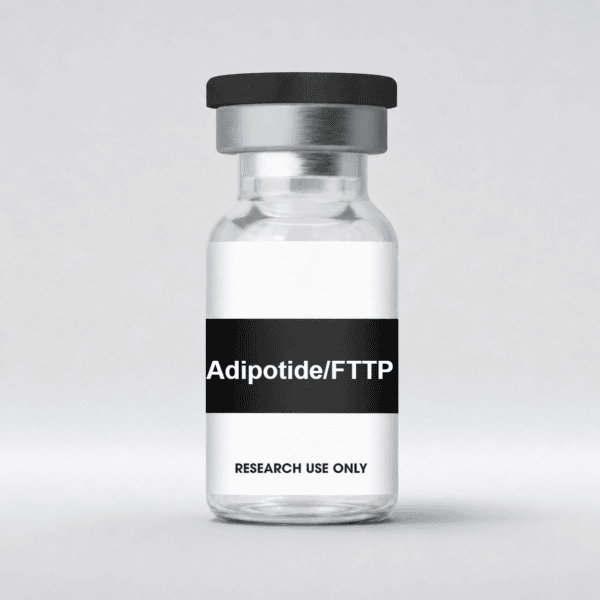
Buy Adipotide/FTTP Peptide
Price range: $71.00 through $151.00
Adipotide Peptide – Powerful Research Guide and Scientific Overview
Adipotide peptide is an experimental research compound that has attracted scientific interest because of its distinctive approach to studying white adipose tissue, adipose-tissue vasculature, cellular signaling, and metabolic biology. Unlike conventional compounds that primarily target appetite or hormonal pathways, Adipotide was designed to investigate the possibility of selectively targeting the vascular environment associated with white adipose tissue.
The peptide commonly described in scientific literature is CKGGRAKDC-GG-D(KLAKLAK)₂. Its design combines a targeting sequence with a pro-apoptotic component, creating a research model for investigating targeted cellular effects. Preclinical studies have evaluated Adipotide in mice and nonhuman primates, including research involving body weight, adipose tissue, food intake, glucose metabolism, and insulin resistance.
Adipotide is an experimental research compound intended solely for legitimate laboratory research. It is not an approved weight-loss medication and is not intended for human or veterinary use.
What Is Adipotide Peptide?
Adipotide is a synthetic chimeric peptide developed to study targeted interactions with the vasculature of white adipose tissue. Its molecular design contains two functional sections.
The CKGGRAKDC sequence serves as the targeting portion, while D(KLAKLAK)₂ is a pro-apoptotic component designed to affect mitochondrial membranes following cellular internalization.
This combination makes Adipotide relevant to several areas of laboratory investigation, including:
- Adipose-tissue biology
- Vascular biology
- Endothelial-cell research
- Cellular apoptosis
- Targeted peptide delivery
- Metabolic research
- Energy-balance research
- Experimental obesity biology
Adipotide Peptide Sequence and Molecular Design
The commonly reported Adipotide sequence is:
CKGGRAKDC-GG-D(KLAKLAK)₂
The design is significant because the two portions of the molecule perform different experimental functions. The targeting sequence is associated with prohibitin on endothelial cells within white adipose tissue, while the pro-apoptotic component is designed to produce intracellular effects after uptake.
Researchers interested in this compound should verify the exact molecular identity and specifications of any material they purchase because similarly named research products can differ in composition.
How Does Adipotide Peptide Work?
Adipotide peptide research is based on a targeted mechanism involving the vascular environment of white adipose tissue.
The targeting sequence has been investigated for its interaction with prohibitin-associated structures on adipose-tissue endothelial cells. Following cellular uptake, the pro-apoptotic component is designed to interact with mitochondrial membranes. This can lead to cellular pathways associated with apoptosis.
This mechanism distinguishes Adipotide from research compounds that primarily act through appetite-related receptors or general metabolic signaling.
Adipotide and Prohibitin
Prohibitin, particularly PHB1, is an important part of the scientific research surrounding Adipotide.
Researchers have investigated prohibitin-associated structures as potential targets within the vasculature of white adipose tissue. The targeting sequence used in Adipotide research was developed to recognize this biological environment.
Understanding this interaction helps explain why the peptide has become relevant to research involving targeted delivery and adipose-tissue vascular biology.
Adipotide and Mitochondrial Research
Mitochondria are cellular structures involved in energy production and numerous signaling processes.
The pro-apoptotic portion of Adipotide was designed to affect mitochondrial membranes after internalization. Experimental research has examined downstream pathways involving mitochondrial disruption and apoptosis.
This makes the compound relevant to researchers studying the relationship between targeted peptide delivery and programmed cellular death.
Adipotide Peptide Research
Adipotide and White Adipose Tissue Research
White adipose tissue is more than an energy-storage compartment. It is a biologically active tissue containing adipocytes, endothelial cells, immune cells, connective-tissue components, and signaling molecules.
Researchers have therefore investigated whether changing the vascular environment surrounding white adipose tissue can influence adipose-tissue biology.
Adipotide provides an experimental model for examining this relationship.
Adipotide Peptide and Adipose-Tissue Vasculature
Blood vessels provide adipose tissue with oxygen and nutrients while participating in communication between adipose tissue and other biological systems.
Research into Adipotide has focused on whether selectively targeting endothelial cells associated with white adipose tissue can produce measurable changes in adipose-tissue mass and systemic metabolic parameters.
This makes the peptide particularly relevant to experimental vascular and metabolic research.
Adipotide and Angiogenesis Research
Angiogenesis refers to the formation and remodeling of blood vessels.
Because growing adipose tissue requires vascular support, researchers have investigated the relationship between angiogenesis and adipose-tissue expansion.
Adipotide represents an experimental approach to studying this relationship by targeting the vascular component associated with white adipose tissue.
Adipotide and Body-Weight Research
One of the most frequently discussed areas of Adipotide research is body-weight regulation in animal models.
In preclinical studies, researchers observed significant reductions in body weight and adipose tissue following treatment with the pro-apoptotic peptide.
These findings are scientifically interesting, but they should not be interpreted as evidence that Adipotide is an established or approved human weight-loss treatment.
Adipotide and Fat-Mass Research
Experimental studies have investigated changes in fat mass following Adipotide exposure.
Research involving nonhuman primates reported reductions in white adipose tissue alongside reductions in body weight.
These findings contributed to further investigation of the relationship between adipose-tissue vasculature and whole-body metabolism.
Adipotide Peptide and Food-Intake Research
Preclinical research has also investigated changes in food intake.
In animal models, researchers observed reduced food consumption following administration of the experimental peptide. The findings contributed to research into the possible relationship between adipose tissue, vascular biology, and energy-regulation pathways.
These observations remain experimental and should not be translated directly into claims about human appetite or weight management.
Adipotide and Glucose Metabolism
Glucose metabolism is another area investigated in preclinical Adipotide research.
Experimental studies have examined glucose tolerance and related metabolic measurements following treatment. Some animal studies reported improvements in glucose-related endpoints.
However, animal findings do not establish that the same effects occur in humans.
Adipotide and Insulin Resistance Research
Nonhuman-primate research has investigated Adipotide in relation to insulin resistance and metabolic changes.
One study reported improvements in insulin resistance alongside reductions in body weight and white adipose tissue.
These findings provide a basis for continued scientific investigation but remain preclinical evidence.
Adipotide Animal Studies
Adipotide Research in Mice
Mouse models provided important early evidence for the adipose-tissue targeting concept.
Research in obese mice investigated body weight, adipose tissue, food intake, and metabolic parameters following administration of the experimental peptide. Significant changes in body weight and fat mass were reported in these models.
Mouse studies are useful for investigating mechanisms but cannot independently establish human safety or effectiveness.
Adipotide Research in Nonhuman Primates
Nonhuman-primate studies provided additional information about the biological effects of Adipotide.
Research reported reductions in body weight and white adipose tissue as well as changes in metabolic measurements. Importantly, researchers also observed renal proximal-tubule functional changes, emphasizing the importance of safety evaluation when studying experimental compounds.
What Do Adipotide Animal Studies Tell Researchers?
Animal studies can help researchers:
- Investigate biological mechanisms
- Identify potential molecular targets
- Examine dose-response relationships
- Study changes in adipose tissue
- Measure metabolic endpoints
- Identify potential safety concerns
- Determine whether further research is justified
Animal results should always be distinguished from clinical evidence in humans.
Potential Research Benefits of Adipotide
The following are research areas and experimental observations, not established medical benefits.
Targeted Adipose-Tissue Research
Adipotide provides a model for investigating targeted interactions with the vascular environment surrounding white adipose tissue.
Vascular Biology Research
The peptide can be studied in experimental models investigating endothelial-cell biology and adipose-tissue vasculature.
Metabolic Research
Preclinical studies have investigated relationships involving body weight, fat mass, glucose tolerance, and insulin resistance.
Cellular Apoptosis Research
The pro-apoptotic portion provides a model for studying targeted cellular death following peptide-mediated delivery.
Targeted Peptide Delivery Research
Adipotide is also relevant to research into how peptide sequences can direct functional molecules toward specific cellular environments.
Adipotide Research Limitations
Limited Human Evidence
Most of the evidence surrounding Adipotide comes from preclinical research.
Results obtained in mice, rats, or nonhuman primates cannot automatically be considered evidence of safety or effectiveness in humans.
Adipotide Is Not an Approved Weight-Loss Medication
Adipotide should not be marketed as an approved treatment for obesity or as a clinically proven weight-management product.
Its scientific importance comes from its experimental mechanism and preclinical research rather than established therapeutic approval.
Safety Considerations
Safety is an important consideration when evaluating any experimental compound.
Nonhuman-primate research reported renal proximal-tubule functional changes, reinforcing the importance of careful scientific evaluation and appropriate laboratory controls.
Mechanism Does Not Prove Clinical Effectiveness
A scientifically interesting mechanism does not automatically establish that a compound is effective or safe as a human treatment.
Researchers should distinguish between:
mechanistic research → animal studies → clinical studies → regulatory approval.
These are separate stages of scientific development.
Adipotide vs Other Research Peptides
Adipotide has a distinctive research mechanism because it was designed to target the vascular environment associated with white adipose tissue.
Other experimental peptides may focus on different biological pathways, such as:
- Appetite signaling
- Hormonal pathways
- Glucose regulation
- Growth-factor signaling
- Cellular repair
- Inflammatory pathways
This distinction makes Adipotide particularly relevant to researchers interested in targeted adipose-tissue and vascular biology.
Adipotide Peptide Quality and Testing
Researchers purchasing experimental peptide materials should consider product quality and documentation carefully.
What Should You Look for When Buying Adipotide?
Important considerations include:
- Exact peptide identity
- Peptide sequence
- Molecular weight
- Purity information
- HPLC analysis
- Mass spectrometry
- Batch number
- Certificate of Analysis
- Storage requirements
- Research-use labeling
Adipotide HPLC Testing
High-performance liquid chromatography, commonly known as HPLC, can be used to evaluate chromatographic purity and separate components within a peptide sample.
Researchers should review the actual analytical documentation whenever available rather than relying only on general marketing descriptions.
Adipotide Mass Spectrometry
Mass spectrometry can provide additional information relevant to molecular characterization and peptide identity.
When combined with chromatographic analysis, it can provide researchers with more comprehensive information about the supplied material.
Adipotide Certificate of Analysis
A Certificate of Analysis, or COA, can provide batch-specific analytical information.
Depending on the testing package, a COA may include:
- Product identification
- Batch number
- Purity
- Analytical method
- Testing date
- Laboratory results
Researchers should verify that the documentation corresponds to the specific batch being supplied.
Where to Buy Adipotide Peptide
If you are searching for where to buy Adipotide peptide, evaluate suppliers based on product transparency, documentation, analytical information, and research-use labeling rather than price alone.
Premium Bio Peptides can provide detailed product information to help research customers evaluate the material before purchasing.
Best Place to Buy Adipotide Peptide
The best research supplier is one that provides clear and useful information about the material being offered.
Before purchasing, researchers should consider:
- Product identity
- Product specifications
- Purity information
- Analytical testing
- Batch documentation
- COA availability
- Storage information
- Research-use requirements
Buy Adipotide Peptide Online
Customers searching for buy Adipotide peptide online should carefully review the product page before placing an order.
Check the stated identity, specifications, available analytical documentation, storage information, and research-use requirements.
Adipotide Peptide for Sale
Premium Bio Peptides can present Adipotide as an experimental research material for legitimate laboratory use.
The product page should provide accurate specifications and avoid unsupported claims about human treatment or guaranteed weight loss.
Why Choose Premium Bio Peptides?
Premium Bio Peptides is focused on providing research-oriented peptide information alongside product specifications.
A comprehensive Adipotide product page can help visitors evaluate:
- Scientific background
- Molecular information
- Research mechanisms
- Preclinical evidence
- Research limitations
- Product specifications
- Available analytical testing
- COA information
- Storage requirements
- Research-use restrictions
Providing this information creates a more transparent experience for researchers evaluating experimental materials.
Adipotide (FTPP Peptide) for Sale – High Purity Research Compound USA
If you are searching for Adipotide peptide for sale, sourcing from a verified manufacturer is essential to ensure purity, consistency, and reliable research outcomes. We are a licensed peptide manufacturer supplying high-quality research compounds for adipose tissue studies, metabolic research, and targeted cell apoptosis analysis.
We operate under controlled laboratory standards.
We verify purity through analytical testing.
We provide full documentation for every production batch.
Adipotide (also known as FTPP peptide) is a synthetic peptidomimetic designed for targeted research into adipose tissue vasculature and fat cell apoptosis. It is widely utilized in studies involving fat tissue reduction mechanisms, angiogenesis inhibition in adipose tissue, and metabolic pathway modulation.
Key Benefits
- Adipose Tissue Targeting Research – Supports studies involving fat cell vasculature and selective targeting
- Apoptosis Pathway Analysis – Useful for investigating programmed cell death in adipose tissue
- Metabolic Research Applications – Applicable in studies on fat metabolism and energy regulation
- Angiogenesis Inhibition Studies – Ideal for analyzing vascular supply disruption in adipose tissue
- Stable Peptide Profile – Designed for consistency and reproducibility in laboratory environments
What You Receive
- ≥98% purity (HPLC verified)
- Analytical validation (HPLC + Mass Spectrometry)
- Certificate of Analysis (COA) available per batch
- Laboratory-secured packaging
- Available in small batch or bulk wholesale quantities
Direct manufacturer sourcing ensures product integrity, traceability, and consistent long-term supply.
Bulk Adipotide Peptide Supply
We support:
- Biotechnology research laboratories
- Pharmaceutical R&D organizations
- Academic research institutions
- Contract research organizations (CROs)
- Metabolic and obesity research centers
- International peptide distributors
Why Professional Buyers Choose Us
- Transparent manufacturing processes
- Verified analytical testing
- Consistent batch-to-batch quality
- Competitive wholesale pricing
- Reliable U.S. and international fulfillment
We combine advanced peptide synthesis capabilities with a global distribution network, ensuring dependable research-grade supply at scale.
Frequently Asked Questions About Adipotide
What Is Adipotide Peptide?
Adipotide is an experimental chimeric peptide designed to investigate targeted interactions with the vascular environment associated with white adipose tissue.
What Is the Adipotide Peptide Sequence?
The commonly reported sequence is CKGGRAKDC-GG-D(KLAKLAK)₂.
How Does Adipotide Work?
Its targeting component is associated with prohibitin on endothelial cells in white adipose tissue, while its pro-apoptotic component is designed to affect mitochondrial membranes following cellular internalization.
What Is Adipotide Being Researched For?
Research has investigated adipose-tissue vasculature, body weight, fat mass, food intake, glucose metabolism, insulin resistance, cellular apoptosis, and targeted peptide delivery.
Has Adipotide Been Studied in Animals?
Yes. Research has included rodent models and nonhuman primates.
Does Adipotide Cause Weight Loss?
Animal studies have reported reductions in body weight and adipose tissue. These findings are preclinical and do not establish effectiveness for human weight management.
Is Adipotide FDA Approved?
Adipotide should not be represented as an FDA-approved medication or weight-loss treatment.
Is Adipotide Safe for Humans?
There is insufficient evidence to characterize Adipotide as safe for human use. Preclinical research has identified safety concerns that require careful consideration.
Is Adipotide Intended for Human Use?
No. Research-product listings should clearly state that the material is intended solely for legitimate laboratory research and is not intended for human or veterinary use.
Where Can I Buy Adipotide Peptide?
Premium Bio Peptides can provide current product availability, specifications, analytical information, and ordering details through its Adipotide product listing.
Is Adipotide available in bulk quantities?
Yes. We provide scalable manufacturing with volume-based pricing.
Do you provide Certificates of Analysis?
Yes. Each batch includes verifiable COA documentation.
Do you ship within the USA?
Yes. Orders are fulfilled through our U.S. distribution channel.
What purity level is provided?
≥98% purity verified via HPLC (higher specifications available upon request).
What Should I Check Before Purchasing Adipotide?
Review the exact peptide identity, sequence where available, purity information, analytical testing, batch number, COA, storage requirements, and research-use designation.
Research-Use Disclaimer
Adipotide is an experimental research compound intended solely for legitimate laboratory research. It is not intended for human or veterinary use and is not an approved treatment for obesity, weight management, or any other medical condition. The information on this page is provided for educational and scientific purposes only and does not constitute medical advice.
| Dosage | 2mg*10vials, 5mg*10vials, 10mg*10vials |
|---|
Related products
-

Dermorphin
$82.00 -
KPV
Price range: $53.00 through $59.00Select options This product has multiple variants. The options may be chosen on the product page -
L-Carnitine
Price range: $52.00 through $63.00Select options This product has multiple variants. The options may be chosen on the product page -
GHRP-2 Peptide
Price range: $52.00 through $66.00Select options This product has multiple variants. The options may be chosen on the product page