Get up to 10% OFF! with coupon PBP10
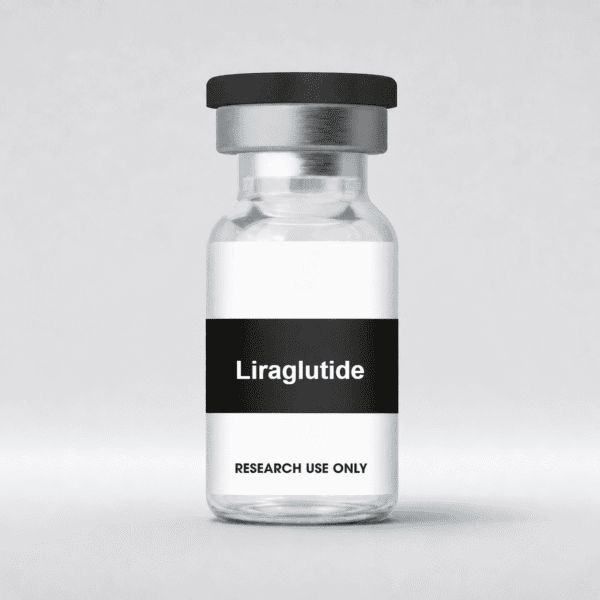
Buy liraglutide peptide
Price range: $78.00 through $270.00
Trusted Liraglutide Peptide: Complete Research Guide | Premium Bio Peptides
What Is Liraglutide Peptide?
A synthetic acylated analog of human glucagon-like peptide-1 (GLP-1), liraglutide functions as an agonist of the GLP-1 receptor. Because it can activate the GLP-1 receptor and affect multiple physiological signaling pathways, it has been thoroughly studied in metabolic, endocrine, and pharmaceutical studies.
Liraglutide and endogenous human GLP-1 share over 97% of their amino acid sequences (7–37). Compared to naturally occurring GLP-1, it is more stable due to a fatty acid change in its structure. (FDA Access Information)
liraglutide peptide offers laboratory researchers a well-characterized model for studying cellular communication, metabolic regulation, peptide pharmacology, GLP-1 receptor biology, and related systems.
Liraglutide Molecular Structure
When assessing the biological and pharmacological characteristics of liraglutide, it is crucial to comprehend its molecular structure.
The GLP-1 sequence is the source of liraglutide, which has structural alterations intended to boost stability. A glutamic-acid spacer connects a C-16 fatty acid (palmitoyl) group, which contributes to the compound’s modified pharmacokinetic properties. C172H265N43O51 is the molecular formula listed in the FDA label, and its molecular weight is roughly 3751.2 Da. (FDA Access Information)
These structural features set liraglutide apart from native GLP-1 and make it valuable for studies on signal transduction, peptide stability, and receptor binding.
How Does Liraglutide Work?
liraglutide peptide mainly binds to and activates the GLP-1 receptor (GLP-1R) to induce its pharmacological effects.
The class B family of G protein-coupled receptors includes the cell-surface receptor GLP-1R. Adenylyl cyclase and stimulatory G proteins are involved in intracellular signaling that is linked to receptor activation and can raise intracellular cyclic AMP (cAMP). (FDA Access Information)
Because GLP-1R is involved in pathways related to glucose-dependent insulin signaling, glucagon control, gastrointestinal activity, hunger, and energy balance, this signaling system is a crucial area of study.
Liraglutide and GLP-1 Receptor Signaling
In molecular pharmacology, the relationship between liraglutide and GLP-1R is crucial.
Receptor conformational changes can facilitate intracellular communication via G-protein pathways when an agonist activates GLP-1R. Cellular models, receptor-binding studies, functional assays, and other verified experimental systems can all be used by researchers to study these processes.
GLP-1 receptor research can provide insight into:
- Receptor activation mechanisms
- Ligand-receptor interactions
- cAMP signaling
- G-protein activation
- Cellular signal transduction
- Metabolic pathway regulation
- Structure-function relationships
Structural studies of GLP-1R have also helped researchers better understand how peptide agonists interact with this receptor and trigger receptor activation. (PubMed)
Liraglutide Stability and Pharmacological Characteristics
Stability is one of the key distinctions between liraglutide and natural GLP-1.
Because it is quickly broken down by enzymes like neutral endopeptidases and dipeptidyl peptidase-4 (DPP-4), naturally occurring GLP-1 has a relatively short half-life in circulation. According to FDA labeling, liraglutide’s plasma half-life following subcutaneous dose is roughly 13 hours, which reflects its structural alterations, protein binding, self-association, and resistance to metabolic destruction. (FDA Data Access)
These features make liraglutide peptide especially pertinent for studies looking at sustained receptor activity and peptide stability.
Liraglutide in Metabolic Research
Metabolic physiology and GLP-1 signaling are intimately related. As a result, liraglutide has been thoroughly investigated in studies looking at endocrine processes and glucose regulation.
Activation of the GLP-1 receptor can affect glucagon secretion and glucose-dependent insulin signaling. In addition to being expressed in a variety of tissues, the receptor is linked to processes that control hunger and energy. (FDA Access Information)
Researchers may examine the connection between receptor activation and metabolic signaling using models linked to liraglutide.
Liraglutide and Energy-Balance Research
The connection between GLP-1 signaling and hunger, satiety, and energy balance is another crucial field of study.
Both peripheral and central physiological routes have been investigated for GLP-1 receptor activation. Understanding how receptor activation interacts with signaling networks involved in food intake and energy control can be aided by research in this field.
The experimental model, species, dose or concentration, length, and research approach all affect the study’s outcome.
liraglutide Peptide Research Applications
Because of its well-characterized receptor activity, liraglutide can be relevant to several areas of laboratory research.
GLP-1 Receptor Research
Researchers can investigate receptor activation, ligand binding, receptor conformation, and downstream signaling.
Peptide Pharmacology
Liraglutide provides a model for studying the relationship between peptide structure, stability, receptor activity, and pharmacological characteristics.
Metabolic Research
Researchers can examine GLP-1-related pathways involved in glucose and endocrine signaling.
Cellular Signaling Research
Liraglutide can be studied in experimental systems designed to evaluate cAMP production, G-protein signaling, receptor activation, and related pathways.
Structure-Activity Research
The structural modifications incorporated into liraglutide provide opportunities to investigate how changes to a peptide can influence stability, receptor interactions, and biological activity.
liraglutide peptide Compared With Native GLP-1
Despite their close relationship, liraglutide and endogenous GLP-1 are not the same molecule.
The body quickly breaks down native GLP-1, but liraglutide has structural changes that make it more resistant to enzymatic breakdown and prolong its function. (FDA Access Information)
Because very little chemical changes can have a substantial impact on peptide stability, pharmacokinetics, receptor interactions, and experimental behavior, this distinction is crucial in peptide research.
liraglutide Peptide Compared With Other GLP-1 Receptor Agonists
Liraglutide is one member of a larger class of GLP-1 receptor agonists. Other compounds in this group can differ in:
- Molecular structure
- Amino-acid sequence
- Fatty-acid modification
- Receptor activity
- Metabolic stability
- Protein binding
- Duration of activity
- Pharmacokinetic characteristics
Comparative research can help investigators understand how structural differences influence receptor signaling and biological responses.
liraglutide Peptide Quality and Purity
When evaluating research materials, identity, purity, batch information, and analytical documentation are important considerations.
Researchers should review the documentation supplied with the specific material rather than relying solely on general product descriptions.
Depending on the product and testing laboratory, analytical documentation may include:
- Product identity
- Batch or lot number
- Purity assessment
- Analytical testing results
- Testing methodology
- Molecular or physical characteristics
- Testing date
- Applicable specifications
Liraglutide Certificate of Analysis (COA)
Batch-specific analytical data for a single material is provided via a Certificate of Analysis (COA).
The COA can help researchers assessing liraglutide link analytical results to a particular production lot. Testing may involve methods for determining identification and purity, depending on the documentation that is provided.
The relevant product specifications and research documentation should always be examined in conjunction with a COA. It is not appropriate for researchers to presume that every batch or supplier has undergone the same testing.
Liraglutide Storage and Handling
Storage requirements can vary according to the specific formulation, physical state, packaging, and supplier instructions.
Researchers should follow the applicable product documentation and established laboratory procedures. Factors that may be relevant to peptide stability include:
- Temperature
- Moisture exposure
- Light exposure
- Solution concentration
- Solvent compatibility
- Storage duration
- Repeated handling
The appropriate storage conditions should be determined from product-specific documentation rather than assumed from another peptide.
Liraglutide Reconstitution Considerations
When a research material is supplied in a lyophilized form, preparation requirements depend on the product formulation and intended laboratory application.
Researchers should consult the applicable product documentation and validated laboratory protocol before selecting a solvent or preparing a solution.
Important variables can include:
- Solubility
- Solvent compatibility
- Desired concentration
- pH
- Temperature
- Handling conditions
- Stability after preparation
This information should be treated as general research guidance rather than a substitute for a validated laboratory procedure.
Why Choose Premium Bio Peptides?
At Premium Bio Peptides, our goal is to make research-related product information easier to understand and evaluate.
We focus on providing clear information about research peptides, analytical documentation, Certificates of Analysis, handling considerations, and educational resources.
Researchers should review the documentation associated with the specific product and batch and make decisions based on their own laboratory requirements and applicable procedures.
Liraglutide Peptide for Sale – High Purity Research Compound USA
Purchasing Liraglutide peptide for sale from a reputable manufacturer is crucial to guaranteeing purity, consistency, and trustworthy study results. For studies on incretin biology, metabolism, and the GLP-1 receptor pathway, we provide premium research chemicals.
We follow regulated laboratory standards in our operations.
Purity is confirmed by analytical testing.
Every production batch has complete documentation from us.
Liraglutide is a long-acting GLP-1 receptor agonist widely utilized in research involving glucose metabolism, incretin signaling, appetite regulation, and energy balance pathways. Its molecular structure is designed to provide prolonged receptor activation, making it a valuable compound for investigating metabolic and endocrine mechanisms in advanced research settings.
Key Benefits
- GLP-1 Receptor Research – Supports studies involving incretin signaling and receptor activation pathways
- Metabolic Function Analysis – Applicable in glucose utilization and energy regulation research
- Appetite Regulation Studies – Useful for investigating satiety signaling and feeding behavior mechanisms
- Endocrine Pathway Research – Ideal for examining hormonal regulation and metabolic communication networks
- Long-Acting Peptide Profile – Designed for stability, consistency, and reproducibility in laboratory environments
What You Receive
- ≥98% purity (HPLC verified)
- Analytical validation (HPLC + Mass Spectrometry)
- Certificate of Analysis (COA) available per batch
- Laboratory-secured packaging
- Available in small batch or bulk wholesale quantities
Direct manufacturer sourcing ensures product integrity, traceability, and consistent long-term supply.
Bulk Liraglutide Supply
We support:
- Biotechnology research laboratories
- Pharmaceutical R&D organizations
- Academic research institutions
- Contract research organizations (CROs)
- Metabolic and endocrinology research centers
- International distributors
Frequently Asked Questions About Liraglutide
Is Liraglutide a Peptide?
Yes. Liraglutide is a synthetic peptide-based GLP-1 receptor agonist structurally related to human GLP-1. It contains 31 amino acids and incorporates additional structural modifications that improve its stability. (FDA Access Data)
What Is Liraglutide Studied For?
Liraglutide is studied extensively in areas including GLP-1 receptor signaling, metabolic physiology, peptide pharmacology, glucose-related pathways, appetite signaling, and energy balance.
What Is the Mechanism of Liraglutide?
Liraglutide binds to and activates GLP-1 receptors. This activates intracellular signaling pathways involving G proteins and adenylyl cyclase, including pathways associated with cAMP signaling. (FDA Access Data)
Why Is Liraglutide Important in Peptide Research?
Its defined molecular structure, GLP-1 receptor activity, and increased stability compared with native GLP-1 make it a useful compound for investigating peptide-receptor interactions and related biological pathways.
What Should Researchers Look for on a Liraglutide COA?
Researchers should review the product name, batch or lot number, applicable specifications, testing results, analytical methods, and other information provided for the specific material.
Does Liraglutide Have the Same Structure as Natural GLP-1?
No. Liraglutide is structurally related to human GLP-1 but contains modifications, including a fatty-acid side chain, that alter its stability and pharmacological characteristics. (FDA Access Data)
Is Liraglutide available in bulk quantities?
Yes. We provide scalable manufacturing with volume-based pricing.
Do you provide Certificates of Analysis?
Yes. Each batch includes verifiable COA documentation.
Do you ship within the USA?
Yes. Orders are fulfilled through our U.S. distribution channel.
What purity level is provided?
≥98% purity verified via HPLC (custom specifications available upon request).
Why Professional Buyers Choose Us
- Transparent manufacturing processes
- Verified analytical testing
- Consistent batch-to-batch quality
- Competitive wholesale pricing
- Reliable U.S. and international fulfillment
We combine advanced peptide synthesis capabilities with a global distribution network, ensuring dependable research-grade supply for scientific and pharmaceutical research applications.
Important Research-Use Information
Regarding liraglutide and its use in peptide and GLP-1 research, this page offers general scientific and educational information. It should not be taken as personal usage recommendations and is not medical advise.
When assessing study materials, researchers should adhere to applicable rules, employ suitable laboratory procedures, and refer to reliable scientific and product-specific documentation.
Research-use products are not intended for human or veterinary use, diagnosis, treatment, or prevention of disease.
| Dosage | 2mg*10vials, 5mg*10vials, 10mg*10vials |
|---|
Related products
-

GHRP-6 Peptide
Price range: $52.00 through $58.00Select options This product has multiple variants. The options may be chosen on the product page -
Dermorphin
$82.00 -
Thymalin / Thymulin
$68.00 -
Ipamorelin
Price range: $47.00 through $62.00Select options This product has multiple variants. The options may be chosen on the product page
Reviews
There are no reviews yet.