Get up to 10% OFF! with coupon PBP10

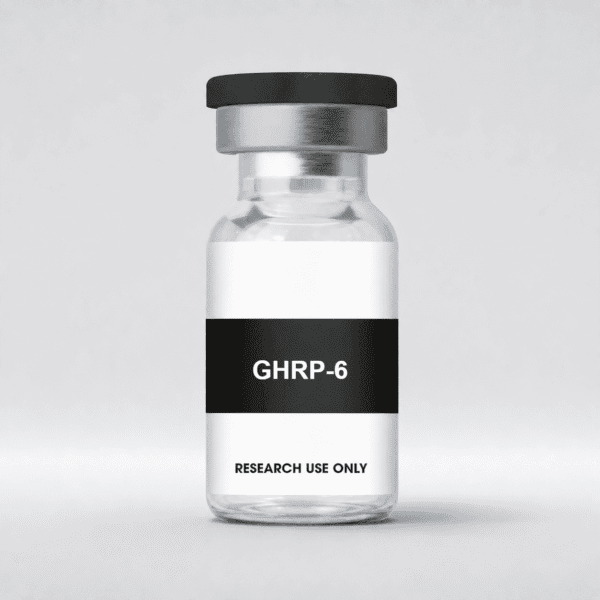
GHRP-6 Peptide
Price range: $52.00 through $58.00
GHRP-6 Peptide: Complete Guide to Research, Mechanism, Benefits, Safety & Scientific Background
GHRP-6 peptide is a synthetic hexapeptide that has attracted considerable scientific interest because of its relationship with growth hormone (GH) secretion, ghrelin signaling, and the growth hormone secretagogue receptor (GHS-R). Unlike growth hormone itself, GHRP-6 does not replace GH. Instead, it has been investigated for its ability to interact with receptor systems involved in endogenous hormone regulation.
Research into GHRP-6 peptide has contributed to the broader understanding of how growth hormone secretion is controlled and how synthetic secretagogues interact with endocrine pathways. Studies have examined GHRP-6 in cellular models, animal research, and controlled human investigations, making it an important compound in the history of growth hormone secretagogue research.
GHRP-6 is also scientifically interesting because its activity extends beyond growth hormone alone. Its relationship with GHS-R connects it to the biology of ghrelin, a naturally occurring hormone involved in appetite, energy balance, gastrointestinal physiology, and endocrine signaling.
For this reason, GHRP-6 continues to appear in research involving endocrinology, peptide pharmacology, receptor biology, metabolic physiology, and hormonal signaling.
This guide examines GHRP-6 peptide from a scientific and educational perspective, including its molecular characteristics, mechanism of action, relationship with ghrelin and GHS-R, potential research applications, comparisons with related compounds, safety considerations, analytical testing, and research limitations.
What Is GHRP-6 Peptide?
GHRP-6 stands for Growth Hormone-Releasing Peptide-6. It is a synthetic peptide consisting of six amino acids and is commonly described as one of the earliest members of the growth hormone-releasing peptide family.
GHRP-6 became scientifically important because researchers discovered that certain synthetic peptides could stimulate growth hormone secretion through mechanisms that were not identical to classical growth hormone-releasing hormone pathways.
The compound is therefore classified as a growth hormone secretagogue.
A secretagogue is a substance that promotes the secretion or release of another substance. In the case of GHRP-6, the principal research interest is its ability to stimulate GH release through activation of the growth hormone secretagogue receptor.
Importantly, GHRP-6 is not itself human growth hormone.
Growth hormone is a naturally occurring protein hormone produced by somatotroph cells in the anterior pituitary. GHRP-6 is a synthetic peptide that interacts with signaling pathways involved in regulating GH secretion.
This distinction is essential when discussing GHRP-6 research because the compound’s effects are mediated through biological signaling rather than through direct replacement of endogenous growth hormone.
GHRP-6 Peptide Scientific Background
The discovery of growth hormone-releasing peptides represented an important development in endocrinology.
Before these compounds were characterized, growth hormone secretion was primarily understood through the interaction of growth hormone-releasing hormone (GHRH) and somatostatin.
GHRH promotes GH secretion, whereas somatostatin generally suppresses it. Together, these hormones contribute to the pulsatile pattern of GH release observed naturally.
The discovery of GHRP-6 demonstrated that another signaling system could influence GH secretion.
Later research identified the growth hormone secretagogue receptor and subsequently established a connection between this receptor and ghrelin, an endogenous peptide hormone.
This helped explain why synthetic growth hormone secretagogues could have effects extending beyond the pituitary.
Research has shown that GHRP-6 peptide can activate GHS-R-associated signaling pathways and influence molecular processes involved in pituitary GH regulation. Experimental work has also demonstrated effects involving transcription factors such as Pit-1 and intracellular pathways including protein kinase C, MAP kinase-related signaling, and protein kinase A.
GHRP-6 Peptide Molecular Structure
GHRP-6 is a synthetic hexapeptide.
Its commonly reported sequence is:
His-D-Trp-Ala-Trp-D-Phe-Lys-NH₂
The presence of D-amino-acid residues contributes to the peptide’s pharmacological characteristics and distinguishes it from many naturally occurring peptide hormones.
Its molecular structure is particularly important because receptor recognition depends on the three-dimensional arrangement and chemical properties of the peptide.
Modern structural research has provided additional insight into how GHRP-6 interacts with the ghrelin receptor. Structural studies indicate that GHRP-6 can occupy the orthosteric binding region of the receptor and make specific interactions that contribute to receptor activation.
This structural information is useful because it helps researchers understand why relatively small changes in peptide structure can alter receptor activity.
What Is the Growth Hormone Secretagogue Receptor?
The growth hormone secretagogue receptor, commonly abbreviated as GHS-R or GHSR, is a G-protein-coupled receptor involved in growth hormone and ghrelin signaling.
GHS-R belongs to the GPCR family, which contains receptors that transmit signals from extracellular molecules into cells.
The receptor is particularly important in the pituitary and hypothalamus, although GHS-R signaling has broader physiological relevance.
Research describes GHS-R as a seven-transmembrane GPCR with important intracellular signaling pathways involving molecules such as calcium, cyclic AMP-related signaling, MAPK, PI3K, and AMPK.
GHRP-6 is one of the synthetic ligands used to investigate this receptor.
How Does GHRP-6 Peptide Work?
GHRP-6 primarily works by interacting with the growth hormone secretagogue receptor.
When GHRP-6 activates this receptor, intracellular signaling processes are initiated. These signals can ultimately influence somatotroph cells in the anterior pituitary and promote the secretion of growth hormone.
The process is more complicated than simply turning GH production on.
Growth hormone regulation involves communication between:
- The hypothalamus
- The pituitary gland
- Peripheral tissues
- Growth hormone-releasing hormone
- Somatostatin
- Ghrelin
- GHS-R
- Insulin-like growth factor-1
- Metabolic signals
- Feedback mechanisms
Consequently, the response to a growth hormone secretagogue depends on the physiological environment in which the signaling occurs.
GHRP-6 Peptide Mechanism of Action
The mechanism of GHRP-6 can be understood through several connected stages.
1. Receptor Interaction
GHRP-6 interacts with GHS-R.
2. Intracellular Signal Activation
Receptor activation triggers intracellular signaling pathways.
3. Pituitary Signaling
These pathways influence somatotroph cells involved in GH secretion.
4. Growth Hormone Release
The signaling response can promote release of growth hormone into circulation.
5. Downstream Effects
Growth hormone subsequently interacts with tissues and influences downstream biological processes.
Research has demonstrated that the relationship between GHRP-6 and GHRH is also important. Human experimental research has shown that endogenous GHRH contributes substantially to the GH response produced by GHRP-6, illustrating that growth hormone secretagogue signaling does not necessarily operate as a completely isolated pathway.
GHRP-6 Peptide and Growth Hormone Release
The principal scientific interest in GHRP-6 involves its capacity to stimulate GH secretion.
Growth hormone is naturally released in pulses rather than continuously.
These pulses can be influenced by:
- Age
- Sleep
- Exercise
- Nutrition
- Stress
- Sex hormones
- Metabolic state
- Hypothalamic signaling
- Growth hormone-releasing hormone
- Somatostatin
GHRP-6 research provides an experimental method for examining how receptor activation can influence this pulsatile endocrine system.
Early research characterized GHRP-6 as a potent growth hormone secretagogue, while subsequent studies helped clarify its interaction with GHS-R and other regulatory pathways.
GHRP-6 and Ghrelin
One of the most important developments in GHRP-6 research was the discovery of the relationship between growth hormone secretagogues and ghrelin.
Ghrelin is a naturally occurring peptide hormone produced predominantly in the stomach, although it is also associated with tissues including the hypothalamus and pituitary.
Ghrelin has multiple physiological functions, including effects on:
- Growth hormone secretion
- Appetite
- Food intake
- Energy balance
- Gastrointestinal activity
- Glucose regulation
- Other endocrine pathways
GHRP-6 is not identical to ghrelin, but both can interact with the growth hormone secretagogue receptor.
This makes GHRP-6 useful for studying the broader ghrelin signaling system.
GHRP-6 Peptide and the Ghrelin Receptor
GHS-R is frequently referred to as the ghrelin receptor because endogenous ghrelin is one of its principal physiological ligands.
GHRP-6 is a synthetic ligand for this receptor.
Structural research has provided detailed information about the molecular recognition of GHRP-6 by the receptor, including interactions involving particular amino-acid residues within the receptor’s binding region.
This work has helped researchers better understand how synthetic peptides can mimic or modify receptor signaling.
GHRP-6 and Intracellular Signaling
Receptor activation does not occur in isolation.
GHS-R activation can influence multiple intracellular signaling pathways.
Research into GHS-R has examined pathways involving:
- Calcium signaling
- Protein kinase C
- Protein kinase A
- MAPK signaling
- PI3K-related signaling
- AMPK
- mTOR-related pathways
- Gene transcription
The exact response can depend on the cell type, receptor state, ligand, experimental conditions, and signaling pathway being measured.
This complexity is one reason GHRP-6 remains scientifically valuable.
GHRP-6 and Pit-1
Pit-1, also known as POU1F1, is an important transcription factor involved in pituitary development and expression of several pituitary hormones, including growth hormone.
Experimental research has demonstrated that GHRP-6 can influence Pit-1-related transcriptional activity through GHS-R-associated signaling pathways.
Researchers observed activation involving signaling mechanisms including protein kinase C, MAPK-related pathways, and PKA.
This finding illustrates that GHRP-6 research extends beyond immediate hormone release and into molecular regulation of pituitary function.
GHRP-6 and GHRH
GHRH is a major hypothalamic regulator of growth hormone secretion.
One important aspect of GHRP-6 research is its interaction with the GHRH system.
Human experimental research has shown that blocking endogenous GHRH substantially reduces the GH response to GHRP-6. This supports the idea that GHRP-6-induced GH secretion involves cooperation with endogenous hypothalamic signaling rather than acting completely independently.
This is an important concept when interpreting claims about the mechanism of GHRP-6.
GHRP-6 and Somatostatin
Somatostatin is another major regulator of growth hormone secretion.
It generally suppresses GH release from the pituitary.
Research involving pituitary cells has demonstrated interactions between GHRP-6, GHRH, and somatostatin signaling. Experimental studies have shown that somatostatin can inhibit secretagogue-induced GH secretion, demonstrating the importance of the broader endocrine network.
Therefore, GHRP-6 should not be viewed as operating independently of the body’s normal GH regulatory mechanisms.
Potential Research Benefits of GHRP-6
GHRP-6 is studied for several scientific reasons.
These include:
- Investigating GH secretion
- Studying GHS-R activation
- Understanding ghrelin biology
- Examining pituitary signaling
- Studying appetite pathways
- Investigating metabolic signaling
- Exploring endocrine feedback
- Studying peptide-receptor interactions
- Developing knowledge about growth hormone secretagogues
These are research applications, not established therapeutic claims.
The distinction is especially important because biological activity demonstrated in experimental models does not automatically translate into clinically meaningful outcomes.
GHRP-6 and Body Composition Research
Growth hormone has long been associated with research into body composition and metabolism.
Because GHRP-6 can influence GH secretion, researchers have investigated whether changes in GH-related signaling affect processes involving:
- Protein metabolism
- Lipid metabolism
- Energy utilization
- Lean tissue
- Adipose tissue
- Insulin-related pathways
However, increased GH secretion should not automatically be equated with improved body composition.
Human outcomes depend on multiple variables, and available evidence does not justify treating experimental GH responses as proof of predictable body-composition improvements.
GHRP-6 and Muscle Research
Growth hormone signaling is relevant to research involving muscle physiology and protein metabolism.
This has contributed to interest in GHRP-6 among researchers studying the relationship between endocrine signaling and skeletal muscle.
However, laboratory investigation of GH pathways is different from demonstrating that GHRP-6 produces clinically meaningful improvements in muscle mass or athletic performance.
The strongest scientific interpretation is that GHRP-6 provides a model for investigating GH-related biological signaling.
GHRP-6 and Recovery Research
Growth hormone and related endocrine pathways are involved in tissue maintenance and physiological processes associated with recovery.
GHRP-6 has therefore been included in research examining the relationship between GH secretion and tissue-related processes.
However, claims about improved healing or recovery should be evaluated carefully because laboratory mechanisms do not automatically establish clinical effectiveness.
GHRP-6 and Metabolic Research
GHRP-6 peptide is also relevant to metabolic research.
Growth hormone interacts with glucose and lipid metabolism, while ghrelin signaling contributes to energy balance.
Consequently, GHRP-6 can be useful for examining how endocrine signaling affects metabolic physiology.
Researchers may investigate:
- Glucose homeostasis
- Lipid metabolism
- Energy balance
- Appetite
- Hormonal feedback
- GH-related metabolic pathways
These research areas demonstrate why GHRP-6 cannot be considered exclusively a growth hormone compound.
GHRP-6 and Appetite Research
Appetite is one of the most interesting areas of GHRP-6 peptide research because of the compound’s relationship with ghrelin signaling.
Ghrelin is widely recognized for its role in stimulating food intake and influencing feeding behavior.
Experimental research has shown that GHRP-6 peptide can engage brain pathways associated with appetite and growth hormone regulation. A recent mouse study, for example, found that intranasal GHRP-6 activated ghrelin-associated neurons and increased food intake under the experimental conditions used.
This reinforces the importance of considering appetite-related signaling when evaluating GHRP-6 research.
GHRP-6 Peptide and the Hypothalamus
The hypothalamus plays a central role in endocrine regulation.
It receives and integrates signals related to:
- Energy availability
- Hormonal status
- Appetite
- Stress
- Sleep
- Growth
- Metabolism
Ghrelin signaling interacts with hypothalamic pathways involved in appetite and GH regulation.
Because GHRP-6 can activate GHS-R, it can be used experimentally to investigate how ghrelin-related signaling influences hypothalamic circuits.
GHRP-6 and Neuropeptide Y
Neuropeptide Y, or NPY, is a neuropeptide associated with appetite regulation and energy balance.
Ghrelin-related signaling can interact with NPY and agouti-related peptide pathways within the hypothalamus.
Recent experimental work involving GHRP-6 has provided additional evidence that GHS-R activation can engage arcuate-nucleus neurons associated with feeding behavior.
This helps explain why GHRP-6 research extends beyond pituitary GH release.
GHRP-6 Peptide vs. GHRP-2
GHRP-6 peptide and GHRP-2 are closely related research compounds.
Both belong to the growth hormone-releasing peptide family, but they have different molecular characteristics and pharmacological profiles.
Researchers may compare them based on:
- Receptor activity
- GH response
- Appetite effects
- Signaling pathways
- Experimental objectives
GHRP-6 peptide is particularly notable for its ghrelin-associated appetite signaling, while GHRP-2 has also been widely investigated for its growth hormone secretagogue activity.
They should not be treated as interchangeable substances.
GHRP-6 Peptide vs. Ipamorelin
Ipamorelin is another peptide growth hormone secretagogue.
One important difference is the degree of receptor selectivity and the resulting signaling profile.
GHRP-6 peptide has a broader pharmacological profile associated with GHS-R activation and ghrelin-related signaling.
Ipamorelin has been investigated as a more selective growth hormone secretagogue.
Comparative studies can therefore help researchers understand how small differences in peptide structure influence receptor signaling.
GHRP-6 vs. CJC-1295
GHRP-6 and CJC-1295 act through different primary approaches to GH regulation.
GHRP-6 is associated with GHS-R activation.
CJC-1295 is related to GHRH-based signaling.
Because GHRH and GHS-R represent distinct regulatory pathways, comparing these compounds can help researchers understand how separate endocrine signals influence GH secretion.
This distinction is also useful when interpreting research involving combinations of GH-related compounds.
GHRP-6 vs. MK-677
MK-677, or ibutamoren, is a non-peptide growth hormone secretagogue.
GHRP-6 is a peptide.
Both are associated with GHS-R research, but their molecular structures and pharmacological properties differ.
GHRP-6 provides a peptide model for investigating GHS-R activation, while MK-677 provides a small-molecule example of secretagogue activity.
Research comparing these compounds can help investigators understand how structurally different ligands interact with the same receptor system.
GHRP-6 Peptide Molecular Properties
For laboratory purposes, the molecular identity of a peptide is important.
Researchers may consider:
- Molecular sequence
- Molecular weight
- Purity
- Identity
- Peptide integrity
- Impurity profile
- Analytical method
- Stability
The same product name should not automatically be treated as proof of identical composition across suppliers or batches.
Analytical documentation is therefore an important part of responsible peptide research.
GHRP-6 Peptide Research Applications
Potential research applications include:
Endocrinology Research
GHRP-6 peptide can be used to investigate growth hormone regulation and endocrine feedback.
Receptor Biology
The compound provides a model for examining GHS-R activation.
Peptide Pharmacology
Researchers can study how synthetic peptide structure affects receptor interactions.
Ghrelin Research
GHRP-6 provides a useful tool for studying ghrelin-associated signaling.
Metabolic Research
Researchers can examine relationships between GH, appetite, and metabolic pathways.
Neuroscience
GHRP-6 can help researchers investigate hypothalamic pathways associated with appetite and endocrine regulation.
GHRP-6 in Laboratory Research
Laboratory research can examine GHRP-6 through multiple experimental approaches.
These may include:
- Receptor-binding studies
- Cell-based assays
- Gene-expression experiments
- Hormone measurements
- Signaling assays
- Molecular modeling
- Structural biology
- Animal studies
Each experimental model answers different questions.
For example, a receptor-binding experiment can provide information about molecular interaction but cannot establish whether a compound produces a beneficial physiological outcome in humans.
GHRP-6 in Preclinical Studies
Animal research can provide valuable information about pharmacology and biological mechanisms.
Preclinical studies involving GHRP-6 have examined areas such as:
- GH secretion
- Appetite
- Brain signaling
- Endocrine responses
- Receptor activity
- Metabolism
However, animal findings must be interpreted cautiously.
Species differences in receptor distribution, metabolism, endocrine regulation, and physiology can affect how findings translate to humans.
GHRP-6 Human Research
GHRP-6 has also been studied experimentally in humans.
Human studies have contributed to understanding its ability to influence GH secretion and the role of endogenous GHRH in that response.
Human research is important because it provides evidence that cannot be obtained from cell or animal models alone.
Nevertheless, individual human studies should not be generalized beyond their specific design.
Researchers should examine:
- Sample size
- Study population
- Study duration
- Experimental design
- Outcome measures
- Control groups
- Statistical significance
- Clinical relevance
GHRP-6 Research Limitations
One of the most important aspects of responsible scientific communication is recognizing limitations.
GHRP-6 research may be limited by:
- Small study populations
- Short study durations
- Differences between animal and human models
- Variation in experimental conditions
- Limited long-term evidence
- Differences in peptide preparations
- Incomplete understanding of downstream effects
A study showing increased GH secretion does not necessarily establish a meaningful clinical benefit.
Likewise, receptor activation does not automatically establish safety.
GHRP-6 Potential Side Effects and Safety Considerations
Because GHRP-6 influences endocrine and ghrelin-related signaling, safety considerations are important.
Research involving GHRP-6 has reported or investigated effects involving hormonal pathways beyond GH alone.
Potential areas of scientific concern include:
- Appetite changes
- Glucose regulation
- Endocrine feedback
- Cortisol-related signaling
- Prolactin-related responses
- Fluid and metabolic changes
- Interactions with other hormonal pathways
A recent scientific review notes that human research has associated GHRP-6 with appetite stimulation and has reported transient endocrine responses involving hormones such as cortisol and prolactin.
This does not mean that every research subject will experience the same response. It demonstrates why biological activity should be taken seriously.
GHRP-6 and Blood Sugar Research
Growth hormone interacts with glucose metabolism.
Consequently, compounds that alter GH signaling may be relevant to glucose-related research.
GHRP-6 research can examine relationships between:
- GH
- Insulin
- Glucose
- Lipid metabolism
- Energy balance
This is particularly important because endocrine systems are interconnected.
Researchers should therefore avoid evaluating GHRP-6 solely through its effect on GH concentrations.
GHRP-6 and Hormonal Signaling
The endocrine system functions through complex feedback loops.
Growth hormone interacts with:
- GHRH
- Somatostatin
- Ghrelin
- IGF-1
- Insulin
- Glucocorticoids
- Sex hormones
- Thyroid-related pathways
GHRP-6 research is valuable partly because it provides an experimental way to examine how one signaling pathway interacts with this larger network.
GHRP-6 and IGF-1
Insulin-like growth factor-1, or IGF-1, is an important downstream component of the GH axis.
Growth hormone can stimulate IGF-1 production, particularly in the liver.
IGF-1 then contributes to many biological processes associated with growth and tissue regulation.
When studying GHRP-6, researchers may therefore be interested in both immediate GH responses and downstream changes within the GH-IGF-1 axis.
However, changes in GH do not necessarily produce identical changes in IGF-1 under every experimental condition.
GHRP-6 and Possible Medication Interactions
Because GHRP-6 affects endocrine signaling, interaction with other substances can be an important research consideration.
Researchers should document experimental variables carefully when studying biologically active peptides.
For human health decisions, interactions with medications should not be inferred from general peptide information.
Anyone considering a biologically active compound in a medical context should consult an appropriately qualified healthcare professional.
Who Should Avoid GHRP-6 Research?
Research involving GHRP-6 should be conducted by appropriately qualified researchers operating within applicable laboratory, institutional, and regulatory requirements.
Individuals should not interpret scientific literature as instructions for unsupervised self-experimentation.
This distinction is particularly important for biologically active compounds that affect endocrine pathways.
GHRP-6 Storage and Stability Considerations
Peptide stability can be influenced by environmental conditions.
Important factors may include:
- Temperature
- Moisture
- Light
- Oxygen exposure
- Container integrity
- Contamination
- Repeated handling
- Storage duration
The appropriate storage conditions depend on the specific preparation and manufacturer’s validated stability information.
Researchers should therefore follow the documentation supplied for the specific batch rather than relying on generic peptide-storage assumptions.
GHRP-6 Peptide Quality and Purity
Purity is a major consideration when evaluating research peptides.
A peptide labeled “GHRP-6” should ideally be supported by analytical documentation that identifies the compound and provides information about its purity.
Useful quality information may include:
- Compound identity
- Purity percentage
- Batch number
- Lot number
- Analytical method
- Testing laboratory
- Manufacturing date
- Testing date
- Storage recommendations
Purity alone does not answer every question about quality, but it is an important analytical characteristic.
Why a Certificate of Analysis Matters for GHRP-6
A Certificate of Analysis (COA) provides analytical information about a particular batch.
Depending on the laboratory and testing methods used, a COA may provide information regarding identity, purity, and other characteristics.
A good COA should be specific to the material being evaluated rather than functioning only as a generic marketing document.
Researchers should examine whether the:
- Batch number matches the product
- Compound name is clearly identified
- Testing method is stated
- Purity result is reported
- Testing date is provided
- Laboratory information is available
A COA does not automatically prove that a product is safe for human use. It is primarily evidence about specific analytical characteristics of a particular batch.
How to Evaluate GHRP-6 Research Products
Researchers evaluating GHRP-6 materials should consider more than the advertised name.
Important factors include:
Product Identity
The material should be clearly identified as GHRP-6.
Batch Documentation
Batch-specific information can improve traceability.
Analytical Testing
Testing should use appropriate analytical techniques.
Purity
The reported purity should be clearly documented.
Transparency
The supplier should provide meaningful scientific documentation rather than vague claims.
Storage Information
Clear storage information can help preserve material integrity.
Research-Use Labeling
Materials intended for research should be appropriately labeled and handled according to applicable requirements.
Why Analytical Testing Matters
Analytical testing provides a way to verify the characteristics of a research material.
Depending on the compound and laboratory, techniques such as chromatography and mass spectrometry may be used to investigate identity and purity.
No single analytical result necessarily answers every quality question.
For example, purity analysis may not provide complete information about:
- Biological activity
- Sterility
- Endotoxin content
- Long-term stability
- Manufacturing consistency
This is why comprehensive quality documentation is preferable.
GHRP-6 Legal and Regulatory Considerations
The regulatory status of GHRP-6 can vary by country and jurisdiction.
Research availability does not necessarily mean that a compound is approved for medical use.
Before acquiring, transporting, storing, or studying GHRP-6, researchers should verify the laws and institutional requirements applicable to their location.
Regulatory frameworks can change, so current official sources should be consulted.
Is GHRP-6 Approved for Human Use?
Research activity should not be confused with regulatory approval.
GHRP-6 has been investigated scientifically and has appeared in human research, but this does not mean that it is approved as a general medical treatment.
A compound can have published scientific research while still lacking regulatory approval for particular clinical applications.
This distinction should always be maintained in educational and commercial research content.
GHRP-6 and Athletic Performance Claims
GHRP-6 is sometimes discussed in connection with athletic performance because of its relationship with growth hormone.
However, research interest does not automatically establish improved athletic performance.
Claims concerning strength, endurance, muscle growth, recovery, or body composition should be evaluated against appropriate clinical evidence.
Scientific content should distinguish between:
Mechanistic evidence → physiological evidence → clinical evidence → established therapeutic benefit.
These are different levels of evidence.
GHRP-6 and Research Ethics
Responsible peptide research requires appropriate scientific and ethical standards.
Important considerations include:
- Proper laboratory procedures
- Accurate documentation
- Appropriate experimental controls
- Responsible interpretation of findings
- Compliance with applicable regulations
- Avoidance of unsupported health claims
Research compounds should not be presented as established therapies when the evidence does not support such claims.
GHRP-6 Research: What the Evidence Really Shows
The available literature supports several important conclusions.
First, GHRP-6 is biologically active as a growth hormone secretagogue.
Second, its activity is closely connected with GHS-R/ghrelin receptor signaling.
Third, GHRP-6 interacts with a broader endocrine network involving GHRH, somatostatin, and other hormonal pathways.
Fourth, its effects are not limited to GH secretion because ghrelin-related signaling also has connections with appetite and energy balance.
Finally, evidence concerning practical human outcomes should be interpreted more cautiously than evidence demonstrating receptor or hormone activity.
GHRP-6 Peptide for Sale – High Purity Research Compound USA
If you are searching for GHRP-6 peptide for sale, sourcing from a verified manufacturer is essential to ensure purity, consistency, and reliable research outcomes. We are a licensed peptide manufacturer supplying high-quality research compounds for growth hormone pathway studies, ghrelin receptor analysis, and endocrine signaling research.
We operate under controlled laboratory standards.
We verify purity through analytical testing.
We provide full documentation for every production batch.
GHRP-6 (Growth Hormone Releasing Peptide-6) is a synthetic hexapeptide belonging to the ghrelin mimetic class, widely utilized in research involving growth hormone secretion, receptor activation, and endocrine system regulation. It is commonly studied for its interaction with the GHS-R1a receptor and its role in pulsatile GH release mechanisms.
Key Benefits
- Growth Hormone Pathway Research – Supports studies involving endogenous GH release stimulation
- Ghrelin Receptor Activation – Targets GHS-R1a receptors with high specificity
- Pulsatile Secretion Analysis – Ideal for investigating natural hormone release patterns
- Endocrine System Studies – Applicable in controlled hormonal signaling research
- Stable Peptide Profile – Designed for consistency and reproducibility in laboratory environments
What You Receive
- ≥98% purity (HPLC verified)
- Analytical validation (HPLC + Mass Spectrometry)
- Certificate of Analysis (COA) available per batch
- Laboratory-secured packaging
- Available in small batch or bulk wholesale quantities
Direct manufacturer sourcing ensures product integrity, traceability, and consistent long-term supply.
Bulk GHRP-6 Peptide Supply
We support:
- Biotechnology research laboratories
- Pharmaceutical R&D organizations
- Academic research institutions
- Contract research organizations (CROs)
- International peptide distributors
Why Professional Buyers Choose Us
- Transparent manufacturing processes
- Verified analytical testing
- Consistent batch-to-batch quality
- Competitive wholesale pricing
- Reliable U.S. and international fulfillment
We combine advanced peptide synthesis capabilities with a global distribution network, ensuring dependable research-grade supply at scale.
Frequently Asked Questions About GHRP-6 Peptide
What Does GHRP-6 Stand For?
GHRP-6 stands for Growth Hormone-Releasing Peptide-6. It is a synthetic six-amino-acid peptide investigated primarily for its ability to influence growth hormone secretion.
What Is GHRP-6 Used for in Research?
GHRP-6 is studied in endocrinology, peptide pharmacology, receptor biology, growth hormone regulation, ghrelin signaling, appetite research, and metabolic physiology.
Is GHRP-6 a Growth Hormone?
No. GHRP-6 is not growth hormone. It is a growth hormone secretagogue that influences pathways involved in endogenous GH release.
Is GHRP-6 a Steroid?
No. GHRP-6 is a peptide and is chemically different from steroid hormones.
How Does GHRP-6 Work?
GHRP-6 interacts with the growth hormone secretagogue receptor and activates signaling pathways associated with growth hormone secretion.
Does GHRP-6 Peptide Interact With Ghrelin Signaling?
Yes. GHRP-6 is a synthetic ligand associated with GHS-R, the receptor through which ghrelin produces many of its biological effects.
Does GHRP-6 Peptide Affect Appetite Research?
Yes. Because GHS-R/ghrelin signaling is involved in appetite regulation, GHRP-6 has been investigated in feeding and energy-balance research. Experimental animal research has demonstrated effects on food intake and hypothalamic signaling.
What Is the Difference Between GHRP-6 and GHRP-2?
Both are growth hormone-releasing peptides, but their molecular and pharmacological profiles differ. Researchers may compare them based on receptor activity, GH responses, and other physiological effects.
What Is the Difference Between GHRP-6 Peptide and Ipamorelin?
Both are growth hormone secretagogues, but they differ in their receptor pharmacology and selectivity. They should therefore be considered separate research compounds.
What Is the Difference Between GHRP-6 Peptide and CJC-1295?
GHRP-6 primarily relates to GHS-R signaling, while CJC-1295 is associated with the GHRH pathway. They therefore represent different approaches to investigating GH regulation.
Is GHRP-6 Peptide the Same as MK-677?
No. GHRP-6 is a peptide, while MK-677 is a non-peptide small-molecule growth hormone secretagogue. Both are associated with GHS-R research but have different chemical structures.
What Are the Main Research Benefits of GHRP-6?
The primary research value of GHRP-6 is its ability to help investigators study growth hormone secretion, GHS-R signaling, ghrelin biology, appetite pathways, and endocrine regulation.
Does GHRP-6 Peptide Increase Growth Hormone?
Research demonstrates that GHRP-6 can stimulate GH secretion under experimental conditions. However, the magnitude and physiological significance of a GH response depend on the experimental setting and biological context.
Does GHRP-6 Peptide Affect Other Hormones?
GHRP-6 research has examined effects beyond GH, including interactions with endocrine pathways associated with appetite and other hormones. This broader activity is one reason its pharmacology requires careful study.
Why Is GHRP-6 Important in Peptide Research?
GHRP-6 helped researchers investigate a previously less understood pathway for stimulating growth hormone secretion and contributed to the broader understanding of GHS-R and ghrelin biology.
What Should Researchers Look for in GHRP-6 Peptide Documentation?
Researchers should look for clear compound identification, batch information, analytical testing, purity data, and appropriate storage documentation.
Why Is a COA Important for GHRP-6?
A batch-specific Certificate of Analysis can provide useful information about the tested material’s identity and analytical characteristics. It should be evaluated as part of a broader quality-assurance process.
Is GHRP-6 Approved as a General Medical Treatment?
Research evidence and regulatory approval are different concepts. The presence of scientific literature does not itself establish regulatory approval for medical treatment.
Is GHRP-6 available in bulk quantities?
Yes. We provide scalable manufacturing with volume-based pricing.
Do you provide Certificates of Analysis?
Yes. Each batch includes verifiable COA documentation.
Do you ship within the USA?
Yes. Orders are fulfilled through our U.S. distribution channel.
What purity level is provided?
≥98% purity verified via HPLC (higher specifications available upon request).
Final Thoughts on GHRP-6 Peptide
GHRP-6 is an important research peptide with a substantial history in the study of growth hormone secretion, ghrelin signaling, GHS-R pharmacology, pituitary biology, appetite regulation, and endocrine physiology.
Its importance comes from its ability to interact with a receptor system that connects several physiological processes. Research has shown that GHRP-6 can activate GHS-R-related signaling and influence GH secretion, while additional evidence demonstrates connections with hypothalamic and appetite-related pathways.
The compound also illustrates how complicated endocrine signaling can be. GHRP-6 does not operate through a single isolated pathway. Its effects can involve interactions among GHS-R, GHRH, somatostatin, ghrelin, growth hormone, and downstream endocrine mechanisms.
For scientific research, this complexity makes GHRP-6 particularly valuable.
At the same time, responsible interpretation is essential. Evidence demonstrating receptor activation or increased GH secretion should not automatically be presented as proof of improved health, athletic performance, body composition, or therapeutic effectiveness.
Researchers should distinguish between molecular evidence, laboratory evidence, animal evidence, human physiological evidence, and clinically established outcomes.
Quality considerations are equally important. Clear product identification, appropriate analytical testing, batch-specific documentation, purity information, and responsible storage are important components of research-material evaluation.
Ultimately, GHRP-6 is best understood as a synthetic growth hormone secretagogue and research tool for investigating GHS-R/ghrelin signaling and the complex biology of growth hormone regulation. Its scientific value lies not only in its effects on GH secretion but also in what it has helped researchers learn about the interconnected endocrine pathways governing growth, appetite, metabolism, and hormonal communication.
| Dosage | 5mg*10vials, 10mg*10vials |
|---|
Related products
-

Hexarelin Acetate Peptide
Price range: $58.00 through $89.00Select options This product has multiple variants. The options may be chosen on the product page -
GHK-CU
Price range: $46.00 through $48.00Select options This product has multiple variants. The options may be chosen on the product page -
Cagrilintide
Price range: $99.00 through $148.00Select options This product has multiple variants. The options may be chosen on the product page -
FOXO4
Price range: $87.00 through $330.00Select options This product has multiple variants. The options may be chosen on the product page

Reviews
There are no reviews yet.