Get up to 10% OFF! with coupon PBP10
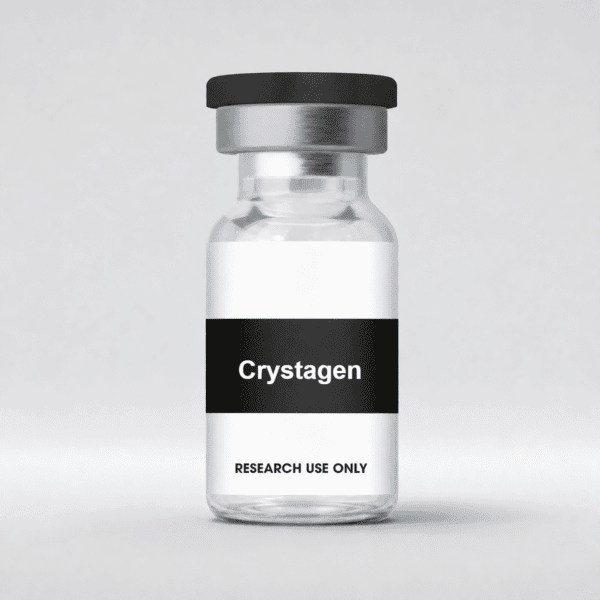
Buy Crystagen Peptide
$70.00
20mg*10vials
Crystagen Peptides: Powerful Research Guide, Structure, Mechanisms & Scientific Evidence
What Are Crystagen Peptides?
Crystagen peptide is commonly described as a short synthetic peptide associated with the Khavinson peptide-bioregulator research tradition. Current evidence-oriented sources generally identify the compound as the tripeptide Glu-Asp-Pro (EDP), with a reported molecular weight of approximately 359.3 Da. It has been investigated primarily in connection with immune-system and thymus-related research.
The compound is particularly interesting to researchers because it belongs to a broader group of short peptides proposed to participate in tissue-associated biological regulation. Crystagen has been discussed in experimental research involving immune-cell activity, aging-related biology, and cellular regulation.
It is important to distinguish research interest from established clinical evidence. Current evidence reviews characterize the evidence base as limited, with much of the available literature originating from the same research tradition and no established Western Phase 1-or-later clinical trial program identified for the compound.
Crystagen Peptide Origin and Relationship to Thymalin
Crystagen peptide is commonly linked to Thymalin, a peptide preparation derived from thymic tissue that has been studied within the Khavinson research program.
According to current descriptions, analytical work involving thymic peptide preparations identified several short sequences of scientific interest, including EDP. Crystagen is subsequently discussed as a defined synthetic molecule that allows researchers to study one particular peptide sequence rather than a complex mixture.
This distinction is important for scientific research. Thymalin and Crystagen should not be treated as interchangeable substances: one represents a broader peptide preparation, while the other is discussed as a specific short synthetic sequence.
Crystagen Molecular Structure and Characteristics
The most consistently reported sequence for Crystagen is:
Glu-Asp-Pro (EDP)
This represents three amino-acid residues: glutamic acid, aspartic acid, and proline. Evidence-oriented databases report a molecular weight of approximately 359.3 Da.
The short structure makes the molecule particularly interesting for peptide research because small peptides can be evaluated in highly defined experimental systems.
Researchers may characterize a research sample by examining:
- Amino-acid sequence
- Molecular mass
- Purity
- Identity
- Chromatographic profile
- Structural integrity
- Stability
- Degradation products
Because online sources disagree about some Crystagen specifications, researchers should rely on batch-specific analytical documentation when confirming the identity of a particular research material.
How Crystagen Peptide Is Studied in Research
Experimental investigation of short peptides can involve multiple research methods.
Scientists may use cell-based assays, molecular biology techniques, gene-expression analysis, tissue models, and analytical chemistry to examine how a compound behaves under controlled conditions.
For Crystagen, research interest has focused particularly on immune-related cellular systems and age-associated changes in immune biology. One indexed research report described Crystagen alongside other short peptides in experiments involving aging spleen-cell models and reported B-cell-related activity.
These observations provide a basis for further investigation, but they should not be interpreted as proof of clinical efficacy.
Crystagen Peptide and Immune-System Research
Immune-system biology is the principal research area associated with this compound.
Researchers studying immune aging are interested in how immune-cell populations and their activity change over time. Short peptide bioregulators have been proposed as experimental tools for examining these processes.
Evidence-oriented reviews describe Crystagen as having been investigated in relation to immune-cell activity, particularly B-cell-associated responses. However, the available evidence remains limited and does not establish the compound as an approved immune treatment.
Crystagen and Thymus Research
The thymus plays an important role in immune-system development, particularly in relation to T-cell maturation.
Crystagen’s association with thymic peptide research has led investigators to examine whether short sequences identified from thymus-associated preparations may have measurable effects in experimental immune models.
This research is part of a larger scientific question: whether very short peptide sequences can influence tissue-associated cellular processes.
The proposed biological model remains an area of investigation rather than a universally accepted mechanism.
Crystagen Peptide and Immune-Cell Research
Immune cells communicate through complex networks involving receptors, signaling molecules, transcription factors, and gene-expression pathways.
Experimental studies involving Crystagen have examined immune-cell responses under controlled conditions. Reported findings include effects involving B-cell activity in aging-related cellular models.
Researchers may use these models to investigate whether particular peptide sequences influence cellular differentiation, proliferation, or signaling.
Because the available evidence is limited, these observations should be described as experimental research findings, rather than established human benefits.
Crystagen and Gene-Expression Research
Gene expression is a major area of interest within the broader peptide-bioregulator field.
The proposed model is that certain short peptides may interact with cellular or nuclear components and influence the expression of particular genes. The Khavinson research tradition has proposed sequence-specific interactions between short peptides and DNA-associated regulatory regions.
However, a proposed mechanism should not be confused with a definitively established molecular target. Current evidence reviews specifically note that a Crystagen-specific molecular target has not been conclusively established.
Crystagen and Cellular Signaling
Cellular signaling describes how cells receive molecular information and convert it into measurable biological responses.
Research into short regulatory peptides may examine changes in:
- Cellular proliferation
- Differentiation
- Gene expression
- Protein production
- Immune-cell activity
- Intracellular signaling
- Tissue-associated responses
For Crystagen, the exact molecular pathway responsible for reported experimental observations remains an area requiring additional research.
Crystagen Peptide
Crystagen is also discussed within the broader field of aging and immune-system research.
Aging is associated with numerous biological changes, including alterations in immune-cell populations and cellular signaling. Researchers studying peptide bioregulators have proposed that short signaling molecules could provide experimental models for examining age-associated changes.
However, claims about slowing aging, extending lifespan, or reversing age-related changes require substantially stronger evidence than is currently available for Crystagen peptide.
Therefore, an evidence-focused website should describe these subjects as areas of research interest, not established outcomes.
Crystagen and Cellular Regulation
Cellular regulation involves the coordinated control of processes such as proliferation, differentiation, metabolism, gene expression, and protein synthesis.
Short peptides are being investigated as potential molecular signals that may interact with regulatory systems.
Crystagen provides researchers with a defined three-amino-acid sequence for studying these concepts in controlled laboratory models.
This makes it useful for investigating whether small peptide structures can produce measurable changes in cellular behavior.
Crystagen Peptide Structure-Activity Research
Structure-activity research investigates how molecular structure influences biological activity.
Because Crystagen consists of only three amino acids, researchers can investigate how individual residues contribute to molecular properties and experimental activity.
Comparing related short sequences may help researchers examine:
- Sequence specificity
- Molecular recognition
- Stability
- Cellular interaction
- Biological activity
- Structure-function relationships
This type of work is important for understanding whether observed activity depends on the complete sequence or on individual amino-acid characteristics.
Crystagen Stability and Analytical Characterization
Peptide stability is an important consideration for laboratory experiments.
Environmental factors such as temperature, pH, moisture, solvent conditions, oxidation, and enzymatic activity can affect peptide integrity.
Researchers may therefore use analytical techniques to evaluate whether the intended molecule remains intact throughout storage and experimentation.
Chromatographic methods can help assess purity, while mass spectrometry can help confirm molecular identity and mass.
For research-grade materials, batch-specific testing is more informative than relying solely on generic product descriptions.
Crystagen Research Applications
Crystagen can be relevant to several areas of experimental peptide research.
Immune Biology
Researchers can investigate cellular responses associated with immune-system models.
Thymus Research
The molecule can be studied in the context of thymus-associated peptide biology.
Aging Research
Experimental models can examine relationships between short peptides and age-associated cellular changes.
Gene-Regulation Research
Scientists can investigate possible relationships between peptide exposure and gene-expression patterns.
Cellular Biology
Laboratory models can evaluate proliferation, differentiation, signaling, and other measurable cellular responses.
Peptide Structure Research
The short EDP sequence provides a simple molecular framework for studying structure-function relationships.
Potential Research Benefits of Crystagen
When discussing benefits on a research website, it is more scientifically accurate to describe potential research applications rather than proven therapeutic benefits.
Potential areas of scientific interest include:
- Immune-cell research — Experimental models have investigated responses involving immune-cell activity.
- Thymus-related research — The compound is associated with research into thymic peptide biology.
- Gene-expression studies — The broader bioregulator field investigates relationships between short peptides and gene regulation.
- Cellular signaling research — Researchers can examine molecular responses following exposure.
- Aging biology — Crystagen has been discussed in research involving age-associated immune changes.
- Structure-function studies — Its short EDP sequence provides a defined model for peptide research.
- Peptide characterization — Identity, purity, molecular mass, and stability can be evaluated using laboratory techniques.
These are research areas, not established medical benefits.
Current Scientific Evidence
The current evidence for Crystagen is limited compared with well-established pharmaceutical compounds.
Evidence-oriented databases identify primarily Russian-language or Khavinson-group research and report no indexed Western Phase 1-or-later clinical trials for the compound.
One research report described Crystagen among short peptides investigated in aging spleen-cell models and reported B-cell-related activity. At the same time, the study reportedly did not show cellular-renewal activity for Crystagen in that model, illustrating why individual findings should not be generalized into broad therapeutic claims.
The current evidence therefore supports continued scientific investigation but does not establish clinical effectiveness.
Crystagen Research Limitations
Several limitations should be considered when evaluating the available evidence.
Limited independent replication: Much of the available literature is associated with the originating research group.
Preclinical evidence: Available research is predominantly laboratory or preclinical rather than large-scale human clinical research.
Uncertain mechanism: A definitive Crystagen-specific molecular target has not been established.
Inconsistent online specifications: Different websites currently provide conflicting information about the exact identity and molecular specifications of the compound. This makes analytical verification particularly important.
Regulatory uncertainty: Crystagen does not have the regulatory status of an FDA-approved pharmaceutical.
Crystagen Peptides and Quality Documentation
Researchers evaluating synthetic peptides should consider analytical documentation alongside scientific literature.
Important documentation can include:
- Batch or lot identification
- Peptide sequence
- Purity analysis
- Molecular-mass confirmation
- HPLC or equivalent chromatographic data
- Mass-spectrometry results
- Testing laboratory information
- Date of analysis
A Certificate of Analysis (COA) can provide batch-specific information and is useful when evaluating the analytical identity and quality of research material.
Is Crystagen FDA Approved?
Crystagen is not an FDA-approved pharmaceutical. Evidence reviews also report no major regulatory authorization for Crystagen as a standalone medicine.
It should therefore be distinguished from approved medications used for immune, inflammatory, neurological, or age-related conditions.
Is Crystagen Intended for Human Use?
Research-grade Crystagen should be presented as an experimental research compound rather than a medication or consumer health product.
Scientific literature concerning laboratory or preclinical activity should not be interpreted as instructions for human administration.
Researchers should follow applicable laboratory procedures, institutional policies, and relevant regulations when working with research compounds.
Crystagen Peptide FAQs
What is Crystagen peptide?
Crystagen is commonly described as a short synthetic tripeptide associated with the Khavinson peptide-bioregulator research tradition. Current evidence-oriented sources generally identify it as Glu-Asp-Pro (EDP).
What is Crystagen researched for?
Research interest has focused primarily on immune-system biology, thymus-related research, immune-cell activity, aging-related mechanisms, and cellular regulation.
What is the amino-acid sequence of Crystagen?
The most consistently reported sequence in the evidence-oriented sources reviewed is Glu-Asp-Pro (EDP).
What is Crystagen related to?
It is commonly associated with Thymalin and thymus-related peptide-bioregulator research.
Does Crystagen have a confirmed mechanism of action?
No definitive Crystagen-specific molecular target has been established. Proposed mechanisms involving gene regulation remain an area of scientific investigation.
Has Crystagen been studied in immune cells?
Yes. Experimental research has investigated the compound in immune-related cellular models, including research reporting B-cell-associated activity.
Is Crystagen an anti-aging treatment?
It is more accurate to describe aging as an area of research interest. Current evidence is not sufficient to establish Crystagen as a proven anti-aging treatment.
Is Crystagen FDA approved?
No. Crystagen is not an FDA-approved pharmaceutical.
Is Crystagen a medication?
No. It should be presented as an experimental research compound rather than an established medication.
How is Crystagen characterized in the laboratory?
Researchers can use techniques such as chromatography and mass spectrometry to evaluate peptide identity, purity, molecular mass, and related analytical characteristics.
Why is a Certificate of Analysis important?
A batch-specific COA can provide analytical information that helps researchers verify the identity and reported quality characteristics of a particular research sample.
What are the limitations of current Crystagen research?
The primary limitations include limited independent replication, predominantly preclinical evidence, uncertainty surrounding the precise molecular mechanism, and the absence of an established human clinical evidence base.
Is Crystagen available in bulk quantities?
Yes. We provide scalable manufacturing with volume-based pricing.
Do you provide Certificates of Analysis?
Yes. Each batch includes verifiable COA documentation.
Do you ship within the USA?
Yes. Orders are fulfilled through our U.S. distribution channel.
What purity level is provided?
≥98% purity verified via HPLC (custom specifications available upon request).
Crystagen Peptide for Sale – High Purity Research Compound USA
To guaranty purity, consistency, and trustworthy study results, it is crucial to purchase Crystagen peptide for sale from a reputable producer. We provide premium research substances for tissue signaling pathway analysis, bioregulator research, and cellular regeneration studies.
We work according to strict laboratory guidelines.
Analytical testing is how we confirm purity.
For each production batch, we offer complete documentation.
Crystagen is a synthetic peptide bioregulator that has been researched for its function in tissue homeostasis, gene expression regulation, and cellular communication. It is pertinent for advanced molecular and biological studies since it is frequently used in studies pertaining to regenerative biology, epithelial tissue function, and age-related cellular signaling pathways.
Key Benefits
- Cellular Regeneration Research Support – Supports studies involving tissue renewal and repair mechanisms
- Gene Expression Analysis – Applicable in regulatory pathway and protein synthesis research
- Tissue Homeostasis Studies – Useful for investigating cellular balance and structural integrity
- Bioregulation Research – Ideal for examining peptide-mediated signaling in biological systems
- Advanced Peptide Profile – Designed for consistency and reproducibility in laboratory environments
What You Receive
- ≥98% purity (HPLC verified)
- Analytical validation (HPLC + Mass Spectrometry)
- Certificate of Analysis (COA) available per batch
- Laboratory-secured packaging
- Available in small batch or bulk wholesale quantities
Direct manufacturer sourcing ensures product integrity, traceability, and consistent long-term supply.
Bulk Crystagen Peptide Supply
We support:
- Biotechnology research laboratories
- Pharmaceutical R&D organizations
- Academic research institutions
- Contract research organizations (CROs)
- Regenerative medicine and cellular biology research centers
- International distributors
Why Professional Buyers Choose Us
- Transparent manufacturing processes
- Verified analytical testing
- Consistent batch-to-batch quality
- Competitive wholesale pricing
- Reliable U.S. and international fulfillment
We combine advanced biotechnological synthesis capabilities with a global distribution network, ensuring dependable research-grade supply for scientific and pharmaceutical research applications.
Final Thoughts on Crystagen Peptide Research
Crystagen is a short peptide of scientific interest within the Khavinson peptide-bioregulator research tradition, with current evidence-oriented sources generally identifying the compound as Glu-Asp-Pro (EDP). Its research profile is primarily associated with immune-system biology, thymus-related research, immune-cell activity, cellular regulation, and aging-related mechanisms.
The small size of the molecule makes it an interesting subject for structure-function and molecular biology research. Researchers can investigate how short peptide sequences behave in controlled cellular systems and whether measurable changes occur in immune-related biological processes.
However, the evidence base remains limited. Much of the research is associated with a relatively small scientific tradition, and independent clinical evidence is lacking. For that reason, Crystagen should be presented as an experimental research peptide rather than a proven therapeutic compound.
For Premium Bio Peptides, emphasizing accurate scientific information, analytical documentation, research-use limitations, and transparent discussion of the evidence can make the page more credible and useful to researchers while avoiding unsupported medical claims.
Research-Use Statement: The information provided about Crystagen is intended for scientific and educational research purposes only. Experimental findings should not be interpreted as medical advice, treatment recommendations, or evidence that the compound is safe or effective for human or veterinary use.
| Dosage | 20mg*10vials |
|---|
Related products
-

Glutathione
Price range: $44.00 through $87.00Select options This product has multiple variants. The options may be chosen on the product page -
IGF-1 LR3
Price range: $53.00 through $142.00Select options This product has multiple variants. The options may be chosen on the product page -
Thymalin / Thymulin
$68.00 -
HCG
Price range: $56.00 through $103.00Select options This product has multiple variants. The options may be chosen on the product page
Reviews
There are no reviews yet.