Get up to 10% OFF! with coupon PBP10
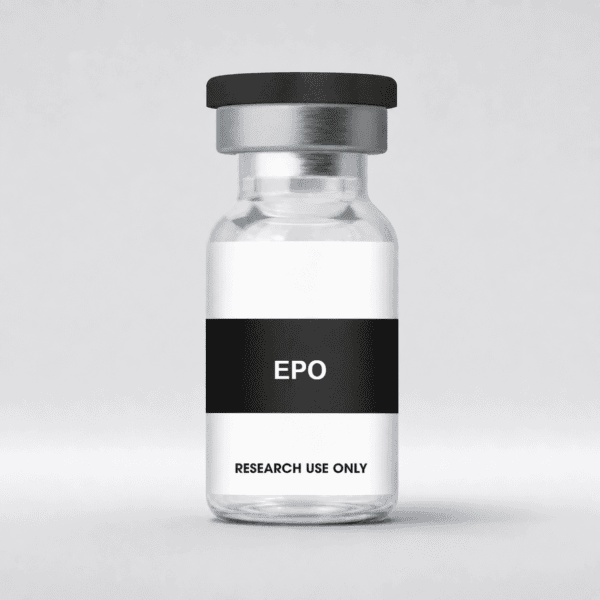
Buy EPO Peptide
$66.00
3000iu*10vials
Powerful EPO Peptide: Complete Research, Mechanism & Science Guide | Premium Bio Peptides
What Is EPO Peptide and What Does Erythropoietin Do?
Erythropoietin (EPO) is a naturally occurring glycoprotein hormone that plays a central role in regulating erythropoiesis, the biological process responsible for producing red blood cells.
The kidneys’ specialized cells are primarily responsible for producing EPO in adulthood. Oxygen-sensing systems produce more EPO when there is less oxygen available. After entering the bloodstream, EPO mainly interacts with the erythropoietin receptor (EPOR) on growing bone marrow erythroid cells.
Differentiating EPO from shorter EPO-derived or EPO-mimetic peptides is crucial for study. Instead of being a typical short peptide, EPO is a glycosylated protein. Therefore, any item referred to be a “EPO peptide” should have its precise identity, sequence or structure, molecular weight, purity, and formulation verified by experts.
EPO peptide Molecular Structure and Important Biochemical Characteristics
Human EPO is a 165-amino-acid glycoprotein with a molecular mass of approximately 30 kDa. Its structure includes four carbohydrate chains, consisting of three N-linked and one O-linked glycan. These carbohydrate modifications contribute to the molecule’s stability and biological characteristics.
The structural complexity of EPO makes analytical characterization particularly important.
Researchers evaluating EPO-related research materials should consider:
- Protein or peptide identity
- Amino-acid sequence
- Molecular weight
- Glycosylation profile
- Purity
- Batch or lot number
- Analytical testing
- Formulation
- Storage conditions
These characteristics can influence receptor interactions, stability, and reproducibility between experimental preparations.
How Does EPO peptide Work at the Cellular Level?
EPO primarily produces its biological effects through the erythropoietin receptor (EPOR).
When EPO interacts with EPOR, it promotes receptor-associated signaling involving Janus kinase 2 (JAK2). Activated JAK2 subsequently phosphorylates signaling proteins, including STAT5, initiating downstream molecular responses.
Major pathways associated with EPO/EPOR signaling include:
- JAK2/STAT5
- PI3K/AKT
- RAS/MAPK
- Other regulatory signaling pathways
These pathways contribute to the survival, proliferation, and differentiation of erythroid precursor cells.
EPO and the Erythropoietin Receptor (EPOR)
The erythropoietin receptor, or EPOR, is a member of the class I cytokine receptor family.
EPOR does not possess intrinsic kinase activity. Instead, it associates with JAK2, which provides the kinase activity required for downstream signaling. EPO binding changes the receptor complex in a way that promotes JAK2 activation and subsequent phosphorylation events.
This makes the EPO/EPOR system an important experimental model for studying cytokine receptor signaling and cellular communication.
EPO and JAK2/STAT5 Signaling Pathway
The JAK2/STAT5 pathway is one of the most extensively studied mechanisms associated with EPO signaling.
Following EPOR activation, JAK2 phosphorylates STAT5. Phosphorylated STAT5 forms dimers and moves into the nucleus, where it regulates the expression of genes involved in erythroid-cell survival and development.
Research has identified several STAT5-regulated genes involved in processes such as:
- Cell survival
- Erythroid differentiation
- Proliferation
- Metabolism
- Iron availability
- Regulation of apoptosis
This pathway is therefore central to understanding how an extracellular EPO signal produces changes in erythroid cells.
EPO, PI3K/AKT and MAPK Signaling
EPO signaling is not limited to JAK2/STAT5.
Research has demonstrated activation of additional pathways, including PI3K/AKT and RAS/MAPK/ERK signaling. These pathways can contribute to erythroid-cell survival, proliferation, differentiation, and cellular adaptation.
Studying these interconnected pathways helps researchers understand why EPO signaling produces a coordinated cellular response rather than acting through a single molecular mechanism.
EPO and Red Blood Cell Production Research
The most established biological role of EPO is regulation of red blood cell production.
Developing erythroid cells depend on EPO/EPOR signaling for important survival and maturation processes. When EPO signaling increases under appropriate physiological conditions, erythroid progenitor survival and development can be enhanced.
This makes EPO an important research target in:
- Hematology
- Erythroid biology
- Bone-marrow research
- Cytokine signaling
- Red blood cell development
- Cellular differentiation
EPO and Hypoxia Signaling Research
EPO is closely linked to the body’s response to low oxygen availability.
When oxygen levels fall, oxygen-sensitive pathways involving hypoxia-inducible factors (HIFs) contribute to increased EPO gene expression. In adults, the kidney is the major source of circulating EPO.
This makes the EPO system valuable for researchers investigating the relationship between:
Oxygen sensing → HIF signaling → EPO expression → EPOR activation → erythropoiesis
This pathway provides an important example of how cells adapt to changes in oxygen availability.
EPO and Erythroid Cell Survival
EPO signaling does more than regulate the number of developing red blood cells.
Activation of EPOR-associated pathways promotes survival signals in erythroid precursor cells. STAT5-dependent regulation of genes such as BCL2L1 has been investigated as part of the molecular mechanism supporting erythroid-cell survival.
Understanding these mechanisms helps researchers investigate how cytokine signaling controls cell fate and survival.
EPO and Iron Availability During Erythropoiesis
Red blood cell production requires sufficient iron for hemoglobin synthesis.
Research has shown that EPO-driven erythropoiesis can influence iron availability through signaling molecules produced by erythroid cells, including erythroferrone (ERFE). ERFE acts on the liver to suppress hepcidin production, thereby influencing iron availability for erythropoiesis.
This demonstrates that EPO biology extends beyond the direct stimulation of erythroid precursor cells and interacts with broader mechanisms controlling iron metabolism.
EPO and Cellular Signaling Research
Because EPOR activates several intracellular pathways, EPO is a useful research model for studying signal transduction.
Researchers may investigate:
- EPOR activation
- JAK2 phosphorylation
- STAT5 activation
- PI3K/AKT signaling
- MAPK/ERK signaling
- Gene transcription
- Cellular survival
- Erythroid differentiation
- Negative feedback mechanisms
The interaction between these pathways is an important area of modern EPO research.
EPO and Negative Feedback Regulation
EPO signaling is tightly regulated to prevent uncontrolled pathway activation.
Several regulatory proteins participate in terminating or reducing EPOR signaling, including SOCS proteins, PTPN6/SHP-1, and SH2B3/LNK. These mechanisms help control the duration and intensity of intracellular signaling.
Studying these regulatory systems provides insight into how cells maintain balanced cytokine signaling.
EPO Research Beyond Erythropoiesis
Although EPO is best known for its role in red blood cell production, researchers have also investigated EPO and EPOR signaling in various non-hematopoietic tissues.
Experimental literature has examined EPO-related signaling in areas including neuroscience, cardiovascular biology, cellular stress, and tissue signaling. However, evidence in these areas varies by model and mechanism, so research findings should not automatically be interpreted as established clinical effects.
This distinction is important when creating scientifically responsible SEO content.
EPO Research Applications in Molecular Biology
EPO can serve as a valuable experimental system for investigating several areas of biology.
Erythropoiesis Research
Researchers can examine the molecular mechanisms responsible for erythroid-cell survival, proliferation, and differentiation.
Cytokine Receptor Research
The EPO/EPOR system provides a well-characterized model for investigating receptor-mediated signal transduction.
JAK2/STAT5 Research
EPO is widely studied as a model for understanding JAK2 activation and STAT5-dependent gene regulation.
Hypoxia Research
Because EPO expression is regulated by oxygen availability, it is relevant to studies of HIF signaling and cellular oxygen sensing.
Cellular Survival Research
Researchers can investigate how extracellular signaling influences intracellular pathways responsible for cell survival.
Hematology Research
The EPO pathway remains fundamental to experimental studies involving red blood cell development and erythroid biology.
Key Benefits of EPO Research
Supports Detailed Erythropoiesis Studies
EPO is a fundamental regulator of erythroid development and provides researchers with an established model for studying red blood cell production.
Provides a Strong Model for Cytokine Signaling
The EPO/EPOR system demonstrates how receptor activation can initiate multiple intracellular pathways.
Enables JAK2/STAT5 Investigations
EPO provides a well-characterized system for examining JAK2 and STAT5 signaling.
Helps Researchers Study Hypoxia Responses
The connection between oxygen availability and EPO expression makes it useful for investigating cellular responses to hypoxia.
Supports Molecular Mechanism Research
EPO can be studied at the receptor, signaling, transcriptional, and cellular levels.
EPO vs. EPO-Mimetic Peptides: Understanding the Difference
An important distinction for researchers is the difference between recombinant EPO, EPO-derived peptides, and EPO-mimetic compounds.
EPO itself is a complex glycosylated protein. EPO-mimetic peptides are designed to interact with the EPO receptor or reproduce selected aspects of EPO signaling without necessarily having the same molecular structure as full-length EPO.
Therefore, researchers should compare these materials based on:
- Molecular structure
- Receptor interaction
- Mechanism of action
- Stability
- Glycosylation
- Purity
- Experimental evidence
- Intended research application
This distinction is especially important when evaluating products marketed under broad terms such as “EPO peptide.”
EPO Purity and Quality Testing for Research
Quality documentation is an important consideration when evaluating EPO-related research materials.
Researchers should review available documentation for:
- Exact product identity
- Protein or peptide sequence
- Molecular weight
- Purity
- Glycosylation information where applicable
- Batch or lot number
- Analytical methodology
- Testing results
- Storage requirements
Because EPO is a glycoprotein, characterization can require more detailed analytical evaluation than a simple purity measurement.
EPO Certificate of Analysis (COA)
A Certificate of Analysis (COA) provides batch-specific analytical information about a research material.
Depending on the product, documentation may include:
- Product identification
- Batch number
- Purity
- Analytical test results
- Testing methodology
- Molecular characterization
- Test date
- Product specifications
Researchers should confirm that the COA corresponds to the exact product and batch being evaluated.
EPO Storage and Handling Considerations
EPO is a protein-based research material, and environmental conditions can influence protein stability.
Researchers should follow the manufacturer’s or supplier’s product-specific storage and handling documentation.
Important considerations can include:
- Temperature
- Freeze-thaw exposure
- Light
- Moisture
- Formulation
- Container compatibility
- Storage duration
- Laboratory handling procedures
Avoid applying generic peptide-storage instructions to EPO without confirming that they are appropriate for the specific formulation.
Why Is EPO Important in Scientific Research?
EPO provides researchers with an unusually well-characterized connection between oxygen sensing, hormone regulation, receptor activation, intracellular signaling, gene expression, and red blood cell development.
Its canonical EPOR/JAK2/STAT5 pathway, together with PI3K/AKT and MAPK signaling, provides a valuable model for understanding how extracellular signals regulate cell survival and differentiation.
This broad biological relevance makes EPO an important subject across hematology, molecular biology, cellular signaling, and hypoxia research.
EPO peptide (Erythropoietin) for Sale – High Purity Research Compound USA
Purchasing EPO peptide (erythropoietin) from a reputable producer is crucial if you want to guaranty purity, consistency, and trustworthy study results. We provide top-notch research substances for erythropoietin receptor pathway study, cellular signaling research, and hematological studies.
We follow strict laboratory guidelines.
We use analytical testing to confirm purity.
For each production batch, we offer comprehensive documentation.
EPO (Erythropoietin) is a glycoprotein hormone primarily responsible for regulating red blood cell production through activation of erythropoietin receptors. It is widely utilized in research involving hematopoiesis, cellular survival signaling, tissue protection mechanisms, and hypoxia-responsive biological pathways. Its well-characterized biological activity makes it a valuable tool for advanced biomedical and pharmaceutical research.
What You Receive
- ≥98% purity (analytically verified)
- Comprehensive quality control testing
- Certificate of Analysis (COA) available per batch
- Laboratory-secured packaging
- Available in small batch or bulk wholesale quantities
Direct manufacturer sourcing ensures product integrity, traceability, and consistent long-term supply.
Bulk EPO Peptide Supply
We support:
- Biotechnology research laboratories
- Pharmaceutical R&D organizations
- Academic research institutions
- Contract research organizations (CROs)
- Hematology and regenerative medicine research centers
- International distributors
Frequently Asked Questions About EPO Peptide
What Is EPO?
EPO stands for erythropoietin, a glycoprotein hormone that regulates red blood cell production.
What Does EPO peptide Do?
EPO binds to EPOR and activates signaling pathways that support the survival, proliferation, and differentiation of erythroid precursor cells.
What Receptor Does EPO Bind To?
The primary receptor responsible for erythropoietic signaling is the erythropoietin receptor (EPOR).
What Is the JAK2/STAT5 Pathway?
It is a major signaling pathway activated following EPO/EPOR interaction. JAK2 phosphorylates STAT5, which can then regulate gene expression involved in erythroid-cell biology.
Is EPO a Peptide?
EPO is more accurately classified as a glycosylated protein hormone consisting of 165 amino acids rather than a conventional short peptide.
What Is the Difference Between EPO and an EPO-Mimetic Peptide?
EPO is a full glycosylated protein, whereas an EPO-mimetic peptide is a different molecular entity designed to reproduce or influence aspects of EPO receptor signaling.
Is EPO available in bulk quantities?
Yes. We provide scalable manufacturing with volume-based pricing.
Do you provide Certificates of Analysis?
Yes. Each batch includes verifiable COA documentation.
Do you ship within the USA?
Yes. Orders are fulfilled through our U.S. distribution channel.
What purity level is provided?
≥98% purity verified through established analytical testing methods.
What Should Researchers Check on an EPO COA?
Researchers should examine the product identity, molecular characteristics, purity, batch number, analytical methods, testing results, and applicable product specifications.
Why Choose Premium Bio Peptides?
Premium Bio Peptides is committed to providing clear, research-focused information about peptides, proteins, and related research compounds.
Our website emphasizes:
- Detailed scientific information
- Product specifications
- Quality documentation
- Certificates of Analysis
- Research applications
- Educational resources
- Transparent research-use information
Our objective is to encourage trained researchers to examine primary literature and product-specific documentation while simplifying information relevant to research.
We guaranty a consistent supply of research-grade materials for scientific and pharmaceutical research applications by combining cutting-edge biotechnological production capabilities with a worldwide distribution network.
Important Research-Use Statement
This information is provided for scientific and educational purposes only. It is not medical advice and should not be interpreted as instructions for personal use, treatment, performance enhancement, or diagnosis.
Researchers are responsible for following applicable laws, regulations, laboratory procedures, safety requirements, and product-specific documentation.
Research materials are not intended for human or veterinary use, diagnosis, treatment, or prevention of disease.
| Dosage | 3000iu*10vials |
|---|
Related products
-

Ipamorelin
Price range: $47.00 through $62.00Select options This product has multiple variants. The options may be chosen on the product page -
CJC 1295 With DAC Peptide
Price range: $75.00 through $125.00Select options This product has multiple variants. The options may be chosen on the product page -
FOXO4
Price range: $87.00 through $330.00Select options This product has multiple variants. The options may be chosen on the product page -
KPV
Price range: $53.00 through $59.00Select options This product has multiple variants. The options may be chosen on the product page
Reviews
There are no reviews yet.