Get up to 10% OFF! with coupon PBP10
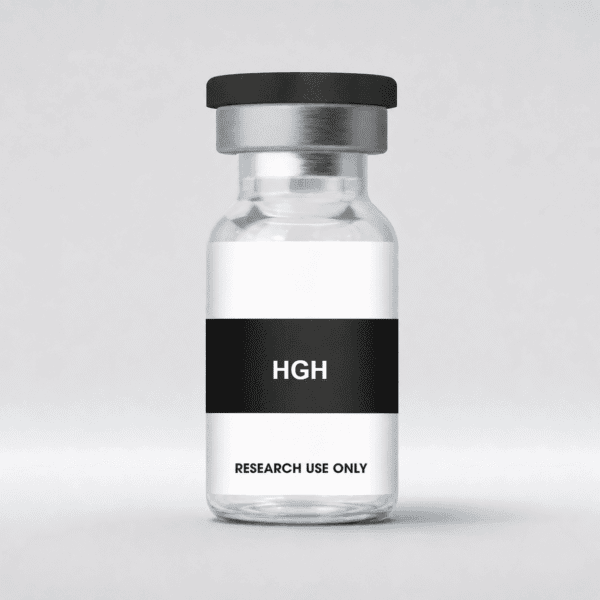
Buy HGH Peptide
Price range: $55.00 through $99.00
HGH Peptide – Complete Research Guide, Mechanism, Scientific Studies & Safety
What Is HGH Peptide?
HGH peptide, commonly referring to Human Growth Hormone (HGH) or somatropin, is a naturally occurring peptide hormone involved in growth, metabolism, tissue maintenance, and numerous biological processes. Human growth hormone is produced primarily by the anterior pituitary gland and plays an important role in regulating growth and development throughout life.
In scientific research, HGH is studied because of its broad influence on multiple physiological systems. Researchers investigate its relationship with growth-factor signaling, protein metabolism, lipid metabolism, carbohydrate metabolism, tissue development, and endocrine regulation.
It is important to understand that human growth hormone is a complex protein hormone rather than a short research peptide like many other compounds in peptide research. Nevertheless, the term HGH peptide is commonly used online to describe human growth hormone and HGH-related research products.
At Premium Bio Peptides, our goal is to provide clear, professional, and research-focused information for customers interested in learning about HGH and its role in scientific investigation. Products offered for research should always be handled according to applicable regulations and their intended research-use status.
What Does HGH Stand For?
HGH stands for Human Growth Hormone.
Human growth hormone is also known as somatotropin. It is an endogenous hormone naturally produced by the body and is released in pulses throughout the day.
HGH secretion is influenced by several biological factors, including:
- Age
- Sleep
- Physical activity
- Nutrition
- Stress
- Hormonal signaling
- Growth hormone-releasing hormone
- Somatostatin
Researchers study these regulatory systems to better understand how growth hormone production and signaling are controlled.
HGH Peptide Structure and Biological Role
Human growth hormone is a protein composed of 191 amino acids. It has a complex three-dimensional structure that is important for its interaction with biological receptors.
Once released, HGH can interact with growth hormone receptors and activate signaling pathways involved in cellular communication and metabolic regulation. One important downstream component of HGH biology is the relationship between growth hormone and insulin-like growth factor 1 (IGF-1).
IGF-1 is produced in response to growth hormone signaling and is itself an important subject of research involving growth, tissue biology, and metabolism.
Researchers studying HGH may investigate:
- Growth hormone receptor signaling
- HGH and IGF-1 pathways
- Protein metabolism
- Lipid metabolism
- Carbohydrate metabolism
- Tissue and cellular processes
- Endocrine feedback mechanisms
How Does HGH Work?
HGH works through complex biological signaling systems. After interacting with the growth hormone receptor, HGH can trigger intracellular signaling processes that influence gene expression and cellular activity.
Its effects can be divided broadly into direct actions and indirect actions.
Direct biological actions occur through growth hormone receptor signaling. Indirect actions can involve mediators such as IGF-1.
The exact biological outcome depends on many factors, including tissue type, developmental stage, nutritional status, and interactions with other hormones.
HGH and Growth Hormone Receptor Research
The growth hormone receptor is a major area of HGH research. Scientists study how HGH binding may initiate signaling pathways that influence cellular growth and metabolism.
Understanding receptor interactions is important for investigating endocrine signaling and the regulation of growth-related biological processes.
HGH and IGF-1 Research
One of the most important pathways associated with HGH research involves IGF-1. Growth hormone can stimulate IGF-1 production, particularly in the liver, while local IGF-1 signaling can also occur in various tissues.
Researchers study the HGH–IGF-1 axis because it is involved in:
- Growth-related biological processes
- Cellular signaling
- Protein metabolism
- Tissue development
- Endocrine regulation
The HGH–IGF-1 relationship is complex and remains an important area of endocrinology research.
Potential Areas of HGH Peptide Research
The following sections describe scientific areas of investigation. They should not be interpreted as claims that research-grade HGH is approved for self-treatment or general human use.
HGH and Growth Research
Human growth hormone is extensively studied because of its natural role in growth and development. Researchers investigate how HGH signaling interacts with other hormones and growth factors throughout different stages of life.
Research may focus on the biological mechanisms controlling cell growth, skeletal development, and tissue maturation.
HGH and Protein Metabolism Research
Protein metabolism is another important area of HGH research. Scientists investigate how growth hormone signaling may influence protein synthesis and the broader regulation of amino acid metabolism.
These studies contribute to a better understanding of how endocrine signals interact with tissue maintenance and metabolic activity.
HGH and Lipid Metabolism Research
HGH is also studied in connection with lipid metabolism, including how the body regulates the storage and use of fats.
Researchers investigate the complex interactions between growth hormone signaling, energy balance, adipose tissue, and metabolic pathways.
HGH and Carbohydrate Metabolism Research
Growth hormone signaling can also interact with pathways involved in glucose and carbohydrate metabolism.
Because metabolic regulation involves numerous hormones and signaling molecules, researchers study HGH alongside insulin, IGF-1, cortisol, and other components of the endocrine system.
HGH and Tissue Research
Scientists investigate HGH and related growth-factor pathways in research involving tissue biology and cellular maintenance.
Potential research areas include:
- Cellular growth signaling
- Connective tissue biology
- Muscle-related biological processes
- Bone and skeletal research
- Recovery and tissue adaptation pathways
These areas remain dependent on the specific experimental model and should not be presented as guaranteed outcomes.
HGH and Sleep Research
Natural growth hormone secretion is closely connected with sleep physiology. HGH is released in pulses, with significant secretion often associated with deep sleep.
Researchers study the relationship between:
- Sleep architecture
- Circadian rhythms
- Deep sleep
- Pituitary hormone release
- Growth hormone secretion patterns
This research helps scientists understand the connection between sleep and endocrine regulation.
HGH and Aging Research
Growth hormone and IGF-1 signaling are also studied in aging biology. Researchers investigate how changes in endocrine signaling over time may influence cellular processes, metabolism, and tissue maintenance.
Aging research is complex, and findings regarding growth hormone pathways should be interpreted carefully. HGH should not be marketed as a proven anti-aging treatment based solely on experimental research.
HGH Peptide Research and Scientific Studies
HGH has been extensively studied in endocrinology and biological science. Researchers have investigated its role in normal physiology, growth regulation, metabolism, and hormone signaling.
Important areas of HGH research include:
- Pituitary function
- Growth hormone secretion
- Hormone receptor activity
- IGF-1 signaling
- Metabolic regulation
- Endocrine feedback loops
- Sleep and circadian biology
- Age-related changes in hormone signaling
When reviewing HGH research, it is important to consider the type of evidence being discussed. Results from laboratory experiments, animal studies, observational research, and controlled clinical studies do not carry the same meaning or level of evidence.
A professional evaluation should distinguish between established scientific knowledge and experimental areas that require additional research.
HGH Peptide vs Other Growth-Related Research Compounds
HGH is often discussed alongside other peptides and compounds involved in growth hormone or endocrine research. However, these compounds can differ substantially in structure and mechanism.
HGH vs IGF-1
HGH and IGF-1 are different biological molecules.
HGH acts as a hormone and can stimulate pathways that influence IGF-1 production. IGF-1 is an important growth factor involved in downstream signaling.
Although closely connected in endocrine research, HGH and IGF-1 should not be considered the same compound.
HGH vs MK-677
HGH and MK-677 (Ibutamoren) are also different.
HGH is human growth hormone itself, while MK-677 is studied for its interaction with ghrelin-related signaling and its potential influence on endogenous growth hormone secretion.
Their structures, mechanisms, and research applications differ.
HGH vs Growth Hormone-Releasing Hormone Peptides
Growth hormone-releasing hormone peptides and HGH act at different points within the endocrine system.
Growth hormone-releasing peptides are investigated for their ability to influence signaling that may stimulate the body’s own growth hormone release, whereas HGH represents the growth hormone itself.
HGH Peptide Side Effects and Safety Considerations
The safety profile of HGH depends on the specific product, context, dose, duration, and whether the product is used under appropriate medical supervision.
Research materials should not be confused with regulated prescription medicines. The use of unapproved or improperly sourced products can involve significant uncertainty.
Potential concerns associated with inappropriate HGH exposure or misuse may include effects involving:
- Fluid balance
- Joint and muscle discomfort
- Metabolic regulation
- Glucose regulation
- Cardiovascular health
- Hormonal balance
This is not a complete list of risks. Anyone with medical questions regarding human growth hormone should consult a qualified healthcare professional.
Research-grade products from Premium Bio Peptides are not intended for self-treatment, human use, or veterinary use.
Is HGH FDA Approved?
Certain prescription forms of somatropin have been approved by the FDA for specific medical conditions under professional medical supervision.
However, this does not mean that every product marketed as HGH or an HGH-related compound is FDA approved.
Research-grade HGH products should not be represented as FDA-approved medications unless they are specifically authorized and regulated as such.
The regulatory status of a product depends on its formulation, manufacturer, intended use, and applicable laws.
HGH Peptide Storage and Handling for Research
Proper storage and handling are essential when working with protein and peptide research materials.
HGH can be sensitive to environmental conditions, and storage requirements may vary according to the specific formulation and product documentation.
Researchers should follow the product-specific instructions regarding:
- Recommended storage temperature
- Light exposure
- Moisture protection
- Handling procedures
- Reconstitution requirements, where applicable
- Stability after preparation
Always follow the instructions provided with the specific product rather than assuming that all HGH products require identical storage conditions.
What to Look for When Buying HGH Peptide for Research
When evaluating HGH peptide for legitimate scientific research, researchers should prioritize transparency, product identity, analytical documentation, and accurate labeling.
Important considerations may include:
- Clear product identification
- Product specifications
- Available analytical testing
- Batch or lot information
- Certificate of Analysis availability
- Storage documentation
- Research-use labeling
A professional research supplier should avoid unsupported medical claims and provide accurate information about the intended status of its products.
HGH Peptide Purity and Quality Considerations
Quality is particularly important when evaluating complex peptide and protein materials for laboratory research.
Researchers may review available information related to:
- Product identity
- Purity testing
- Analytical methods
- Batch-specific documentation
- Lot tracking
- Storage recommendations
Depending on the product and testing methods used, documentation may include analytical information designed to help researchers evaluate the material.
At Premium Bio Peptides, transparent product information and responsible research-use communication are important parts of building customer confidence.
Why a Certificate of Analysis Matters for HGH Peptide
A Certificate of Analysis (COA) can provide valuable information about analytical testing associated with a product or specific batch.
Depending on the testing performed, a COA may include information related to:
- Product identity
- Purity
- Batch or lot number
- Analytical methods
- Product specifications
Researchers should review available documentation carefully and, where possible, verify that it corresponds to the specific batch being evaluated.
Why Choose Premium Bio Peptides?
Premium Bio Peptides is focused on providing a professional, research-oriented experience for customers seeking advanced peptide and protein research materials.
When evaluating products for scientific investigation, customers should consider the importance of:
- Clear product information
- Transparent research-use positioning
- Available quality documentation
- Professional customer experience
- Accurate scientific content
- Responsible product claims
Our goal is to provide a reliable platform where researchers can explore peptide research products while accessing informative, professional content.
Premium Bio Peptides products are intended for legitimate research purposes only and are not intended for human or veterinary use.
HGH (Human Growth Hormone) for Sale – High Purity Research Compound USA
If you are searching for HGH for sale, sourcing from a verified manufacturer is essential to ensure purity, consistency, and reliable research outcomes. We are a licensed manufacturer supplying high-quality research compounds for growth factor studies, endocrine research, and metabolic pathway analysis.
We operate under controlled laboratory standards.
We verify purity through analytical testing.
We provide full documentation for every production batch.
HGH (Human Growth Hormone), also known as somatropin, is a peptide hormone produced by the pituitary gland, widely utilized in research involving growth regulation, cellular development, and metabolic signaling. It plays a key role in studies focused on IGF-1 pathways, protein synthesis, and endocrine system function.
Key Benefits
- Growth Hormone Research Support – Supports studies involving GH and IGF-1 signaling pathways
- Endocrine System Analysis – Applicable in hormonal regulation and feedback mechanism research
- Metabolic Function Studies – Useful for investigating protein synthesis and nutrient utilization
- Cellular Growth Research – Ideal for studying cell proliferation and development pathways
- Stable Hormone Profile – Designed for consistency and reproducibility in laboratory environments
What You Receive
- ≥98% purity (HPLC verified or equivalent analytical standard)
- Analytical validation (HPLC + Mass Spectrometry where applicable)
- Certificate of Analysis (COA) available per batch
- Lyophilized HGH (Somatropin) formulation
- Laboratory-secured packaging
- Available in small batch or bulk wholesale quantities
Direct manufacturer sourcing ensures product integrity, traceability, and consistent long-term supply.
Bulk HGH Supply
We support:
- Biotechnology research laboratories
- Pharmaceutical R&D organizations
- Academic research institutions
- Contract research organizations (CROs)
- Endocrinology and metabolic research centers
- International distributors
Why Professional Buyers Choose Us
- Transparent manufacturing processes
- Verified analytical testing
- Consistent batch-to-batch quality
- Competitive wholesale pricing
- Reliable U.S. and international fulfillment
We combine advanced biotechnological production capabilities with a global distribution network, ensuring dependable research-grade supply at scale.
Frequently Asked Questions About HGH Peptide
What Is HGH Peptide?
HGH peptide generally refers to Human Growth Hormone, also known as somatropin, a naturally occurring protein hormone involved in growth, metabolism, and endocrine signaling.
How Does HGH Work?
HGH interacts with growth hormone receptors and can influence multiple biological signaling pathways. One major area of research involves the relationship between HGH and IGF-1.
Is HGH a Peptide?
HGH is more accurately described as a protein hormone composed of 191 amino acids. However, it is often grouped with peptide research products because of its amino acid-based structure and biological signaling activity.
What Is HGH Studied For?
HGH is studied in areas involving growth, endocrine signaling, metabolism, IGF-1 pathways, tissue biology, sleep-related hormone secretion, and aging research.
Does HGH Affect IGF-1?
HGH is closely associated with IGF-1 signaling and can stimulate IGF-1 production. The HGH–IGF-1 axis is a major area of endocrinology research.
Is Research-Grade HGH FDA Approved?
Research-grade HGH products are not automatically FDA-approved medicines. FDA approval applies to specific regulated pharmaceutical products and approved indications.
Is HGH Safe?
Safety depends on the product, medical context, exposure, and other factors. Research-grade HGH should not be used for self-treatment or as a substitute for professional medical care.
How Should HGH Be Stored?
Storage requirements depend on the specific product and formulation. Always follow the storage and handling instructions supplied with the individual research product.
Is HGH available in bulk quantities?
Yes. We provide scalable manufacturing with volume-based pricing.
Do you provide Certificates of Analysis?
Yes. Each batch includes verifiable COA documentation.
Do you ship within the USA?
Yes. Orders are fulfilled through our U.S. distribution channel.
What form is HGH supplied in?
Lyophilized (freeze-dried) somatropin for research applications.
Final Thoughts on HGH Peptide Research
HGH peptide research remains one of the most important areas of endocrine and biological science. Human growth hormone is involved in a complex network of signaling pathways connected with growth, metabolism, IGF-1 activity, tissue biology, and hormonal regulation.
Its biological importance has made HGH a major subject of research for decades. At the same time, scientific and regulatory accuracy is essential. Research findings should be clearly separated from unsupported medical or performance claims.
For researchers seeking HGH peptide for legitimate scientific investigation, product identity, quality documentation, analytical information, proper storage, and transparent supplier information are important considerations.
Premium Bio Peptides is committed to providing a professional research-focused platform for customers exploring HGH peptide and other advanced research materials. Explore our growing collection for research products supported by clear information and a responsible approach to scientific research.
All products offered by Premium Bio Peptides are intended for research purposes only and are not intended to diagnose, treat, cure, or prevent any disease. Products are not for human or veterinary use.
| Dosage | 6iu*10vials, 8iu*10vials, 10iu*10vials, 12iu*10vials, 15iu*10vials, 24iu*10vials |
|---|
Related products
-

Cagrilintide
Price range: $99.00 through $148.00Select options This product has multiple variants. The options may be chosen on the product page -
VIP
Price range: $73.00 through $103.00Select options This product has multiple variants. The options may be chosen on the product page -
CJC 1295 With DAC Peptide
Price range: $75.00 through $125.00Select options This product has multiple variants. The options may be chosen on the product page -
FOXO4
Price range: $87.00 through $330.00Select options This product has multiple variants. The options may be chosen on the product page

Reviews
There are no reviews yet.