Get up to 10% OFF! with coupon PBP10
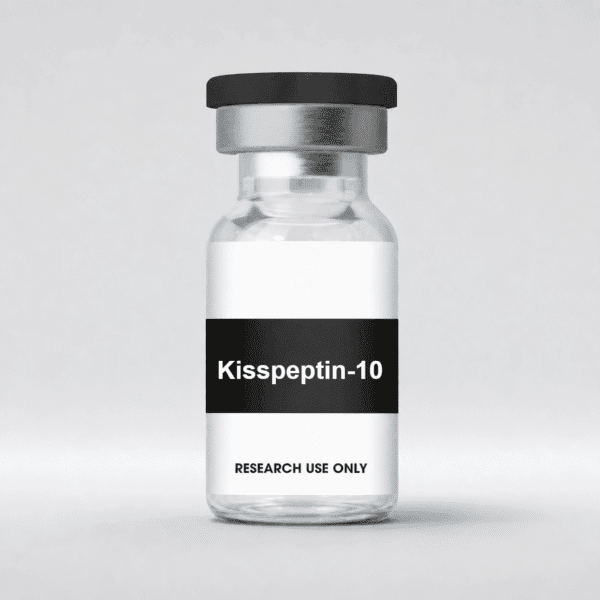
Buy KissPeptin-10 Peptide
Price range: $58.00 through $73.00
Kisspeptin-10 Peptide – Complete Research Guide and Scientific Overview
Kisspeptin-10, also known as KP-10, is the shortest biologically active fragment of the kisspeptin peptide family. It is derived from the KISS1 gene product and acts primarily through the KISS1 receptor (KISS1R), previously known as GPR54. The kisspeptin signaling system is a major area of research because of its important role in reproductive endocrinology, puberty, hypothalamic signaling, and regulation of the hypothalamic-pituitary-gonadal axis.
Kisspeptin 10 research has investigated its ability to stimulate signaling upstream of gonadotropin-releasing hormone (GnRH), which can subsequently influence luteinizing hormone (LH) and follicle-stimulating hormone (FSH) secretion in experimental and human research settings. The compound remains investigational and should not be represented as an FDA-approved treatment.
Kisspeptin-10 is intended solely for legitimate laboratory research and is not intended for human or veterinary use.
What Is Kisspeptin-10?
Kisspeptin 10 is a ten-amino-acid peptide and one of several biologically active kisspeptin fragments. Other members of the kisspeptin family include kisspeptin-54, kisspeptin-14, and kisspeptin-13.
Although these peptides differ in length, they share the biologically important C-terminal region responsible for activating the kisspeptin receptor. Kisspeptin 10 is therefore widely used in research examining the fundamental biology of KISS1R signaling and reproductive hormone regulation.
Other Names for Kisspeptin-10
Kisspeptin-10 may also be identified as:
- KP-10
- Kisspeptin 10
- Metastin 45-54
- Kisspeptin 112-121
Researchers should confirm the exact molecular identity of any material because naming conventions can vary between scientific publications and commercial product listings.
Kisspeptin-10 Peptide Sequence
The commonly reported amino-acid sequence of Kisspeptin 10 is:
YNWNSFGLRF-NH₂
The amidated C-terminal structure is important for biological activity at the KISS1 receptor. Research into the sequence and structure of KP-10 has contributed to the development of synthetic kisspeptin receptor agonists and other experimental tools used to investigate KISS1R signaling.
How Does Kisspeptin-10 Work?
Kisspeptin-10 functions as an agonist of the KISS1 receptor.
KISS1R is a G-protein-coupled receptor associated with the regulation of reproductive neuroendocrine signaling. Activation of the receptor involves Gq/11 signaling and the phospholipase C pathway, leading to intracellular calcium mobilization and downstream cellular responses.
Kisspeptin-10 and the KISS1 Receptor
The interaction between kisspeptin peptides and KISS1R is central to understanding the compound’s research significance.
The KISS1/KISS1R signaling system is involved in the regulation of reproductive function. Human genetic findings involving loss-of-function mutations in KISS1R helped establish the importance of this signaling pathway in normal pubertal and reproductive development.
Kisspeptin-10 and GnRH Signaling
Kisspeptin signaling acts upstream of GnRH neurons within the hypothalamic-pituitary-gonadal axis.
When this pathway is activated, research has shown that kisspeptin can stimulate GnRH release. GnRH then signals to the anterior pituitary, where it influences the secretion of LH and FSH.
This signaling pathway can be summarized as:
Kisspeptin-10 → KISS1R activation → GnRH signaling → LH and FSH secretion
This biological pathway is one of the primary reasons Kisspeptin 10 has attracted attention in reproductive endocrinology research.
Kisspeptin-10 and LH Research
Human and animal studies have investigated the effects of kisspeptin signaling on LH secretion.
Research involving different kisspeptin isoforms, including Kisspeptin 10, has demonstrated stimulation of LH secretion under controlled experimental conditions.
These findings should be understood as evidence of biological signaling and research activity, not as evidence that Kisspeptin-10 is an approved hormone therapy.
Kisspeptin-10 and FSH Research
The hypothalamic-pituitary-gonadal axis also involves FSH secretion.
Because kisspeptin acts upstream of GnRH, research has examined downstream effects involving both LH and FSH. The magnitude and pattern of responses can depend on the experimental conditions, population studied, and kisspeptin formulation.
Kisspeptin-10 Research Areas
Reproductive Endocrinology Research
Reproductive endocrinology is one of the most important areas of Kisspeptin-10 research.
Scientists study the peptide to better understand how hypothalamic signaling regulates:
- GnRH release
- LH secretion
- FSH secretion
- Pubertal development
- Gonadal function
- Reproductive hormone feedback
The discovery of the KISS1/KISS1R system significantly advanced scientific understanding of how reproductive hormone signaling is regulated.
Puberty Research
The KISS1/KISS1R system is strongly associated with pubertal development.
Loss-of-function mutations affecting KISS1R have been linked with hypogonadotropic hypogonadism, helping researchers understand the importance of kisspeptin signaling as an upstream regulator of the reproductive axis.
Kisspeptin 10 can therefore serve as a valuable research tool for studying the neuroendocrine mechanisms involved in puberty and reproductive maturation.
Hypothalamic Research
The hypothalamus coordinates many important hormonal and physiological processes.
Kisspeptin research focuses on how specific hypothalamic signaling pathways communicate with GnRH neurons and influence downstream endocrine activity.
Kisspeptin 10 is useful for investigating:
- Neuroendocrine signaling
- Receptor activation
- GnRH regulation
- Hormonal feedback mechanisms
- Reproductive-axis communication
Fertility Research
The kisspeptin system has been investigated extensively in reproductive and fertility research.
Research involving kisspeptin peptides has explored ovarian function, reproductive hormone signaling, and related aspects of human reproductive physiology. However, findings involving one kisspeptin isoform should not automatically be attributed to every other isoform.
This distinction is particularly important when discussing Kisspeptin-10 specifically.
Hormonal Signaling Research
Kisspeptin 10 provides researchers with a tool for studying the biological connection between hypothalamic signals and downstream pituitary hormone secretion.
This makes the peptide relevant to experiments investigating:
- KISS1R activation
- GnRH secretion
- LH responses
- FSH responses
- Endocrine feedback
- Reproductive neurobiology
Kisspeptin-10 Human Research
Kisspeptin 10 has been investigated in controlled human research, including studies examining its effects on reproductive hormone physiology.
However, the available evidence should be interpreted carefully. The FDA’s 2024 review noted limited information regarding longer-term use, appropriate dosing ranges for proposed uses, and safety for intended patient populations. It also identified only limited human Kisspeptin-10 administration data for some routes and populations.
Human research does not automatically mean that a compound is approved, established as safe for general use, or appropriate for unsupervised use.
Kisspeptin-10 vs Kisspeptin-54
Kisspeptin 10 and Kisspeptin-54 belong to the same peptide family but differ substantially in length.
Kisspeptin-10
- Contains 10 amino acids
- Shortest biologically active kisspeptin fragment
- Useful for receptor and signaling research
- Has been investigated in controlled human studies
Kisspeptin-54
- Contains 54 amino acids
- Longer endogenous kisspeptin isoform
- Extensively studied in reproductive research
- Used in several areas of clinical research
Although both activate KISS1R, researchers should not assume that their pharmacokinetic properties, experimental protocols, or research findings are interchangeable.
Potential Research Benefits of Kisspeptin 10
The following are potential areas of scientific research, not guaranteed human benefits.
KISS1R Signaling Research
Kisspeptin 10 can be used to investigate activation of the KISS1 receptor and associated intracellular signaling pathways.
GnRH Research
The peptide is relevant to research examining how upstream kisspeptin signaling influences GnRH activity.
LH and FSH Research
Controlled studies can investigate downstream gonadotropin responses following activation of the kisspeptin pathway.
Puberty Research
Kisspeptin signaling provides an important model for understanding the biological mechanisms involved in pubertal development.
Reproductive Biology Research
Researchers may study the KISS1/KISS1R system to better understand communication between the hypothalamus, pituitary gland, and reproductive system.
Endocrine Research
The peptide is also relevant to broader research involving hormonal signaling and neuroendocrine feedback mechanisms.
Kisspeptin-10 Research Limitations
Limited Long-Term Data
Short-term biological responses do not provide the same information as long-term safety or outcome studies.
Long-term and repeated-use data for Kisspeptin-10 remain limited for many proposed applications.
Research Does Not Equal FDA Approval
Kisspeptin-10 has been investigated scientifically, including in human research, but it is not an FDA-approved drug product. The FDA’s review also stated that no approved product containing Kisspeptin-10 had been identified.
Individual Studies Have Limitations
Research results can vary depending on:
- Study population
- Kisspeptin isoform
- Route of administration
- Experimental design
- Duration of exposure
- Measured endpoints
For this reason, website content should avoid combining all kisspeptin research into a single claim about Kisspeptin-10.
Potential Immunogenicity Concerns
The FDA’s review discussed potential immunogenicity concerns associated with peptide products and noted a lack of formal immunogenicity studies for Kisspeptin-10 products in its evaluation.
Kisspeptin 10 Peptide Quality and Testing
For legitimate laboratory research, product quality should be evaluated through appropriate specifications and analytical documentation.
What Should Researchers Look for?
Consider reviewing:
- Exact peptide identity
- Amino-acid sequence
- Molecular weight
- Purity information
- HPLC testing
- Mass spectrometry
- Batch number
- Certificate of Analysis
- Storage requirements
- Research-use labeling
Kisspeptin 10 HPLC Testing
High-performance liquid chromatography, or HPLC, can provide information about chromatographic purity and the composition of a peptide sample.
Researchers should review available analytical data rather than relying only on general statements about product quality.
Kisspeptin 10 Mass Spectrometry
Mass spectrometry can provide additional information relevant to molecular identity and characterization.
When appropriate analytical methods are used together, they can provide a broader assessment of a peptide research material.
Kisspeptin-10 Certificate of Analysis
A Certificate of Analysis may provide batch-specific information such as:
- Product identification
- Batch number
- Purity result
- Analytical method
- Testing date
- Additional laboratory data
Researchers should confirm that any available COA corresponds to the specific batch being evaluated.
Where to Buy Kisspeptin-10 Peptide
If you are searching for where to buy Kisspeptin-10 peptide, consider supplier transparency and product documentation before making a purchasing decision.
A research peptide supplier should clearly provide information about the product identity, available analytical testing, batch documentation, and research-use restrictions.
Premium Bio Peptides can provide detailed product information so legitimate research customers can evaluate the material based on their laboratory requirements.
Best Place to Buy Kisspeptin 10 Peptide
The best place to purchase a research peptide is one that provides clear and accurate information rather than unsupported claims.
Before selecting a supplier, consider:
- Product specifications
- Peptide identity
- Purity information
- Available analytical testing
- Batch information
- COA availability
- Research-use labeling
- Transparent product information
Buy Kisspeptin-10 Peptide Online
Customers searching for buy Kisspeptin 10 peptide online should carefully review the complete product listing before placing an order.
Check the exact product identity, specifications, analytical documentation, storage information, and research-use designation.
Kisspeptin-10 Peptide for Sale
Premium Bio Peptides can present Kisspeptin 10 as an experimental research material for legitimate laboratory use.
Product information should accurately describe its research background without presenting the compound as an approved medication or making unsupported therapeutic claims.
Why Choose Premium Bio Peptides?
Premium Bio Peptides can provide researchers with detailed information to help them evaluate experimental peptide materials.
The Kisspeptin-10 product page can include:
- Scientific background
- Research mechanism
- Peptide sequence
- Molecular information
- Research areas
- Research limitations
- Product specifications
- Available analytical information
- COA information
- Storage requirements
- Research-use disclaimer
This approach helps create a more informative and transparent experience for customers researching peptide materials.
Kisspeptin-10 Peptide for Sale – High Purity Research Compound USA
If you are searching for Kisspeptin-10 peptide for sale, sourcing from a verified manufacturer is essential to ensure purity, consistency, and reliable research outcomes. We are a licensed peptide manufacturer supplying high-quality research compounds for reproductive hormone studies, neuroendocrine research, and hypothalamic signaling analysis.
We operate under controlled laboratory standards.
We verify purity through analytical testing.
We provide full documentation for every production batch.
Kisspeptin-10 is a bioactive fragment of the kisspeptin peptide family, known for its role in regulating the hypothalamic-pituitary-gonadal (HPG) axis. It is widely utilized in research involving gonadotropin-releasing hormone (GnRH) secretion, reproductive signaling pathways, and endocrine system regulation.
Key Benefits
- Reproductive Hormone Research – Supports studies involving GnRH and gonadotropin release
- Neuroendocrine Pathway Analysis – Applicable in hypothalamic signaling research
- HPG Axis Studies – Useful for investigating hormonal regulation and reproductive function
- Receptor Interaction Research – Targets GPR54 (KISS1R) receptors for pathway analysis
- Stable Peptide Profile – Designed for consistency and reproducibility in laboratory environments
What You Receive
- ≥98% purity (HPLC verified)
- Analytical validation (HPLC + Mass Spectrometry)
- Certificate of Analysis (COA) available per batch
- Laboratory-secured packaging
- Available in small batch or bulk wholesale quantities
Direct manufacturer sourcing ensures product integrity, traceability, and consistent long-term supply.
Bulk Kisspeptin-10 Peptide Supply
We support:
- Biotechnology research laboratories
- Pharmaceutical R&D organizations
- Academic research institutions
- Contract research organizations (CROs)
- Endocrinology and reproductive research centers
- International peptide distributors
Why Professional Buyers Choose Us
- Transparent manufacturing processes
- Verified analytical testing
- Consistent batch-to-batch quality
- Competitive wholesale pricing
- Reliable U.S. and international fulfillment
We combine advanced peptide synthesis capabilities with a global distribution network, ensuring dependable research-grade supply at scale.
Frequently Asked Questions About Kisspeptin-10
What Is Kisspeptin-10?
Kisspeptin-10 is a ten-amino-acid, biologically active kisspeptin fragment that activates the KISS1 receptor.
What Does Kisspeptin-10 Do?
In research settings, it activates KISS1R and participates in signaling upstream of GnRH, which can influence downstream LH and FSH secretion.
What Is the Kisspeptin-10 Sequence?
The commonly reported sequence is YNWNSFGLRF-NH₂.
What Receptor Does Kisspeptin-10 Target?
Kisspeptin-10 activates the KISS1 receptor, also known historically as GPR54.
Is Kisspeptin-10 the Same as Kisspeptin-54?
No. Both belong to the kisspeptin family and activate KISS1R, but they differ in peptide length and research characteristics.
Has Kisspeptin-10 Been Studied in Humans?
Yes. Controlled human research has investigated Kisspeptin-10, including its effects on reproductive hormone physiology. However, this does not establish general safety or regulatory approval. (U.S. Food and Drug Administration)
Is Kisspeptin-10 FDA Approved?
No. Kisspeptin-10 is not an FDA-approved drug product.
Is Kisspeptin-10 Intended for Human Use?
No. A research-product listing should clearly state that the material is intended solely for legitimate laboratory research and is not intended for human or veterinary use.
Where Can I Buy Kisspeptin-10 Peptide?
Premium Bio Peptides can provide current product availability, specifications, analytical information, and ordering details through its Kisspeptin-10 product listing.
What Should I Check Before Buying Kisspeptin-10?
Review the exact peptide identity, sequence, purity information, analytical testing, batch number, COA availability, storage requirements, and research-use designation.
Is Kisspeptin-10 available in bulk quantities?
Yes. We provide scalable manufacturing with volume-based pricing.
Do you provide Certificates of Analysis?
Yes. Each batch includes verifiable COA documentation.
Do you ship within the USA?
Yes. Orders are fulfilled through our U.S. distribution channel.
What purity level is provided?
≥98% purity verified via HPLC (higher specifications available upon request).
Research-Use Disclaimer
Kisspeptin-10 is an experimental research peptide intended solely for legitimate laboratory research. It is not intended for human or veterinary use. The information on this page is provided for educational and scientific purposes only and does not constitute medical advice. Kisspeptin-10 is not an FDA-approved treatment for reproductive disorders, hormonal conditions, or any other medical condition.
| Dosage | 5mg*10vials, 10mg*10vials |
|---|
Related products
-

HMG
$64.00 -
GHRP-2 Peptide
Price range: $52.00 through $66.00Select options This product has multiple variants. The options may be chosen on the product page -
SNAP-8
$52.00 -
VIP
Price range: $73.00 through $103.00Select options This product has multiple variants. The options may be chosen on the product page
Reviews
There are no reviews yet.