Get up to 10% OFF! with coupon PBP10
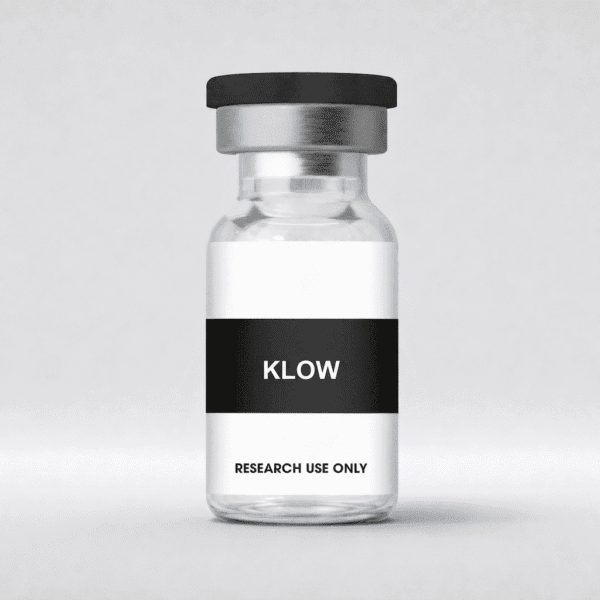
KLOW Peptide Blend
$242.00
TB10mg+BPC10mg+GHK50mg+KPV10mg
80mg*10vials
KLOW Blend – Complete Research Overview of TB-500, BPC-157, GHK-Cu & KPV
What Is the KLOW Blend?
The KLOW Peptide Blend is a multi-peptide research formulation combining four compounds commonly investigated in different areas of scientific research:
- TB-500 – 10 mg
- BPC-157 – 10 mg
- GHK-Cu – 50 mg
- KPV – 10 mg
This combination brings together peptides and peptide-related compounds that have attracted research interest in areas involving tissue biology, cellular signaling, inflammatory pathways, extracellular matrix research, wound-healing processes, and skin-related research.
Because the KLOW Blend contains multiple active research compounds, it should be evaluated as a combination of individual research profiles rather than as a formulation with fully established clinical effects. Research on the individual components does not automatically establish the safety or effectiveness of the combined blend.
At Premium Bio Peptides, we believe professional peptide content should clearly separate scientific research from unsupported medical claims. The KLOW Peptide Blend is intended for legitimate laboratory research only and is not intended to diagnose, treat, cure, or prevent any disease.
KLOW Blend Composition
The KLOW Blend combines the following research compounds in one formulation.
TB-500 – 10 mg
TB-500 is a synthetic peptide associated with research involving thymosin beta-4-related biological pathways. Scientists have investigated these pathways because of their potential involvement in cell migration, cytoskeletal organization, tissue repair processes, and cellular responses to injury.
Research involving TB-500 has explored areas such as:
- Cell migration
- Actin regulation
- Tissue biology
- Cellular repair mechanisms
- Inflammatory signaling
- Angiogenesis-related processes
However, research findings should not be interpreted as proof that TB-500 is an approved treatment for injuries or medical conditions.
BPC-157 – 10 mg
BPC-157 is a synthetic research peptide that has been investigated primarily in preclinical and experimental studies. It has attracted scientific attention for potential relationships with tissue-protection pathways, angiogenesis, nitric oxide signaling, and cellular repair processes.
Areas of BPC-157 research include:
- Tissue biology
- Angiogenesis-related signaling
- Nitric oxide pathways
- Connective tissue research
- Gastrointestinal research
- Experimental inflammatory processes
Much of the available research is preclinical, and additional high-quality human research is needed.
GHK-Cu – 50 mg
GHK-Cu is a copper-binding peptide complex that has been extensively investigated in research involving skin biology, extracellular matrix activity, gene expression, and cellular signaling.
GHK-Cu research has explored its relationship with:
- Collagen-related processes
- Extracellular matrix research
- Skin and connective tissue biology
- Copper-dependent biological pathways
- Cellular remodeling
- Oxidative stress research
The 50 mg amount makes GHK-Cu the largest component by mass in this KLOW formulation.
KPV – 10 mg
KPV is a short peptide fragment that has been investigated for its possible relationship with inflammatory signaling pathways and immune-system research.
Scientific studies have explored KPV in areas involving:
- Cytokine signaling
- Inflammatory pathway research
- Skin biology
- Gastrointestinal research
- Immune-cell signaling
Further research is necessary to fully understand its mechanisms and potential biological significance.
How Does the KLOW Peptide Blend Work?
The precise biological activity of the KLOW Blend as a combined formulation has not been fully established. Each ingredient has its own distinct research profile, and the combined effects of TB-500, BPC-157, GHK-Cu, and KPV cannot automatically be predicted from studies involving the individual compounds.
The formulation is of interest because it combines research compounds associated with several overlapping areas, including:
- Cellular signaling
- Tissue biology
- Extracellular matrix research
- Inflammatory pathway research
- Cell migration
- Angiogenesis-related processes
- Skin and connective tissue research
Researchers should distinguish between the known research profile of each individual ingredient and any claims about the blend itself.
Potential Research Areas of the KLOW Peptide Blend
KLOW Blend and Tissue Biology Research
Several components of the KLOW Blend have been investigated in connection with tissue biology and cellular processes.
TB-500 and BPC-157 have attracted attention in experimental research involving cell migration, tissue response, and repair-related biological pathways. GHK-Cu has been studied in extracellular matrix and connective tissue research, while KPV has been investigated in relation to inflammatory signaling.
Together, these different research profiles make the KLOW Blend potentially relevant for laboratory studies examining multiple aspects of cellular and tissue biology.
KLOW Peptide Blend and Cellular Signaling Research
Cellular signaling is essential for coordinating how cells respond to environmental changes, communicate with other cells, and regulate biological activity.
The four components of the KLOW Blend have been investigated in connection with different signaling pathways. Researchers may study these compounds to better understand interactions involving:
- Cellular communication
- Gene expression
- Cytokine activity
- Growth-related signaling
- Oxidative stress responses
- Extracellular matrix regulation
The biological effects of combining these compounds require further direct research.
KLOW Blend and Inflammatory Pathway Research
Inflammation involves a complex network of immune cells, signaling molecules, and biological responses.
KPV has attracted particular research interest because of its potential relationship with inflammatory signaling, while the other components have also been investigated in experimental models involving tissue responses and cellular stress.
Research into these pathways may help scientists better understand the biological mechanisms involved in inflammation and tissue adaptation.
This does not establish the KLOW Blend as an approved anti-inflammatory treatment.
KLOW Peptide Blend and Skin Biology Research
GHK-Cu is particularly well known in research involving skin and extracellular matrix biology. Scientists have investigated its relationship with collagen-related processes, cellular remodeling, and copper-dependent biological activity.
When combined with other compounds in the KLOW Blend, researchers may be interested in studying multiple pathways relevant to:
- Skin-cell biology
- Extracellular matrix research
- Cellular communication
- Tissue remodeling
- Inflammatory signaling
More direct research is needed to determine how the complete blend behaves as a formulation.
KLOW Blend and Connective Tissue Research
Connective tissues depend on complex interactions involving cells, structural proteins, signaling molecules, and extracellular matrix components.
Research involving TB-500, BPC-157, and GHK-Cu has generated interest in different aspects of connective tissue biology. The KLOW Blend may therefore be of interest for laboratory investigations examining multiple biological pathways associated with tissue structure and cellular responses.
KLOW Peptide Blend and Angiogenesis Research
Angiogenesis refers to the biological process involved in the formation of new blood vessels.
Experimental research involving certain components of the KLOW Blend, particularly TB-500-related pathways and BPC-157, has explored angiogenesis-associated signaling.
Because angiogenesis is a complex biological process, results can depend heavily on the experimental model and conditions being studied.
Scientific Research on the Individual KLOW Blend Ingredients
TB-500 Research
TB-500 research has focused on pathways related to thymosin beta-4 and its role in cellular movement, actin dynamics, tissue biology, and repair-associated processes.
Important areas of investigation include the regulation of actin, a protein involved in cellular structure and movement. Researchers study how these pathways influence cell migration and responses to biological stress.
BPC-157 Research
BPC-157 has primarily been investigated in preclinical research. Experimental studies have explored its possible relationship with nitric oxide signaling, angiogenesis-related pathways, gastrointestinal biology, and tissue-protection processes.
Because much of the available research is preclinical, findings should not be presented as established human therapeutic benefits.
GHK-Cu Research
GHK-Cu is one of the most extensively researched components in the KLOW Blend, particularly in studies involving skin biology and extracellular matrix processes.
Researchers have investigated its possible relationship with:
- Collagen and elastin-related pathways
- Fibroblast biology
- Copper transport
- Gene expression
- Cellular remodeling
- Oxidative stress responses
Its scientific profile makes GHK-Cu an important component of the KLOW Blend for researchers studying cellular and connective tissue biology.
KPV Research
KPV research has focused largely on its possible involvement in inflammatory and immune signaling.
Scientists have studied its potential interactions with pathways involving cytokines and other biological messengers that help regulate immune responses.
Research remains ongoing, and findings should not be interpreted as evidence of an approved therapeutic use.
KLOW Blend vs Individual Peptide Research
One important consideration when evaluating a peptide blend is that research on individual ingredients is not the same as research on the finished combination.
A combined formulation may behave differently because of:
- Interactions between ingredients
- Differences in concentration
- Formulation stability
- Experimental conditions
- Biological model differences
For this reason, researchers should avoid assuming that the effects observed for TB-500, BPC-157, GHK-Cu, or KPV individually will automatically occur when they are combined.
Direct research on the KLOW Blend itself is necessary to establish its specific properties.
KLOW Blend Safety and Research Considerations
The complete safety profile of the KLOW Blend has not been established for general human use. Combining multiple research compounds can create additional uncertainties regarding biological interactions, long-term effects, and safety.
Important considerations include:
- Limited direct research on the complete formulation
- Individual differences in biological response
- Potential interactions between compounds
- Long-term safety uncertainty
- Product identity and purity
- Formulation stability
The KLOW Blend should not be used as a substitute for medical care or as a treatment for any health condition.
Is the KLOW Blend FDA Approved?
No. The KLOW Blend is not FDA approved as a medication or treatment for any medical condition.
Research on individual ingredients does not make the combined formulation an FDA-approved drug.
At Premium Bio Peptides, we believe accurate product information is essential. Scientific interest and experimental research should always be clearly separated from established clinical evidence and regulatory approval.
KLOW Blend Storage and Handling for Research
Proper storage and handling are important when working with peptide research materials.
Storage conditions may vary depending on the formulation and product specifications. Researchers should follow the product-specific guidance regarding:
- Recommended storage temperature
- Protection from excessive heat
- Protection from light
- Moisture control
- Appropriate handling procedures
- Reconstitution requirements, where applicable
Following documented procedures can help support consistent research conditions.
KLOW Blend Quality, Purity and Analytical Testing
Quality and analytical transparency are important when evaluating multi-peptide research formulations.
Researchers may look for available information regarding:
- Product identity
- Individual ingredient composition
- Purity testing
- Analytical methods
- Batch or lot information
- Storage specifications
Depending on the product and available testing, analytical methods may include HPLC, mass spectrometry, or other appropriate techniques.
Why a Certificate of Analysis Matters
A Certificate of Analysis (COA) can provide valuable information about testing performed on a research product.
Depending on the analysis available, documentation may include:
- Product identification
- Purity information
- Batch or lot numbers
- Analytical methods
- Product specifications
When available, researchers should review whether documentation corresponds to the specific batch being evaluated.
Why Choose Premium Bio Peptides for KLOW Blend Research?
At Premium Bio Peptides, we aim to provide a professional, research-focused experience for customers exploring advanced peptide formulations.
When selecting research materials, transparency matters. Researchers should consider factors such as:
- Clear product composition
- Accurate research information
- Available analytical documentation
- Transparent research-use labeling
- Proper product handling information
- Professional customer experience
Our goal is to provide informative product pages that help researchers better understand the compounds they are evaluating without relying on exaggerated or unsupported medical claims.
KLOW Blend (TB-500 10mg + BPC-157 10mg + GHK-Cu 50mg + KPV 10mg) for Sale – High Purity Research Compound USA
If you are searching for KLOW peptide blend for sale (TB-500 10mg + BPC-157 10mg + GHK-Cu 50mg + KPV 10mg), sourcing from a verified manufacturer is essential to ensure purity, consistency, and reliable research outcomes. We are a licensed peptide manufacturer supplying high-quality research compounds for regenerative studies, anti-inflammatory pathway research, and cellular repair analysis.
We operate under controlled laboratory standards.
We verify purity through analytical testing.
We provide full documentation for every production batch.
The KLOW blend is an advanced multi-peptide formulation combining TB-500 (Thymosin Beta-4 fragment), BPC-157, GHK-Cu, and KPV. This combination is designed for comprehensive research into tissue regeneration, inflammatory response modulation, wound healing, and extracellular matrix remodeling. Each peptide contributes to complementary biological pathways, enabling broader and more integrated research outcomes.
Key Benefits
- Advanced Multi-Peptide Synergy – Combines four peptides targeting regeneration and inflammation pathways
- Regenerative Research Support – Supports studies involving tissue repair and cellular recovery
- Anti-Inflammatory Pathway Analysis – KPV contributes to cytokine and inflammatory response research
- Angiogenesis & Repair Studies – Useful for investigating vascular development and healing mechanisms
- Extracellular Matrix Research – Applicable in collagen synthesis and tissue remodeling studies
What You Receive
- ≥98% purity (HPLC verified)
- Analytical validation (HPLC + Mass Spectrometry)
- Certificate of Analysis (COA) available per batch
- 10mg TB-500 + 10mg BPC-157 + 50mg GHK-Cu + 10mg KPV per vial
- Laboratory-secured packaging
- Available in small batch or bulk wholesale quantities
Direct manufacturer sourcing ensures maximum product integrity, traceability, and consistent long-term supply.
Bulk KLOW Peptide Blend Supply
We support:
- Biotechnology research laboratories
- Pharmaceutical R&D organizations
- Academic research institutions
- Contract research organizations (CROs)
- Regenerative and inflammation research centers
- International peptide distributors
Why Professional Buyers Choose Us
- Transparent manufacturing and sourcing
- Verified analytical testing protocols
- Consistent batch-to-batch quality
- Competitive wholesale pricing
- Reliable U.S. and global fulfillment
We combine advanced peptide synthesis technology with strict quality control systems to deliver dependable research-grade compounds at scale.
Frequently Asked Questions About KLOW Peptide Blend
What Is the KLOW Blend?
The KLOW Blend is a multi-compound research formulation containing TB-500 10 mg, BPC-157 10 mg, GHK-Cu 50 mg, and KPV 10 mg.
What Are the Main Ingredients in KLOW Blend?
The four ingredients are TB-500, BPC-157, GHK-Cu, and KPV.
What Is KLOW Blend Studied For?
Researchers may be interested in the blend because its individual components have been studied in areas involving tissue biology, cellular signaling, skin and extracellular matrix research, angiogenesis-related processes, and inflammatory pathways.
How Does KLOW Peptide Blend Work?
The precise mechanism of the complete blend has not been established. Each ingredient has its own research profile, and direct research is required to determine how the combined formulation behaves.
Is KLOW Blend FDA Approved?
No. The KLOW Blend is not FDA approved as a medication or treatment for any disease or medical condition.
Is KLOW Blend Safe?
The complete safety profile of the KLOW Blend has not been established for general human use. The safety and interactions of the combined formulation require additional research.
How Should KLOW Peptide Blend Be Stored?
Storage requirements depend on the specific product formulation. Researchers should always follow the storage and handling instructions provided with the product.
Why Is Product Testing Important for KLOW Blend?
Testing and analytical documentation can help researchers evaluate product identity, composition, purity, and other relevant quality characteristics.
Is the KLOW Peptide blend available in bulk quantities?
Yes. We offer scalable manufacturing with volume-based pricing.
Do you provide Certificates of Analysis?
Yes. Each batch includes verifiable COA documentation.
Do you ship within the USA?
Yes. Orders are fulfilled through our U.S. distribution network.
What purity level is provided?
≥98% purity verified via HPLC (custom specifications available upon request).
Final Thoughts on KLOW Peptide Blend Research
The KLOW Peptide Blend combines four scientifically interesting compounds—TB-500, BPC-157, GHK-Cu, and KPV—into one advanced research formulation. Each component has a distinct research profile involving areas such as cellular signaling, tissue biology, extracellular matrix research, inflammatory pathways, skin biology, and connective tissue processes.
However, research on the individual ingredients should not be mistaken for direct evidence about the complete blend. More research is needed to understand the specific biological properties, interactions, and safety profile of the KLOW formulation itself.
For researchers looking for a KLOW Peptide Blend for legitimate laboratory research, product composition, quality documentation, analytical transparency, proper storage, and accurate scientific information are essential considerations.
Premium Bio Peptides is committed to providing a professional research-focused platform for advanced peptide products. Explore our KLOW Blend and other research compounds with a focus on clear information, responsible product positioning, and a professional customer experience.
All products offered by Premium Bio Peptides are intended for research purposes only. They are not intended for human or veterinary use and are not intended to diagnose, treat, cure, or prevent any disease.
| Dosage | 80mg*10vials |
|---|
Related products
-

IGF-1 LR3
Price range: $53.00 through $142.00Select options This product has multiple variants. The options may be chosen on the product page -
Ipamorelin
Price range: $47.00 through $62.00Select options This product has multiple variants. The options may be chosen on the product page -
L-Carnitine
Price range: $52.00 through $63.00Select options This product has multiple variants. The options may be chosen on the product page -
GHRP-2 Peptide
Price range: $52.00 through $66.00Select options This product has multiple variants. The options may be chosen on the product page
Reviews
There are no reviews yet.