Get up to 10% OFF! with coupon PBP10

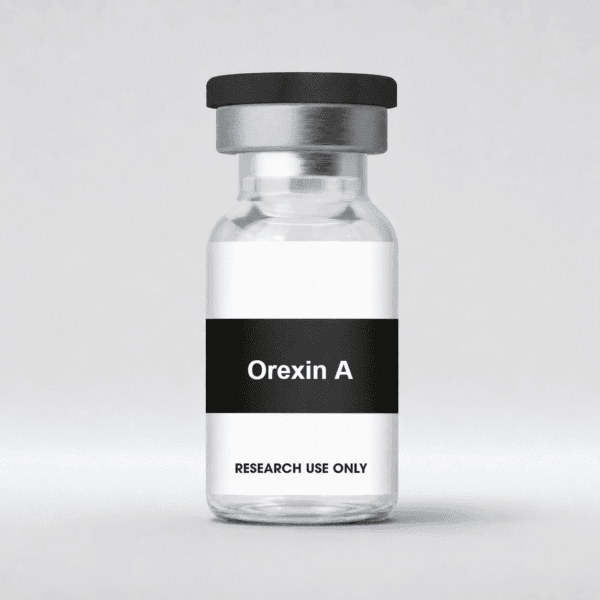
Orexin A Peptide
$351.00
10mg*10vials
Powerful Orexin A Peptide: Complete Research & Science Guide | Premium Bio Peptides
What Is Orexin A Peptide?
A neuropeptide called orexin A, sometimes referred to as hypocretin-1, is crucial to studies on the central nervous system, arousal, wakefulness, energy balance, and metabolic control. Orexin B (hypocretin-2) is the other of the two naturally occurring orexin peptides.
Orexin A is mostly linked to neurons in the lateral hypothalamus region and is generated from the precursor protein prepro-orexin. The orexin system can affect a number of physiological and behavioral processes since these neurons project to several parts of the brain.
Orexin peptide is a valuable research tool for studying neuropeptide signaling, receptor pharmacology, neuronal activity, sleep-wake control, metabolism, and energy homeostasis due to its wide biological activity.
Orexin A Peptide Structure
Orexin A is a 33-amino-acid peptide with several distinctive structural characteristics.
Unlike many linear peptides, Orexin peptide contains two intramolecular disulfide bonds, which contribute to its three-dimensional conformation. It also contains an N-terminal pyroglutamate residue and a C-terminal amidated structure.
These molecular characteristics are important because peptide conformation can influence receptor recognition, stability, and biological activity.
For researchers, understanding the molecular structure is particularly relevant when studying:
- Peptide-receptor binding
- Molecular recognition
- Structure-activity relationships
- Peptide stability
- Receptor selectivity
- Intracellular signaling
Orexin A Molecular Characteristics
Orexin A is a relatively small neuropeptide, but its biological effects are associated with a complex receptor and neural signaling network.
The peptide’s structure allows it to interact with two principal orexin receptors:
- Orexin receptor 1 (OX1R)
- Orexin receptor 2 (OX2R)
Both receptors belong to the G protein-coupled receptor (GPCR) family.
Although Orexin peptide can activate both receptors, receptor distribution and downstream signaling can vary between tissues and experimental systems. This makes receptor-specific research an important part of understanding orexin biology.
How Does Orexin A Work?
The primary biological activity of Orexin peptide results from its interaction with OX1R and OX2R.
When Orexin A binds to an orexin receptor, it can promote receptor activation and initiate intracellular signaling. Depending on the cell type and receptor environment, signaling can involve G-protein pathways, phospholipase C activity, intracellular calcium, and other downstream messenger systems.
Researchers can use Orexin A to investigate how extracellular peptide signals are converted into intracellular responses.
The experimental response depends on several factors, including:
- Receptor expression
- Cell type
- Peptide concentration
- Exposure time
- Intracellular signaling environment
- Experimental model
Orexin A and OX1R
OX1R is one of the two primary receptors activated by orexin peptides.
OX1R research is particularly relevant to studies examining neuronal signaling, arousal, motivation, reward-related pathways, and autonomic functions.
Investigators can study OX1R using receptor-binding assays, cellular signaling experiments, electrophysiological models, and other validated laboratory techniques.
Orexin A and OX2R
OX2R is the second major orexin receptor.
Research involving OX2R has been particularly important in understanding the relationship between orexin signaling and wakefulness and arousal.
Because OX2R is distributed across several brain regions involved in arousal and physiological regulation, researchers can use Orexin A to investigate how receptor activation influences neural network activity.
Orexin A Signaling Pathways
Orexin receptor activation can initiate several intracellular signaling processes.
Depending on the experimental system, research may examine:
- G-protein activation
- Phospholipase C signaling
- Intracellular calcium mobilization
- Protein kinase pathways
- Membrane excitability
- Neuronal depolarization
- Secondary messenger systems
These pathways provide researchers with opportunities to investigate how neuropeptides regulate cellular activity.
The signaling response is not necessarily identical in every cell type. Receptor expression, cellular context, and experimental conditions can influence the observed response.
Orexin A and Neuroscience Research
Orexin A is particularly significant in neuroscience research because orexin-producing neurons communicate with multiple brain regions.
These projections connect the orexin system with neural circuits involved in:
- Wakefulness
- Arousal
- Attention
- Motivation
- Reward
- Autonomic regulation
- Energy balance
- Stress-related responses
This broad network makes orexin research highly interdisciplinary.
Researchers studying Orexin peptide may investigate individual neurons, receptor activity, neural circuits, behavioral models, or interactions between neurological and metabolic pathways.
Orexin A and Sleep-Wake Research
One of the most extensively investigated roles of the orexin system is its relationship with the sleep-wake cycle.
Orexin-producing neurons are strongly associated with maintaining wakefulness and stabilizing arousal. Research into the orexin system has contributed significantly to the understanding of mechanisms involved in sleep and wake regulation.
Laboratory studies may examine:
- Orexin receptor activation
- Neuronal arousal pathways
- Wake-state maintenance
- Neural transitions between behavioral states
- Interactions between orexin neurons and other neurotransmitter systems
The specific findings depend on the model and experimental methodology.
Orexin peptide and Energy Balance
The orexin system is also closely connected with energy homeostasis.
Orexin neurons can integrate information associated with nutritional and metabolic status and interact with neural circuits involved in feeding and energy expenditure.
This has made Orexin A relevant to research exploring the relationship between:
- Metabolism and brain activity
- Feeding behavior
- Energy expenditure
- Nutritional signaling
- Arousal and metabolic demand
- Hypothalamic regulation
The connection between orexin signaling and metabolism demonstrates how neural and physiological systems can communicate through peptide signaling.
Orexin A and Metabolic Research
The hypothalamus plays an important role in coordinating energy-related physiological signals, and orexin neurons are part of this broader regulatory network.
Researchers may investigate how Orexin A interacts with metabolic signals and how changes in energy status affect orexin neuronal activity.
This research area can involve cellular studies, animal models, receptor assays, and investigations of neural circuits.
Orexin peptide and Neuronal Excitability
Orexin peptides can influence neuronal excitability through receptor-mediated signaling.
When Orexin A activates its receptors on responsive neurons, downstream signaling can alter membrane properties and intracellular messenger systems.
Researchers may measure these responses through techniques such as electrophysiology, calcium imaging, receptor assays, and biochemical analysis.
These approaches can help clarify how neuropeptide signaling modifies neuronal communication.
Orexin A and Behavioral Neuroscience
The orexin system has also become an important subject in behavioral neuroscience research.
Because orexin signaling is connected with arousal, motivation, reward, and energy regulation, researchers can investigate relationships between peptide signaling and behavioral states.
Experimental results can vary significantly according to species, brain region, receptor expression, experimental design, and environmental conditions.
Orexin peptide vs. Orexin B
Orexin A and Orexin B are closely related peptides produced from the same precursor protein, but they are structurally different.
Orexin A
- 33 amino acids
- Contains two intramolecular disulfide bonds
- Also known as hypocretin-1
- Activates OX1R and OX2R
- Widely studied in neuroscience and sleep-wake research
Orexin B
- 28 amino acids
- Also known as hypocretin-2
- Structurally different from Orexin A
- Interacts with both orexin receptors but has different receptor activity characteristics
Comparing the two peptides can help researchers investigate how peptide structure influences receptor activity and biological signaling.
Orexin A Research Applications
Orexin A can be relevant to multiple areas of scientific investigation.
Neuroscience
Used in research examining neuronal signaling, neural circuits, receptor biology, and neuropeptide communication.
Sleep Research
Relevant to studies investigating wakefulness, arousal, and sleep-wake regulation.
Receptor Pharmacology
Useful for investigating OX1R and OX2R activation, ligand-receptor interactions, and downstream signaling.
Metabolic Research
Relevant to studies exploring energy balance, feeding pathways, and interactions between metabolism and neural activity.
Cellular Signaling
Can be investigated in experimental systems measuring calcium signaling, G-protein pathways, and intracellular messenger activity.
Behavioral Research
May be studied in validated experimental models examining relationships between orexin signaling, arousal, motivation, and behavioral responses.
Orexin A Purity and Quality
When selecting a research peptide, identity and analytical quality are important considerations.
Researchers should review available documentation for the specific material and batch. Depending on the supplier and product, quality documentation may include:
- Peptide identity
- Purity percentage
- Batch or lot number
- Molecular characteristics
- Analytical test results
- Testing methodology
- Manufacturing information
- Storage recommendations
A high-quality research material should be evaluated using appropriate analytical documentation rather than relying solely on a product name.
Orexin A HPLC and Mass Spectrometry Testing
Analytical methods can help characterize peptide research materials.
High-performance liquid chromatography (HPLC) may be used to evaluate chromatographic purity, while mass spectrometry (MS) can help support molecular identity by examining mass characteristics.
The specific analytical methods and acceptance criteria can vary between laboratories and products.
Researchers should therefore review the actual Certificate of Analysis and testing documentation associated with the specific batch.
Orexin A Certificate of Analysis (COA)
A Certificate of Analysis is a batch-specific quality document containing analytical information about a particular material.
An Orexin A COA may include:
- Product name
- Batch or lot number
- Purity information
- Identity testing
- Analytical methods
- Test results
- Specifications
- Testing date
A COA should be matched to the exact product and batch being evaluated. Researchers should not assume that testing performed on one batch automatically applies to another.
Orexin A Stability and Storage
Peptide stability can be affected by environmental and formulation factors.
Depending on the material, researchers may need to consider:
- Temperature
- Moisture
- Light exposure
- pH
- Solvent
- Concentration
- Storage duration
- Repeated handling
Product-specific instructions should always take priority over generalized peptide-storage recommendations.
Orexin A Handling Considerations
Appropriate laboratory handling is important when working with research peptides.
Researchers should use suitable laboratory practices, minimize unnecessary exposure to environmental conditions, and follow the supplier’s applicable documentation.
If a peptide is supplied in lyophilized form, researchers should consult the relevant product documentation and validated laboratory protocol before preparing a solution.
Why Choose Premium Bio Peptides?
Premium Bio Peptides is focused on providing accessible research-peptide information, quality documentation, and educational resources for qualified researchers.
Our website aims to make important information easier to evaluate, including:
- Peptide characteristics
- Research applications
- Analytical testing
- Certificate of Analysis information
- Storage considerations
- General scientific background
We encourage researchers to review product-specific documentation and use validated laboratory procedures when working with research materials.
Orexin A Peptide for Sale – High Purity Research Compound USA
If you are searching for Orexin A peptide for sale, sourcing from a verified manufacturer is essential to ensure purity, consistency, and reliable research outcomes. We supply high-quality research compounds for neuroendocrine studies, sleep regulation research, and arousal signaling pathway analysis.
We operate under controlled laboratory standards.
We verify purity through analytical testing.
We provide full documentation for every production batch.
Orexin A (also known as hypocretin-1) is a neuropeptide produced in the hypothalamus and widely utilized in research involving wakefulness regulation, appetite signaling, energy homeostasis, and neuroendocrine communication. It plays a central role in studies of sleep–wake cycles and central nervous system arousal mechanisms, making it a valuable compound for advanced neurological research.
Key Benefits of Orexin A Peptide Research
- Neuroscience Research – Supports studies of neuropeptide signaling and neuronal communication.
- Sleep-Wake Research – Useful for investigating wakefulness, arousal, and sleep-related pathways.
- Receptor Signaling Studies – Enables research involving OX1R and OX2R activation and downstream signaling.
- Energy-Balance Research – Relevant to investigations of feeding, metabolism, and energy homeostasis.
- Cellular Signaling – Helps researchers study calcium signaling, G-protein pathways, and neuronal responses.
- Peptide Pharmacology – Useful for examining peptide-receptor interactions and structure-activity relationships.
- Behavioral Neuroscience – Supports research into relationships between orexin signaling, motivation, and behavioral states.
- Comparative Peptide Research – Provides a useful model for comparing Orexin A with Orexin B and other neuropeptides.
- Quality-Control Research – Researchers can evaluate identity, purity, and batch-specific analytical information through appropriate documentation such as a Certificate of Analysis (COA).
What You Receive
- ≥98% purity (HPLC verified)
- Analytical validation (HPLC + Mass Spectrometry)
- Certificate of Analysis (COA) available per batch
- Laboratory-secured packaging
- Available in small batch or bulk wholesale quantities
Direct manufacturer sourcing ensures product integrity, traceability, and consistent long-term supply.
Bulk Orexin A Supply
We support:
- Biotechnology research laboratories
- Pharmaceutical R&D organizations
- Academic research institutions
- Contract research organizations (CROs)
- Neuroscience and sleep research centers
- International distributors
Why Professional Buyers Choose Us
- Transparent manufacturing processes
- Verified analytical testing
- Consistent batch-to-batch quality
- Competitive wholesale pricing
- Reliable U.S. and international fulfillment
We combine advanced neuropeptide synthesis capabilities with a global distribution network, ensuring dependable research-grade supply for scientific and pharmaceutical research applications.
Frequently Asked Questions About Orexin A
What Is Orexin A?
Orexin A, also called hypocretin-1, is a 33-amino-acid neuropeptide involved in orexin receptor signaling and extensively studied in neuroscience, sleep-wake, and metabolic research.
What Receptors Does Orexin A Activate?
Orexin peptide interacts with two major receptors: OX1R and OX2R. Both are G protein-coupled receptors involved in orexin-mediated signaling.
What Is Orexin A Used to Study?
Research involving Orexin A commonly focuses on neuroscience, wakefulness, arousal, sleep-wake regulation, energy balance, receptor signaling, neuronal activity, and metabolic pathways.
What Is the Difference Between Orexin A and Orexin B?
Orexin A contains 33 amino acids and has two intramolecular disulfide bonds, whereas Orexin B contains 28 amino acids and has a different molecular structure. Both interact with orexin receptors.
Is Orexin A available in bulk quantities?
Yes. We provide scalable manufacturing with volume-based pricing.
Do you provide Certificates of Analysis?
Yes. Each batch includes verifiable COA documentation.
Do you ship within the USA?
Yes. Orders are fulfilled through our U.S. distribution channel.
What purity level is provided?
≥98% purity verified via HPLC (custom specifications available upon request).
Why Is Orexin A Important in Neuroscience?
Orexin A is important because orexin signaling connects neural activity with wakefulness, arousal, motivation, energy balance, and other physiological processes.
How Can Researchers Evaluate Orexin A Quality?
Researchers should review the exact product specifications, batch information, Certificate of Analysis, purity results, identity testing, and available analytical methods.
Important Research-Use Information
This page provides general scientific and educational information about Orexin A. It is not medical advice and should not be interpreted as instructions for personal use.
Researchers should follow appropriate laboratory procedures, applicable regulations, safety requirements, and product-specific documentation when evaluating or handling research materials.
Research-use products are not intended for human or veterinary use, diagnosis, treatment, or prevention of disease.
| Dosage | 10mg*10vials |
|---|
Related products
-

VIP
Price range: $73.00 through $103.00Select options This product has multiple variants. The options may be chosen on the product page -
Thymalin / Thymulin
$68.00 -
CJC 1295 With DAC Peptide
Price range: $75.00 through $125.00Select options This product has multiple variants. The options may be chosen on the product page -
KPV
Price range: $53.00 through $59.00Select options This product has multiple variants. The options may be chosen on the product page


Reviews
There are no reviews yet.