Get up to 10% OFF! with coupon PBP10
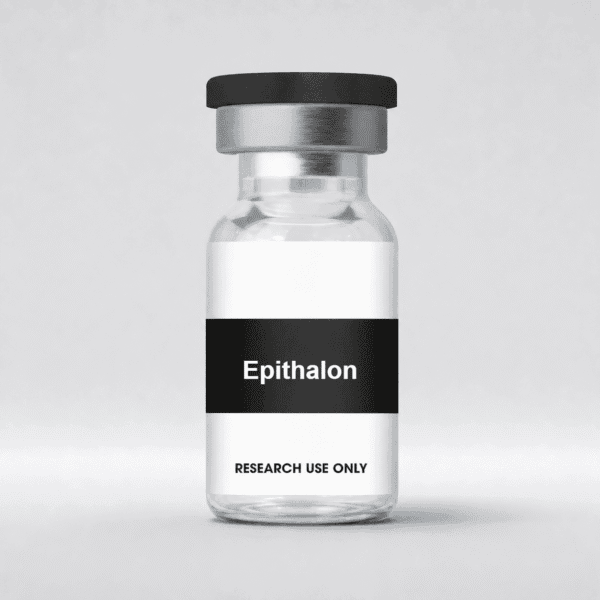
Epithalon Peptide
Price range: $56.00 through $108.00
Epithalon Peptide: Powerful Research Benefits, Telomere Studies & Complete Guide
Epithalon peptide, commonly written as Epitalon in scientific literature and online research communities, is a synthetic tetrapeptide generally identified by the sequence Ala-Glu-Asp-Gly (AEDG).
The compound has attracted interest primarily because of experimental research examining biological processes associated with cellular aging, telomere biology, oxidative stress, pineal function, and longevity.
Unlike peptides developed specifically for metabolic or growth-hormone research, Epithalon is generally discussed in the context of aging and cellular biology research.
Researchers interested in Epithalon commonly investigate questions surrounding:
- Telomere maintenance
- Telomerase-related activity
- Cellular aging
- Oxidative stress
- Gene expression
- Pineal biology
- Melatonin-related pathways
- Cellular stress responses
- Longevity-related mechanisms
It is important to distinguish experimental research findings from established clinical applications. Epithalon should not be presented as a proven anti-aging treatment.
Epithalon Peptide at a Glance
| Property | Details |
|---|---|
| Common name | Epithalon |
| Alternative name | Epitalon |
| Peptide type | Synthetic tetrapeptide |
| Common sequence | Ala-Glu-Asp-Gly (AEDG) |
| Research category | Cellular and aging research |
| Major research areas | Telomeres, oxidative stress, pineal biology |
| Clinical status | Investigational |
| Intended application | Laboratory research where appropriately labeled |
What Is the Epithalon Sequence?
One of the most important pieces of information when evaluating Epithalon is its peptide sequence.
The commonly reported sequence is:
Ala-Glu-Asp-Gly (AEDG)
This represents four amino acids:
- Ala — Alanine
- Glu — Glutamic acid
- Asp — Aspartic acid
- Gly — Glycine
Because peptide names can sometimes be used inconsistently by different suppliers, researchers should verify the exact sequence and analytical identity of the material they purchase.
Epithalon vs. Epitalon: Are They the Same?
The names Epithalon and Epitalon are frequently used interchangeably when referring to the AEDG tetrapeptide.
However, researchers should not rely solely on a product name.
Before purchasing, verify:
- Exact peptide sequence
- Product identity
- Purity
- Batch number
- Analytical documentation
- Manufacturer or supplier information
This is especially important for research reproducibility.
Why Is Epithalon Peptide Studied?
Aging is a complex biological process involving numerous interconnected mechanisms.
Researchers study aging through areas such as:
- DNA stability
- Telomere biology
- Cellular senescence
- Oxidative stress
- Mitochondrial function
- Gene expression
- Inflammation
- Protein regulation
- Cellular repair
Epithalon has attracted interest because experimental studies have explored its relationship with several of these processes.
Rather than describing it as a “fountain of youth” or guaranteed anti-aging compound, a scientifically responsible website should explain which biological pathways have actually been investigated.
How Does Epithalon Peptide Work?
The complete mechanism of Epithalon has not been definitively established.
Experimental research has proposed relationships with several biological pathways.
Telomere-Related Pathways
Telomeres protect the ends of chromosomes and play an important role in cellular replication.
Epithalon has been investigated in relation to telomere and telomerase biology.
Oxidative Stress
Researchers have investigated whether Epithalon can influence pathways associated with oxidative stress and cellular antioxidant defenses.
Gene Expression
Experimental studies have explored whether Epithalon can affect the expression of genes involved in cellular processes.
Pineal Biology
Epithalon’s history is connected to research involving the pineal gland and pineal-derived preparations.
Because these mechanisms remain an active research area, claims should be described as proposed or investigated mechanisms, rather than established therapeutic effects.
Epithalon Peptide and Telomere Research
What Are Telomeres?
Telomeres are protective structures located at the ends of chromosomes.
They help maintain chromosome stability during cellular division.
Telomere biology is particularly important in aging research because telomere length and function can change over time and differ among cell types and individuals.
Why Are Telomeres Important?
Telomeres are studied in relation to:
- Cellular replication
- Genome stability
- Cellular senescence
- Aging biology
- DNA protection
This has made telomere research an important area within molecular gerontology.
Epithalon and Telomerase Research
Telomerase is an enzyme complex involved in maintaining telomere sequences in certain cells.
Experimental research has investigated whether Epithalon may influence telomerase-related pathways.
This is one of the most frequently discussed scientific aspects of Epithalon.
However, findings from experimental models should not be translated into a claim that Epithalon has been proven to reverse or stop human aging.
Epithalon Peptide and Cellular Aging
Cellular aging involves multiple biological processes.
Researchers investigating Epithalon have examined concepts including:
Cellular Senescence
Senescent cells stop dividing but remain metabolically active.
Telomere Changes
Telomere dynamics are an important component of cellular aging research.
Oxidative Damage
Oxidative stress can affect proteins, lipids, DNA, and other cellular structures.
Gene Regulation
Changes in gene expression can influence cellular responses to stress and aging.
Epithalon research provides a potential experimental model for examining relationships among these processes.
Epithalon and Oxidative Stress Research
Oxidative stress occurs when reactive molecular species and antioxidant defenses become imbalanced.
Researchers study oxidative stress because it is associated with numerous biological processes.
Areas of interest include:
- DNA oxidation
- Cellular membrane damage
- Protein modification
- Mitochondrial stress
- Cellular signaling
- Antioxidant defense
Experimental research has explored whether Epithalon influences some of these pathways.
However, research findings should be interpreted according to the model, dose, study design, and experimental conditions.
Epithalon and Pineal Gland Research
The pineal gland is an endocrine structure involved in biological timing and melatonin production.
Historical research involving Epithalon is connected with studies of pineal-derived substances.
This has led researchers to investigate possible relationships between Epithalon and:
- Pineal function
- Melatonin biology
- Circadian rhythms
- Age-associated changes in pineal activity
This does not mean Epithalon should automatically be considered a sleep medication or melatonin replacement.
Epithalon and Melatonin Research
Melatonin is an important hormone involved in circadian rhythm regulation.
Because of Epithalon’s association with pineal research, melatonin-related biology is another area that may be relevant to experimental studies.
Researchers may investigate:
- Melatonin secretion
- Circadian signaling
- Pineal function
- Age-related changes
Epithalon should not, however, be marketed as a proven treatment for insomnia or other sleep disorders.
Key Research Benefits of Epithalon Peptide
1. Telomere Biology Research
Epithalon is frequently studied in connection with telomere and telomerase-related mechanisms.
2. Cellular Aging Research
The peptide provides researchers with a model for investigating molecular pathways associated with cellular aging.
3. Oxidative Stress Research
Experimental studies have examined potential relationships between Epithalon and oxidative-stress pathways.
4. Pineal Biology Research
Its historical association with pineal-derived research makes it relevant to studies involving pineal function.
5. Gene Expression Research
Researchers have investigated whether Epithalon can influence certain gene-expression patterns.
6. Longevity Biology Research
Epithalon is frequently discussed in experimental research exploring biological processes associated with longevity.
Epithalon Peptide Research Applications
Aging Biology
Investigate cellular mechanisms associated with aging and senescence.
Telomere Studies
Examine telomere maintenance and telomerase-related pathways.
Oxidative Stress Studies
Study cellular responses to oxidative challenges.
Pineal Research
Investigate pineal-related signaling and melatonin-associated biology.
Molecular Biology
Explore potential changes in gene expression and cellular signaling.
Cellular Stress Research
Investigate how cells respond to biological and environmental stressors.
Epithalon Peptide vs. Other Research Peptides
Epithalon has a distinct research profile compared with peptides primarily studied for growth hormone, metabolic, or reproductive pathways.
| Research peptide category | Primary research focus |
|---|---|
| Epithalon | Aging and cellular biology |
| CJC-1295 | Growth-hormone-related research |
| BPC-157 | Experimental tissue and cellular research |
| AICAR | AMPK and metabolic research |
| Melanotan-related compounds | Melanocortin research |
These compounds should not be treated as interchangeable simply because they are all categorized as peptides or research compounds.
Why Peptide Quality Matters
Research involving short peptides requires attention to material quality.
Potential sources of experimental variability include:
- Incorrect sequence
- Impurities
- Degradation
- Poor storage
- Inconsistent concentration
- Incorrect product identification
For this reason, researchers should evaluate documentation rather than relying only on marketing terminology.
Epithalon Purity and Quality
When evaluating Epithalon for laboratory research, consider:
- Peptide identity
- Sequence confirmation
- Purity percentage
- Analytical testing
- Batch number
- Manufacturing information
- Storage conditions
- Certificate of Analysis
Clear documentation can help researchers maintain better laboratory records and improve experimental consistency.
Epithalon Certificate of Analysis
A Certificate of Analysis (COA) can provide batch-specific information about a research material.
Depending on the supplier and testing method, documentation may include:
- Compound identity
- Batch number
- Purity
- Testing method
- Test results
- Product specifications
For research purposes, batch-specific documentation is more useful than generic statements such as “high quality.”
How to Choose Epithalon Peptide Online
Before purchasing Epithalon, consider these factors:
Verify the Sequence
Confirm that the material corresponds to the intended AEDG sequence.
Check Purity
Look for clear purity information and analytical testing.
Review the COA
Where available, examine batch-specific documentation.
Check Batch Traceability
A lot or batch number helps identify the specific material.
Review Storage Requirements
Follow product-specific storage instructions.
Verify Product Identity
Make sure the product is clearly identified and appropriately labeled for research.
Why Buy Epithalon Peptide From Premium Bio Peptides?
Detailed Product Information
Premium Bio Peptides aims to provide more than a simple product name.
Our product information can explain:
- What Epithalon is
- Its peptide sequence
- Research applications
- Scientific background
- Quality considerations
- Available documentation
Research-Focused Information
Customers can learn about the scientific context of the compound before purchasing.
Quality Transparency
We emphasize information such as purity, batch details, product specifications, and available COA documentation.
Convenient Online Shopping
Customers can review product information online and compare available research materials conveniently.
A Better-Informed Purchasing Decision
The goal is not simply to sell a product but to give customers useful information so they can make an informed purchasing decision.
Epithalon Storage and Handling
Always follow the specific storage instructions supplied with the product.
Research materials should generally be:
- Properly labeled
- Stored according to manufacturer specifications
- Protected from unsuitable environmental conditions
- Maintained in appropriate packaging
- Tracked using batch or lot information
Avoid applying generic storage recommendations when product-specific instructions are available.
Important Research Considerations
Epithalon is frequently marketed online using terms such as anti-aging, longevity, telomere repair, and cellular rejuvenation.
Your website will be more credible if it clearly distinguishes:
Research hypothesis → Experimental evidence → Clinical evidence
A laboratory finding does not automatically demonstrate a clinical benefit in humans.
This distinction can improve the quality and trustworthiness of your content while reducing exaggerated health claims.
Frequently Asked Questions About Epithalon Peptide
What Is Epithalon Peptide?
Epithalon is a synthetic tetrapeptide commonly identified by the sequence Ala-Glu-Asp-Gly (AEDG) and studied in areas related to aging and cellular biology.
Is Epithalon the Same as Epitalon?
The terms are commonly used for the same AEDG tetrapeptide, although product identity should always be verified through documentation.
What Is the Epithalon Peptide Sequence?
The commonly reported sequence is Ala-Glu-Asp-Gly (AEDG).
What Is Epithalon Studied For?
Research has investigated Epithalon in relation to telomeres, telomerase, cellular aging, oxidative stress, pineal biology, melatonin-related pathways, and longevity.
Does Epithalon Affect Telomeres?
Experimental research has investigated potential relationships between Epithalon and telomere-related pathways. This does not establish that the peptide reverses aging or reliably lengthens human telomeres.
Is Epithalon an Anti-Aging Treatment?
Epithalon is an investigational research compound and should not be represented as a clinically proven anti-aging treatment.
Does Epithalon Increase Melatonin?
Pineal and melatonin-related mechanisms have been investigated, but Epithalon should not be marketed as an established melatonin treatment.
Is Epithalon a Growth Hormone Peptide?
No. Its primary research interest is associated with cellular aging and longevity-related biology rather than growth hormone signaling.
What Is Epitalon AEDG?
AEDG refers to the four-amino-acid sequence commonly associated with Epithalon/Epitalon: alanine, glutamic acid, aspartic acid, and glycine.
What Should I Look for When Buying Epithalon?
Look for accurate sequence information, purity testing, batch traceability, COA documentation, product specifications, storage information, and appropriate research-use labeling.
Why Choose Premium Bio Peptides?
Premium Bio Peptides focuses on detailed product information, transparency, quality considerations, and available documentation to help customers make more informed purchasing decisions.
Is Epithalon available in bulk quantities?
Yes. We provide scalable manufacturing with volume-based pricing.
Do you provide Certificates of Analysis?
Yes. Each batch includes verifiable COA documentation.
Do you ship within the USA?
Yes. Orders are fulfilled through our U.S. distribution channel.
What purity level is provided?
≥98% purity verified via HPLC (higher specifications available upon request).
Epithalon (Epitalon) Peptide for Sale – High Purity Research Compound USA
If you are searching for Epithalon (Epitalon) peptide for sale, sourcing from a verified manufacturer is essential to ensure purity, consistency, and reliable research outcomes. We are a licensed peptide manufacturer supplying high-quality research compounds for cellular aging studies, telomerase activity research, and neuroendocrine pathway analysis.
We operate under controlled laboratory standards.
We verify purity through analytical testing.
We provide full documentation for every production batch.
Epithalon (Epitalon) is a synthetic tetrapeptide analog of epithalamin, studied for its role in cellular aging processes, telomere regulation, and pineal gland signaling. It is widely utilized in research involving telomerase activation, oxidative stress response, and circadian rhythm regulation.
What You Receive
- ≥98% purity (HPLC verified)
- Analytical validation (HPLC + Mass Spectrometry)
- Certificate of Analysis (COA) available per batch
- Laboratory-secured packaging
- Available in small batch or bulk wholesale quantities
Direct manufacturer sourcing ensures product integrity, traceability, and consistent long-term supply.
Bulk Epithalon (Epitalon) Peptide Supply
We support:
- Biotechnology research laboratories
- Pharmaceutical R&D organizations
- Academic research institutions
- Contract research organizations (CROs)
- Longevity and cellular biology research centers
- International peptide distributors
Why Professional Buyers Choose Us
- Transparent manufacturing processes
- Verified analytical testing
- Consistent batch-to-batch quality
- Competitive wholesale pricing
- Reliable U.S. and international fulfillment
We combine advanced peptide synthesis capabilities with a global distribution network, ensuring dependable research-grade supply at scale.
Final Thoughts
Epithalon peptide is an interesting compound for researchers investigating the biology of aging, telomeres, telomerase, oxidative stress, pineal function, cellular signaling, and longevity.
Its commonly reported AEDG sequence and historical connection to pineal research make it distinct from peptides primarily investigated for metabolic or growth-hormone pathways.
For researchers purchasing Epithalon, the scientific background is only one consideration. Sequence accuracy, purity, batch traceability, analytical documentation, COA availability, storage requirements, and product identity are also important.
Premium Bio Peptides aims to provide comprehensive research-product information so customers can evaluate materials more carefully before purchasing.
For research use only where appropriately labeled. Not for human consumption, self-administration, diagnosis, treatment, or prevention of disease.
| Dosage | 10mg*10vials, 50mg*10vials |
|---|
Related products
-

L-Carnitine
Price range: $52.00 through $63.00Select options This product has multiple variants. The options may be chosen on the product page -
VIP
Price range: $73.00 through $103.00Select options This product has multiple variants. The options may be chosen on the product page -
GHRP-6 Peptide
Price range: $52.00 through $58.00Select options This product has multiple variants. The options may be chosen on the product page -
SNAP-8
$52.00


Reviews
There are no reviews yet.