Get up to 10% OFF! with coupon PBP10

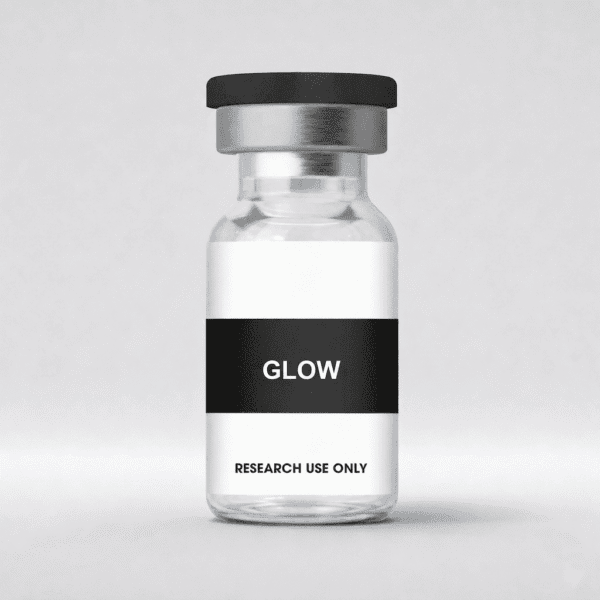
Buy GLOW Peptide
$135.00
TB10mg+BPC10mg+GHK50mg
70mg*10vials
GLOW Peptide: Comprehensive Research Benefits, Ingredients, Uses & Quality Guide
What Is GLOW Peptide?
GLOW Peptide is a name commonly used for a multi-peptide research blend containing GHK-Cu, BPC-157, and TB-500. Unlike an individual peptide such as BPC-157 or GHK-Cu, GLOW combines multiple research compounds with different biological properties.
The purpose of researching a combination such as GLOW is to examine several biological pathways within the same experimental formulation.
The three commonly associated components are:
- GHK-Cu – a copper-binding tripeptide studied extensively in extracellular-matrix, skin, collagen, and cellular biology research.
- BPC-157 – a synthetic pentadecapeptide investigated primarily in preclinical research involving cellular, vascular, and tissue-related processes.
- TB-500 – a synthetic peptide fragment associated with thymosin beta-4 research and investigated in areas involving actin dynamics and cell migration.
Some commercially marketed GLOW formulations use a 50 mg GHK-Cu + 10 mg BPC-157 + 10 mg TB-500 composition, but GLOW is not a universally standardized formulation. Researchers should always verify the exact composition, concentration, and batch documentation of the product being evaluated.
For research use only. Not for human consumption or self-administration.
GLOW Peptide Ingredients
Understanding each component is essential because GLOW does not have one single biological mechanism.
GHK-Cu
GHK-Cu stands for glycyl-L-histidyl-L-lysine copper complex.
It is a naturally occurring copper-binding peptide that has been investigated in research involving:
- Extracellular-matrix biology
- Fibroblast activity
- Collagen-related processes
- Cellular signaling
- Skin biology
- Oxidative-stress pathways
- Tissue remodeling
GHK-Cu is therefore the component of the blend most closely associated with extracellular-matrix and skin-related research.
BPC-157
BPC-157 is a synthetic peptide consisting of 15 amino acids.
Preclinical research has examined BPC-157 in relation to several biological processes, including:
- Cellular signaling
- Angiogenesis-related mechanisms
- Vascular responses
- Tissue-related pathways
- Gastrointestinal research
- Oxidative and inflammatory signaling
Much of the evidence surrounding BPC-157 remains preclinical, meaning results from laboratory and animal research should not be presented as established human clinical outcomes.
TB-500
TB-500 is a synthetic peptide fragment associated with thymosin beta-4 research.
Thymosin beta-4 has been studied in connection with:
- Actin regulation
- Cell migration
- Cellular organization
- Angiogenesis-related processes
- Tissue biology
TB-500 therefore adds a different research pathway to the GLOW formulation.
Why Combine GHK-Cu, BPC-157 and TB-500?
The scientific interest in a multi-peptide blend comes from the fact that its individual components have different research backgrounds.
A simplified overview is:
GHK-Cu → extracellular-matrix and cellular research
BPC-157 → cellular and vascular research
TB-500 → actin and cell-migration research
This creates a broader experimental model than studying a single peptide alone.
However, researchers should make an important distinction: research on the individual peptides does not automatically prove that the combined GLOW formulation produces additive or synergistic effects.
That distinction is important for accurate scientific communication and SEO content that Google users can trust.
How Does GLOW Peptide Work?
There is no single mechanism for GLOW because it contains multiple peptides.
Each component has its own biological characteristics.
GHK-Cu Pathway
GHK-Cu is investigated in relation to copper-dependent cellular processes, extracellular-matrix regulation, fibroblast activity, and collagen-related pathways.
BPC-157 Pathway
BPC-157 has been investigated in preclinical models involving cellular signaling, vascular responses, and tissue-related mechanisms.
TB-500 Pathway
TB-500 is associated with research involving thymosin beta-4, actin organization, and cellular migration.
Consequently, GLOW is best understood as a multi-pathway research formulation, rather than a compound with one defined mechanism.
Key Research Benefits of GLOW Peptide
1. Multi-Pathway Research Potential
The biggest research advantage of a three-peptide blend is the ability to investigate different biological pathways within one experimental formulation.
Researchers can study GHK-Cu-, BPC-157-, and TB-500-related mechanisms together while maintaining an identifiable blend composition.
2. Extracellular-Matrix Research
The GHK-Cu component is relevant to studies involving extracellular-matrix proteins, fibroblasts, collagen-related pathways, and cellular remodeling.
3. Cellular Signaling Research
The individual components have been investigated across different cellular signaling pathways, providing opportunities for controlled comparative studies.
4. Muscle Biology Research
BPC-157 and TB-500 have attracted research interest in models involving tissue and cellular responses relevant to muscle biology.
5. Cell-Migration Research
TB-500’s relationship to thymosin beta-4 makes cell migration and actin-related biology important research areas.
6. Skin Biology Research
GHK-Cu has a particularly strong research association with skin and extracellular-matrix biology.
7. Comparative Peptide Research
Researchers can compare the combined blend with individual components to investigate whether different experimental systems produce different observations.
8. Multi-Component Formulation Research
GLOW can provide researchers with a convenient model for investigating multiple peptide compounds within one defined research material.
GLOW Peptide Research Applications
Skin and Cosmetic Biology Research
GHK-Cu has generated considerable research interest in skin biology and extracellular-matrix processes.
Researchers may investigate:
- Fibroblast behavior
- Collagen-related pathways
- Extracellular-matrix organization
- Cellular signaling
- Skin-cell biology
Tissue Biology
BPC-157 and TB-500 have been studied in preclinical models involving tissue-related biological processes.
This makes the blend relevant to experimental investigations into cellular responses and tissue signaling.
Muscle Research
Researchers studying muscle biology can investigate pathways associated with cellular adaptation, tissue responses, and signaling.
Cellular Migration
TB-500-related research provides an opportunity to examine actin-associated mechanisms and cell migration.
Regenerative Biology
The individual components have generated scientific interest in experimental models involving cellular and tissue responses.
However, “regenerative” should be understood as a research area, not as a proven therapeutic effect of the complete GLOW blend.
Peptide Combination Studies
GLOW can be useful in experiments designed to compare single peptides with multi-component formulations.
GLOW Peptide and Skin Research
One of the most commercially searched aspects of GLOW involves skin-related research.
This interest is primarily connected with GHK-Cu.
GHK-Cu has been studied in relation to extracellular-matrix biology and cellular processes involving skin tissue.
Researchers can investigate how GHK-Cu interacts with:
- Fibroblasts
- Collagen-related pathways
- Extracellular-matrix proteins
- Cellular signaling
- Tissue remodeling
The presence of BPC-157 and TB-500 introduces additional research pathways, but evidence for the complete blend should not be confused with evidence concerning GHK-Cu alone.
GLOW Peptide and Muscle Research
GLOW is also associated with research interest in muscle and tissue biology.
BPC-157 and TB-500 have been investigated in preclinical models involving cellular and tissue responses, while GHK-Cu contributes an extracellular-matrix research component.
This makes the combination potentially useful for experimental models examining multiple aspects of cellular and tissue biology.
Again, laboratory findings should not be interpreted as proof of specific human performance, muscle-building, healing, or medical effects.
GLOW Peptide vs. Individual Peptides
| Research Material | Main Research Area |
|---|---|
| GHK-Cu | Extracellular matrix, skin and cellular biology |
| BPC-157 | Cellular, vascular and tissue-related research |
| TB-500 | Actin, cell migration and tissue biology |
| GLOW | Combined multi-pathway research |
The main difference is that GLOW provides multiple research compounds in one formulation.
GLOW Peptide vs. BPC-157
BPC-157 is an individual peptide.
GLOW commonly contains BPC-157 together with GHK-Cu and TB-500.
Therefore, research involving BPC-157 alone should not automatically be used as evidence for the complete GLOW blend.
GLOW Peptide vs. TB-500
TB-500 is one component commonly found in GLOW.
A standalone TB-500 product provides a single research compound, whereas GLOW combines it with GHK-Cu and BPC-157.
GLOW Peptide vs. GHK-Cu
GHK-Cu is another individual component of GLOW.
GHK-Cu research is particularly associated with extracellular-matrix and skin biology, while GLOW adds BPC-157 and TB-500 to create a broader research formulation.
GLOW Peptide vs. KLOW
GLOW and KLOW are blend names that can vary between suppliers.
A commonly described GLOW formulation contains:
GHK-Cu + BPC-157 + TB-500
KLOW is often described as adding KPV to those three peptides.
Because blend names are not universal pharmaceutical standards, researchers should verify the exact ingredients and amounts listed on the product label and COA.
What Makes GLOW Peptide Different?
The main difference is its multi-peptide composition.
Rather than focusing on one molecular pathway, GLOW brings together three research compounds with distinct areas of scientific interest.
This makes it particularly relevant to researchers interested in:
- Cellular signaling
- Extracellular-matrix biology
- Tissue research
- Muscle biology
- Skin research
- Cell migration
- Peptide combinations
Is GLOW Peptide Clinically Proven?
Researchers should distinguish between preclinical research on individual ingredients and clinical evidence for the complete GLOW formulation.
The existence of research on GHK-Cu, BPC-157, or thymosin beta-4-related compounds does not establish that the GLOW combination itself has been clinically proven for a specific purpose.
At present, the complete blend should be treated as a research formulation, not as an established medical treatment.
Why Choose Premium Bio Peptides for GLOW?
Choosing a research peptide supplier involves evaluating quality, transparency, documentation, and product information.
Clear Product Composition
For a multi-peptide blend, knowing exactly what is included is essential.
Premium Bio Peptides focuses on clearly identifying the research materials offered and providing relevant product information.
Quality-Focused Approach
Researchers should have access to information that helps them evaluate a research compound before purchase.
Important considerations include:
- Product identity
- Individual components
- Amount per component
- Purity
- Batch information
- Analytical documentation
- Storage requirements
Certificate of Analysis
A Certificate of Analysis can provide batch-specific analytical information.
For a GLOW blend, researchers should ideally be able to identify information concerning the individual components and applicable testing.
Convenient Online Ordering
Premium Bio Peptides provides an online research peptide catalog designed to make it easier for researchers to locate specialized compounds and review product information.
Research-Focused Information
We emphasize scientific descriptions rather than unsupported medical promises.
Our product information is designed to help researchers understand:
- What the compound is
- What components are included
- How the components are studied
- Potential research applications
- Quality considerations
- Storage requirements
- Research-only status
Transparent Product Evaluation
We encourage researchers to review product documentation before selecting a research material.
This is particularly important for blends because formulations can differ between suppliers.
How to Choose a Quality GLOW Peptide
Check the Ingredient List
Confirm that the product contains the peptides stated on the product page.
Verify the Amount of Each Peptide
Do not assume all GLOW formulations use the same ratio.
Verify the exact amount of GHK-Cu, BPC-157, and TB-500.
Review Purity Information
Look for available analytical purity information associated with the relevant batch.
Request or Review the COA
A batch-specific COA can provide additional information about product identity and analytical testing.
Check the Batch Number
Batch traceability is useful for laboratory documentation.
Review Storage Requirements
Always follow the storage recommendations supplied with the specific product.
GLOW Peptide Quality and Purity
Purity is an important consideration when selecting research peptides.
For a blend, researchers should consider both the overall product and the individual components.
Important quality considerations include:
- Correct peptide identity
- Correct formulation
- Purity
- Batch consistency
- Analytical testing
- Packaging
- Storage
- Documentation
A clearly documented research product can make it easier for laboratories to maintain accurate experimental records.
Certificate of Analysis for GLOW Peptide
A Certificate of Analysis (COA) is a valuable quality-control document for research materials.
For GLOW, researchers should review whether available documentation identifies:
- GHK-Cu
- BPC-157
- TB-500
- Batch or lot number
- Purity information
- Analytical testing
- Test methodology
- Reported results
The COA for the actual batch should always take priority over generic information published elsewhere.
GLOW Peptide Storage and Handling
Researchers should follow the storage and handling instructions provided for the specific product.
General considerations include:
- Maintain appropriate storage conditions.
- Avoid unnecessary exposure to heat or environmental fluctuations.
- Protect peptide materials from excessive moisture.
- Keep containers appropriately labeled.
- Maintain batch documentation.
- Follow applicable laboratory procedures.
Specific manufacturer or supplier instructions should always take priority.
Who May Research GLOW Peptide?
GLOW may be relevant to qualified researchers in:
- Molecular biology
- Cellular biology
- Peptide science
- Tissue biology
- Skin research
- Muscle physiology
- Biotechnology
- Pharmaceutical research
- Extracellular-matrix research
Research should be conducted according to applicable institutional and regulatory requirements.
Frequently Asked Questions About GLOW Peptide
What Is GLOW Peptide?
GLOW is a research blend commonly associated with GHK-Cu, BPC-157, and TB-500.
What Are the Ingredients in GLOW Peptide?
A commonly marketed formulation contains GHK-Cu, BPC-157, and TB-500. Exact amounts can vary, so researchers should verify the product label and COA.
What Is GLOW Peptide Used for?
GLOW is used as a research formulation for investigating multiple biological pathways involving extracellular-matrix biology, cellular signaling, muscle research, tissue biology, and cell migration.
What Are the Main Research Benefits of GLOW?
Its main research interest comes from combining three peptides with different research backgrounds, allowing investigation of multiple pathways within one experimental formulation.
Is GLOW Peptide the Same as BPC-157?
No. BPC-157 is one component commonly included in GLOW.
Is GLOW Peptide the Same as TB-500?
No. TB-500 is one component of the commonly described GLOW blend.
Is GLOW Peptide the Same as GHK-Cu?
No. GHK-Cu is an individual peptide component, while GLOW is a multi-peptide blend.
Is GLOW the Same as KLOW?
Not necessarily. GLOW commonly refers to GHK-Cu + BPC-157 + TB-500, while KLOW formulations may include an additional peptide such as KPV. Always check the specific formulation.
Is GLOW Peptide Clinically Approved?
Research-grade GLOW should not be assumed to have regulatory approval for human therapeutic use. It should be treated as a research material unless a specific product has an applicable regulatory authorization.
Does GLOW Peptide Have Proven Synergy?
There is insufficient clinical evidence to establish that the three components produce a synergistic effect when combined. Research on individual ingredients should not be presented as proof of synergy for the complete blend.
What Should I Look for When Buying GLOW Peptide?
Look for clear ingredient identification, exact quantities, purity information, batch documentation, analytical testing, storage instructions, and a relevant COA where available.
Why Buy GLOW Peptide From Premium Bio Peptides?
Premium Bio Peptides focuses on research-use peptide products, clear product information, quality considerations, and convenient online ordering. Researchers can review available product specifications and documentation before selecting a research material.
Does Premium Bio Peptides Provide a COA?
Where available for the applicable product or batch, a Certificate of Analysis can provide useful analytical information concerning the research material.
How Should GLOW Peptide Be Stored?
Follow the storage instructions provided with the specific product. Researchers should maintain appropriate laboratory conditions and protect the material from unsuitable environmental exposure.
Is GLOW Peptide Intended for Human Consumption?
No. Research-grade GLOW is intended for legitimate laboratory research only and should not be represented as a product for human consumption or self-administration.
Is the GLOW blend available in bulk quantities?
Yes. We offer scalable manufacturing with volume-based pricing.
Do you provide Certificates of Analysis?
Yes. Each batch includes verifiable COA documentation.
Do you ship within the USA?
Yes. Orders are fulfilled through our U.S. distribution network.
What purity level is provided?
≥98% purity verified via HPLC (custom specifications available upon request).
GLOW Blend (TB-500 10mg + BPC-157 10mg + GHK-Cu 50mg) for Sale – High Purity Research Compound USA
If you are searching for GLOW peptide blend for sale (TB-500 10mg + BPC-157 10mg + GHK-Cu 50mg), sourcing from a verified manufacturer is essential to ensure purity, consistency, and reliable research outcomes. We are a licensed peptide manufacturer supplying high-quality research compounds for regenerative studies, tissue repair research, and cellular signaling pathway analysis.
We operate under controlled laboratory standards.
We verify purity through analytical testing.
We provide full documentation for every production batch.
The GLOW blend is a multi-peptide formulation combining TB-500 (Thymosin Beta-4 fragment), BPC-157, and GHK-Cu. This advanced combination is designed for research involving tissue regeneration, cellular repair mechanisms, angiogenesis, and extracellular matrix remodeling. Each peptide contributes to complementary pathways, making this blend valuable for integrated regenerative and biological response studies.
What You Receive
- ≥98% purity (HPLC verified)
- Analytical validation (HPLC + Mass Spectrometry)
- Certificate of Analysis (COA) available per batch
- 10mg TB-500 + 10mg BPC-157 + 50mg GHK-Cu per vial
- Laboratory-secured packaging
- Available in small batch or bulk wholesale quantities
Direct manufacturer sourcing ensures maximum product integrity, traceability, and consistent long-term supply.
Bulk GLOW Peptide Blend Supply
We support:
- Biotechnology research laboratories
- Pharmaceutical R&D organizations
- Academic research institutions
- Contract research organizations (CROs)
- Regenerative medicine research centers
- International peptide distributors
Why Professional Buyers Choose Us
- Transparent manufacturing and sourcing
- Verified analytical testing protocols
- Consistent batch-to-batch quality
- Competitive wholesale pricing
- Reliable U.S. and global fulfillment
We combine advanced peptide synthesis technology with strict quality control systems to deliver dependable research-grade compounds at scale.
Final Thoughts on GLOW Peptide
GLOW Peptide is a distinctive multi-peptide research blend commonly associated with GHK-Cu, BPC-157, and TB-500. Each component has a different research background, giving the formulation relevance across extracellular-matrix biology, cellular signaling, tissue research, muscle biology, and cell-migration studies.
For SEO purposes, the most important distinction is that GLOW is a blend name, not a universally standardized pharmaceutical formulation. Researchers should therefore verify the exact composition, individual amounts, purity information, batch number, and COA for the specific product they are evaluating.
Premium Bio Peptides focuses on providing research-oriented peptide products with clear information and quality-focused considerations, helping researchers make more informed purchasing decisions.
Explore GLOW Peptide at Premium Bio Peptides and review the available product specifications and quality documentation before selecting it for research.
For research use only. Not for human consumption, self-administration, diagnosis, treatment, or prevention of disease.
| Dosage | 70mg*10vials |
|---|
Related products
-

L-Carnitine
Price range: $52.00 through $63.00Select options This product has multiple variants. The options may be chosen on the product page -
Thymalin / Thymulin
$68.00 -
FOXO4
Price range: $87.00 through $330.00Select options This product has multiple variants. The options may be chosen on the product page -
Melatonin
$72.00

Reviews
There are no reviews yet.