Get up to 10% OFF! with coupon PBP10
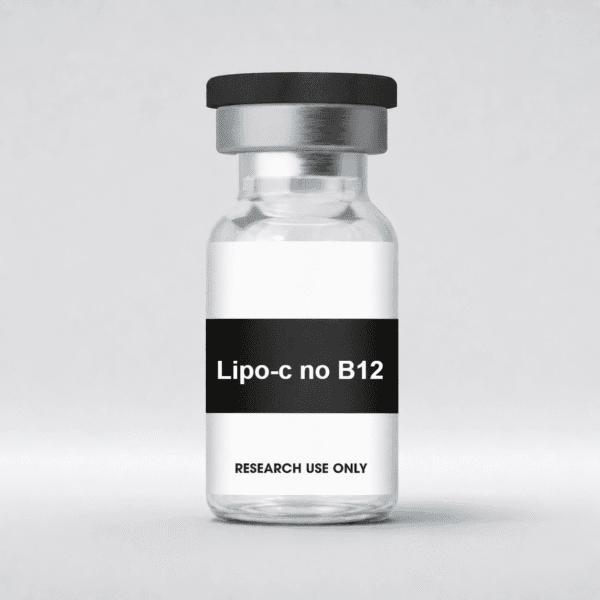
Lipo-C Peptide + B12 Peptide
$89.00
10mg*10vials
Lipo-C Peptide: Comprehensive Guide to Ingredients, Metabolism, Research & Safety
What Is Lipo-C Peptide?
Although Lipo-C is typically not a peptide in the strict scientific sense, the term “lipo-C peptide” is frequently used online to search for Lipo-C goods. Rather, a lipotropic composition with a mix of nutrients and metabolic chemicals is typically referred to as Lipo-C.
Lipo-C peptide may include methionine, inositol, choline, vitamin B12, and occasionally L-carnitine, depending on the brand or composition. The precise composition should always be confirmed using the product’s ingredient list because there isn’t a single universal Lipo-C recipe.
In general, “lipotropic” refers to compounds involved in the digestion, transport, and metabolism of fats. For this reason, Lipo-C is often mentioned in relation to research on weight control, lipid metabolism, metabolic health, and nutritional assistance.
For scientific accuracy, Lipo-C peptide should be distinguished from true peptide compounds, which consist of defined chains of amino acids linked by peptide bonds.
Is Lipo-C Actually a Peptide?
The term “Lipo-C peptide” is one of the most frequent causes of misunderstanding.
Rather than being a single specific peptide molecule, lipo-C is typically a mixture of different nutrients. Methionine is an amino acid, but an amino acid is not a peptide on its own.
A genuine peptide has a certain chemical structure and amino acid sequence. Peptides produced from hormones or signaling proteins are examples of real peptide research substances.
Because the biological profile of lipo-C peptide varies depending on the specific chemicals in the formulation, it is unique.
It is therefore more appropriate to mention in product descriptions and website content that “Lipo-C peptide” is a frequently searched marketing term, whereas Lipo-C is often a lipotropic nutritional combination.
Why Is Lipo-C Called a Lipotropic Formula?
Lipotropic refers to substances that are involved in the metabolism of lipids.
Fats and other fat-soluble substances that carry out vital bodily processes are referred to as lipids. Many lipids are processed, transported, stored, and metabolized by the liver.
A number of nutrients that are frequently found in Lipo-C formulations take part in pathways related to these processes.
This provides the scientific basis for studying lipotropic combinations in relation to:
- Lipid metabolism
- Liver metabolism
- Fatty-acid transport
- Cellular energy production
- Nutritional biochemistry
- Methylation pathways
- Cellular signaling
However, the presence of these nutrients in a formulation does not by itself demonstrate a specific clinical effect.
Key Ingredients in Lipo-C
Methionine
The body cannot produce enough of the necessary amino acid methionine, so it must be obtained from diet.
It participates in methylation processes and protein synthesis. Additionally, methionine aids in the synthesis of S-adenosylmethionine (SAMe), a crucial methyl donor involved in a variety of metabolic processes.
Therefore, methionine is important for studies on methylation, cellular function, lipid-related pathways, and amino acid metabolism.
Inositol
Inositol is a naturally occurring substance that has a role in phospholipid metabolism and cellular communication.
Because some inositol-derived compounds are involved in intracellular signaling pathways, it has been studied in a number of metabolic and cellular research fields.
Lipo-C formulations’ inclusion of inositol adds to the lipotropic combos’ larger metabolic justification.
Choline
Choline is an essential nutrient involved in several important biological functions.
It contributes to:
- Cell-membrane structure
- Phospholipid production
- Lipid transport
- Neurotransmitter synthesis
- Normal liver function
- Methyl-group metabolism
Choline is particularly relevant to liver and lipid research because inadequate choline intake can affect normal hepatic lipid handling.
Vitamin B12
Water-soluble vitamin B12 is necessary for healthy red blood cell production, DNA synthesis, and brain function.
Additionally, it takes involved in significant metabolic processes related to amino acid metabolism and methylation.
Because of its well-established nutritional importance, vitamin B12 is frequently incorporated in Lipo-C compositions.
Crucially, vitamin B12 supplementation is most obviously advantageous when a person has a deficiency or inadequate B12 level. Raising B12 levels above what is necessary does not always result in more energy or metabolic advantages.
L-Carnitine
L-carnitine is a component of several Lipo-C formulations, but not all of them contain it.
Long-chain fatty acids are transported into mitochondria, where fatty acid oxidation takes place, by L-carnitine.
L-carnitine is often explored in nutritional and sports-metabolism research because of this link to fatty acid metabolism.
The existence of L-carnitine in a Lipo-C product, however, should not be taken as proof that the full formulation significantly reduces body fat.
How Does Lipo-C Work?
There is no single mechanism that can accurately describe every Lipo-C product because formulations differ.
Instead, the potential biological activity of a Lipo-C formulation depends on the properties of its individual components.
Methionine contributes to amino-acid and methylation pathways. Choline participates in lipid transport, cell membranes, and methyl metabolism. Inositol is involved in cellular signaling. Vitamin B12 supports essential metabolic reactions, while L-carnitine, when included, participates in fatty-acid transport.
Together, these ingredients provide a biochemical basis for investigating lipotropic formulations.
However, biochemical activity should not be confused with proven clinical effectiveness.
Lipo-C and Fat Metabolism
Fat metabolism is a complex biological process involving digestion, transport, storage, mobilization, oxidation, and energy utilization.
The body continuously regulates how fatty acids and triglycerides are stored and used according to factors such as energy intake, physical activity, hormonal signaling, and nutritional status.
Several Lipo-C ingredients are connected to these pathways.
Choline contributes to phospholipid metabolism and lipid transport. L-carnitine, when included, is involved in transporting fatty acids into mitochondria. Methionine participates in broader methylation and amino-acid metabolism.
These relationships make Lipo-C relevant to metabolic research, but they should not be presented as proof that Lipo-C directly “burns fat.”
Lipo-C and Liver Metabolism
The liver is one of the body’s most important metabolic organs.
It participates in:
- Fat metabolism
- Cholesterol processing
- Nutrient storage
- Protein metabolism
- Detoxification
- Bile production
- Regulation of circulating nutrients
Choline is particularly important in liver biology because it contributes to phosphatidylcholine production and normal lipid transport.
This is one reason choline-containing formulations have historically been described as lipotropic.
Nevertheless, Lipo-C should not be marketed as a treatment for liver disease unless there is appropriate clinical evidence and regulatory authorization for the specific claim.
Lipo-C and Energy Metabolism
Energy metabolism refers to the processes through which cells obtain, store, and use energy.
Several nutrients commonly found in Lipo-C participate in these processes.
Vitamin B12 supports normal cellular metabolism and neurological function. L-carnitine is involved in fatty-acid transport into mitochondria. Methionine participates in amino-acid and methylation pathways.
These roles explain why Lipo-C is sometimes associated with energy and metabolism in marketing materials.
However, there is an important distinction between supporting normal metabolic pathways and producing a noticeable increase in energy in a healthy person.
For example, vitamin B12 can correct problems caused by deficiency, but supplementation does not necessarily create additional energy when B12 status is already adequate.
Lipo-C and Weight-Management Research
Weight management is one of the most common reasons people search for Lipo-C.
However, the scientific evidence should be interpreted carefully.
The biological functions of individual Lipo-C ingredients do not establish that the complete injection is an effective weight-loss treatment.
Body weight and body composition are influenced by numerous factors, including:
- Energy intake
- Physical activity
- Sleep
- Genetics
- Hormonal regulation
- Metabolic health
- Medications
- Overall dietary pattern
A responsible website should therefore describe Lipo-C as a compound of interest in metabolic and nutritional research rather than promising guaranteed weight loss.
Lipo-C With B12
The term Lipo-C with B12 generally refers to a Lipo-C formulation that includes vitamin B12.
This combination is frequently marketed because B12 has well-established nutritional functions.
Vitamin B12 contributes to normal:
- DNA synthesis
- Red-blood-cell production
- Neurological function
- Amino-acid metabolism
- Cellular metabolism
The amount and form of B12 can vary between products, so the formulation should always be checked carefully.
Lipo-C vs. MIC Injection
The terms Lipo-C and MIC injection are often used in similar contexts but are not necessarily identical.
MIC commonly refers to:
M — Methionine
I — Inositol
C — Choline
A Lipo-C formulation may contain these three ingredients and may additionally include vitamin B12, L-carnitine, or other compounds.
Therefore, the best way to compare products is to examine their complete ingredient lists rather than relying on the product name.
Lipo-C vs. Peptide Injections
Lipo-C and peptide injections belong to different molecular categories.
A peptide is characterized by a specific amino-acid sequence. Its biological activity depends heavily on its molecular structure.
Lipo-C, by contrast, is generally a mixture of nutritional and metabolic compounds.
| Category | Lipo-C | Peptide |
|---|---|---|
| Molecular type | Nutrient/lipotropic blend | Amino-acid chain |
| Composition | Multiple ingredients | Defined peptide sequence |
| Typical research | Metabolic and nutritional biology | Depends on specific peptide |
| Structure | Multi-component formulation | Specific molecular sequence |
| Terminology | Lipotropic formulation | Peptide compound |
Understanding this difference can help visitors interpret product descriptions more accurately.
Potential Research Areas
Lipo-C and its individual ingredients may be relevant to research involving:
Lipid Metabolism
Investigating how nutrients influence lipid transport, storage, and utilization.
Liver Biology
Studying the role of nutrients such as choline in normal hepatic lipid metabolism.
Cellular Signaling
Examining the role of inositol-related compounds in intracellular signaling pathways.
Energy Metabolism
Investigating mitochondrial fatty-acid transport and nutrient utilization.
Nutritional Biochemistry
Understanding how vitamins, amino acids, and related compounds contribute to normal physiological processes.
Metabolic Health
Studying interactions between nutrient status, lipid metabolism, energy balance, and cellular function.
Lipo-C Formulation Differences
One of the most important considerations when researching Lipo-C is that formulations can vary.
Different products may contain different:
- Active ingredients
- Concentrations
- Vitamin B12 forms
- L-carnitine amounts
- Preservatives
- Excipients
- Manufacturing processes
As a result, research or information about one formulation should not automatically be applied to every product sold under the Lipo-C name.
For a high-quality website, providing the exact formulation and ingredient amounts is much more useful than using generic claims.
Product Quality and Research Standards
Quality is particularly important for injectable products.
Research or analytical documentation may include information about:
- Ingredient identity
- Concentration
- Purity
- Sterility
- Manufacturing standards
- Batch testing
- Storage requirements
Analytical methods such as chromatography and mass spectrometry may be used to characterize individual compounds.
For injectable products, sterility and appropriate manufacturing controls are especially important considerations.
Safety Considerations
Lipo-C should not be considered automatically safe simply because many formulations contain vitamins or nutrients.
Injectable administration creates additional considerations, including:
- Injection-site reactions
- Allergic or hypersensitivity reactions
- Contamination
- Sterility concerns
- Ingredient-specific effects
- Interactions with medications
- Differences between formulations
The safety profile depends on the exact ingredients, concentrations, administration method, product quality, and individual circumstances.
Lipo-C should therefore be discussed as a formulation requiring appropriate medical and quality-control considerations rather than as a risk-free wellness product.
Current Research and Scientific Evidence
The individual components of Lipo-C have substantially different evidence bases.
Vitamin B12 has extensive nutritional research supporting its essential role in human physiology. Choline also has established biological functions related to cell membranes, lipid transport, and neurotransmitter production.
Methionine and inositol have been studied across numerous metabolic and biochemical pathways, while L-carnitine has been extensively investigated in relation to fatty-acid transport and energy metabolism.
However, the evidence for a specific Lipo-C combination injection depends on the exact formulation and clinical context.
This distinction is important when evaluating online claims. Evidence for an individual ingredient should not automatically be represented as evidence for the entire Lipo-C formulation.
Frequently Asked Questions About Lipo-C Peptide
Is Lipo-C a peptide?
Generally, no. Lipo-C is usually a lipotropic nutrient formulation rather than a single peptide molecule.
Why is Lipo-C called a peptide online?
The term may be used because Lipo-C is marketed alongside peptide products. However, marketing terminology does not change the molecular classification of the formulation.
What does Lipo-C contain?
Common formulations may contain methionine, inositol, choline, and vitamin B12. Some products may also include L-carnitine or other ingredients.
What is MIC in Lipo-C?
MIC commonly stands for methionine, inositol, and choline. These three ingredients are frequently associated with lipotropic formulations.
What is Lipo-C with B12?
Lipo-C with B12 is a formulation combining lipotropic ingredients with vitamin B12. The exact amount and form of B12 varies between products.
Is Lipo-C the same as MIC?
Not necessarily. MIC describes a combination of methionine, inositol, and choline, while Lipo-C may contain these ingredients plus B12 or other compounds.
Is Lipo-C used in metabolic research?
Yes. Its individual components have established roles in metabolic and cellular pathways, making them relevant to nutritional and metabolic research.
Does Lipo-C burn fat?
It is more scientifically accurate to say that some Lipo-C peptide ingredients participate in lipid and energy metabolism. This does not establish that Lipo-C itself directly causes significant fat loss.
Is Lipo-C a weight-loss medication?
Lipo-C should not automatically be described as a weight-loss medication. Evidence for lipotropic injections as standalone weight-loss treatments remains limited.
Does Lipo-C increase energy?
Some ingredients are involved in normal energy metabolism. However, this does not mean that Lipo-C necessarily produces an energy increase in individuals who already have adequate nutrient levels.
Lipo-C + B12 for Sale – High Purity Research Compound Blend USA
If you are searching for Lipo-C peptide + B12 for sale, sourcing from a verified manufacturer is essential to ensure purity, consistency, and reliable research outcomes. We supply high-quality research compounds for metabolic studies, energy pathway research, and nutrient-based biochemical analysis.
We operate under controlled laboratory standards.We verify purity through analytical testing.
We provide full documentation for every production batch.
Lipo-C peptide + B12 is a combined lipotropic and cobalamin formulation widely utilized in research involving lipid metabolism, methylation pathways, and cellular energy production. The blend typically includes lipotropic cofactors such as methionine, inositol, and choline alongside Vitamin B12 (cobalamin), making it a valuable compound for investigating integrated metabolic and mitochondrial processes.
Key Benefits
- Lipotropic Pathway Research – Supports studies involving fat metabolism and lipid transport mechanisms
- Energy Metabolism Analysis – Applicable in ATP production and cellular energy research
- Methylation Cycle Support – Useful for investigating DNA synthesis and biochemical regulation pathways
- Mitochondrial Function Studies – Ideal for examining cellular energy efficiency and oxidative processes
- Combined Nutrient Profile – Designed for consistency and reproducibility in laboratory environments
What You Receive
- ≥98% purity (HPLC verified or equivalent analytical standard)
- Analytical validation (HPLC + Mass Spectrometry where applicable)
- Certificate of Analysis (COA) available per batch
- Sterile laboratory-grade formulation blend
- Laboratory-secured packaging
- Available in small batch or bulk wholesale quantities
Direct manufacturer sourcing ensures product integrity, traceability, and consistent long-term supply.
Bulk Lipo-C + B12 Supply
We support:
- Biotechnology research laboratories
- Pharmaceutical R&D organizations
- Academic research institutions
- Contract research organizations (CROs)
- Metabolic and nutritional research centers
- International distributors
Frequently Asked Questions
Is Lipo-C + B12 available in bulk quantities?
Yes. We provide scalable manufacturing with volume-based pricing.
Do you provide Certificates of Analysis?
Yes. Each batch includes verifiable COA documentation.
Do you ship within the USA?
Yes. Orders are fulfilled through our U.S. distribution channel.
What purity level is provided?
≥98% purity verified via HPLC or equivalent analytical methods (custom specifications available upon request).
Final Thoughts on Lipo-C Peptide
The phrase Lipo-C peptide is widely used in online searches, but Lipo-C is generally better classified as a lipotropic nutrient formulation rather than a peptide.
Its commonly used ingredients—including methionine, inositol, choline, vitamin B12, and sometimes L-carnitine—have important biological roles that have been investigated in metabolic, nutritional, cellular, and biochemical research.
For consumers and researchers, the most important consideration is the exact formulation. Products marketed under the Lipo-C name can differ considerably in ingredients and concentrations.
A scientifically responsible Lipo-C page should therefore focus on ingredient transparency, metabolic science, research evidence, formulation differences, and safety considerations, rather than relying on exaggerated claims.
This approach provides visitors with useful information while also creating a stronger, more comprehensive topical resource for search engines.
Why Professional Buyers Choose Us
- Transparent manufacturing processes
- Verified analytical testing
- Consistent batch-to-batch quality
- Competitive wholesale pricing
- Reliable U.S. and international fulfillment
We combine advanced biochemical formulation capabilities with a global distribution network, ensuring dependable research-grade supply for scientific and pharmaceutical research applications.
| Dosage | 10mg*10vials |
|---|
Related products
-

GHK-CU
Price range: $46.00 through $48.00Select options This product has multiple variants. The options may be chosen on the product page -
Thymosin Alpha-1
Price range: $85.00 through $118.00Select options This product has multiple variants. The options may be chosen on the product page -
GHRP-6 Peptide
Price range: $52.00 through $58.00Select options This product has multiple variants. The options may be chosen on the product page -
VIP
Price range: $73.00 through $103.00Select options This product has multiple variants. The options may be chosen on the product page

Reviews
There are no reviews yet.