Get up to 10% OFF! with coupon PBP10

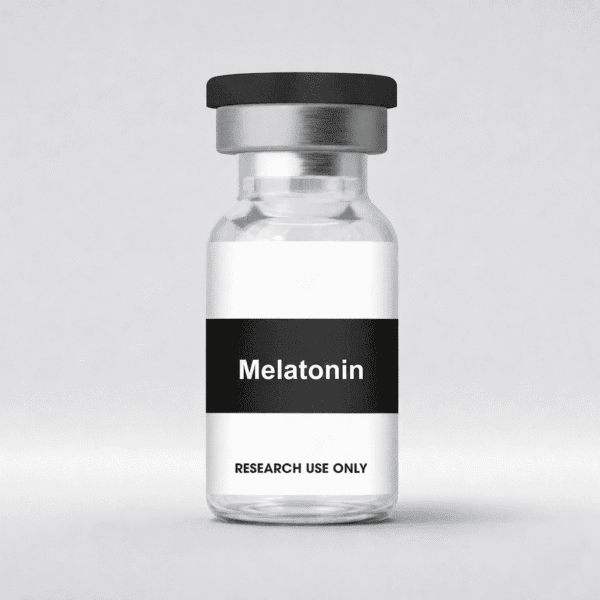
Melatonin Peptide
$72.00
10mg*10vials
Melatonin Peptide: Essential Guide to Biology, Sleep Research & Safety
What Is Melatonin Peptide?
Melatonin is a hormone primarily produced by the pineal gland in the brain. It plays an important role in regulating the body’s internal clock, known as the circadian rhythm, which influences sleep timing, wakefulness, and other daily biological processes.
The phrase “melatonin peptide” can be confusing because melatonin itself is not a peptide. It is a small molecule derived from the amino acid tryptophan through a series of biochemical reactions. Peptides, by contrast, are chains of amino acids linked together.
Understanding this distinction is important for anyone researching peptide biology, sleep-related compounds, hormone signaling, or laboratory research materials.
Melatonin Peptide has been studied extensively for its involvement in sleep-wake regulation, seasonal biological rhythms, and interactions with the body’s internal timing systems. Researchers also investigate its antioxidant activity and potential roles in other physiological processes, although findings from laboratory studies do not automatically establish clinical benefits.
This guide explains melatonin’s biological functions, how it differs from peptides, how its signaling pathways work, what research suggests, and which safety and quality considerations matter when evaluating related compounds.
What Is Melatonin?
Melatonin is a naturally occurring hormone that helps communicate information about environmental darkness to the body’s biological clock.
Its production typically increases in the evening, remains elevated during the biological night, and decreases toward morning. The precise timing depends on an individual’s circadian rhythm, light exposure, age, and other factors.
Melatonin is not simply an on-off switch for sleep. Instead, it acts as a timing signal that helps coordinate biological processes with the day-night cycle.
How Is Melatonin Peptide Produced?
The body produces Melatonin Peptide through a biochemical pathway that begins with the essential amino acid tryptophan.
Tryptophan is converted into serotonin through intermediate steps. Serotonin can then be converted into melatonin through additional enzymatic reactions, particularly in the pineal gland.
The production and release of melatonin are regulated by signals from the brain’s circadian timing system. Light entering the eyes influences this system, helping the body adjust melatonin production to the surrounding light-dark cycle.
Where Is Melatonin Produced?
The pineal gland is the primary source of circulating melatonin in humans. Melatonin-related activity has also been identified in other tissues, where it may serve local biological functions.
The timing of pineal Melatonin Peptide production is especially important because it helps the brain coordinate internal rhythms with environmental conditions.
Is Melatonin a Peptide?
No. Melatonin is not a peptide.
Although melatonin and peptides are both involved in biological signaling, they differ substantially in chemical structure, synthesis, and how they interact with cells.
Melatonin is a small indoleamine molecule derived from tryptophan. Peptides are made from amino acids joined by peptide bonds.
For example, insulin is a peptide hormone, while melatonin is a small-molecule hormone.
The distinction matters when interpreting product descriptions, scientific literature, laboratory documentation, and claims about a substance’s mechanism of action.
Melatonin vs. Peptides
| Feature | Melatonin | Peptides |
|---|---|---|
| Chemical structure | Small molecule | Chain of amino acids |
| Building blocks | Derived from tryptophan | Amino acids |
| Typical biological role | Circadian timing and sleep-wake signaling | Diverse signaling and regulatory functions |
| Receptors | Primarily MT1 and MT2 receptors | Varies by peptide and receptor |
| Examples | Melatonin | Insulin, oxytocin, certain research peptides |
The term “melatonin peptide” may appear in online searches or commercial descriptions, but it should not be assumed to identify a scientifically established peptide. Always confirm the exact compound name and chemical identity.
How Does Melatonin Work in the Body?
Melatonin communicates timing information to cells through specialized receptors. Its effects depend on the receptor involved, the tissue receiving the signal, and the body’s biological state.
The two best-characterized melatonin receptors are MT1 and MT2.
MT1 Receptors and Biological Timing
MT1 receptors are involved in signaling pathways associated with the regulation of circadian timing and sleep-related processes.
When melatonin binds to these receptors, it activates intracellular signaling mechanisms that can influence how cells respond to timing signals.
The effects vary according to the location of the receptors and the physiological context.
MT2 Receptors and Circadian Rhythms
MT2 receptors are also involved in circadian regulation. Research suggests that they contribute to the adjustment of biological rhythms in response to melatonin signals.
The precise contributions of MT1 and MT2 receptors are complex, and researchers continue to investigate how these pathways interact.
How Receptor Signaling Works
Receptor signaling generally follows several stages:
- A signaling molecule reaches a cell.
- It binds to a compatible receptor.
- The receptor changes its activity.
- Intracellular signaling pathways respond.
- The cell adjusts particular biological processes.
This general framework applies to many hormones and signaling molecules, but the specific effects depend on the compound and receptor involved.
Melatonin and the Circadian Rhythm
The circadian rhythm is the body’s approximately 24-hour timing system. It helps coordinate sleep and wakefulness, hormone secretion, body temperature, metabolism, and other biological functions.
Melatonin is one of the signals used by this system.
How Light Affects Melatonin
Light is a major influence on the body’s internal clock. Specialized cells in the retina detect light and transmit information to brain regions responsible for circadian regulation.
Evening light can delay the timing of melatonin release in some circumstances, while appropriate daytime light exposure helps reinforce daily rhythms.
The effects depend on light intensity, timing, duration, and individual sensitivity.
Melatonin Peptide and Sleep Timing
Melatonin is more closely associated with biological night and sleep timing than with acting as a general sedative.
Research on melatonin supplementation has examined particular sleep-related concerns, including circadian rhythm disturbances and some forms of difficulty falling asleep. Outcomes vary by condition and individual circumstances.
Sleep problems can have many causes, so melatonin should not be considered a universal solution for insomnia.
Melatonin and Jet Lag
Jet lag occurs when a person’s internal clock is misaligned with the local time after traveling across time zones.
Research has examined melatonin as one potential approach to managing this mismatch. Timing is an important factor, and evidence may differ according to travel direction, individual schedules, and the specific outcome being assessed.
Anyone considering Melatonin Peptide for a sleep-related condition should discuss suitability and timing with a qualified healthcare professional, especially when taking other medicines.
Melatonin, Serotonin, and Tryptophan
Melatonin and serotonin are chemically related because the body produces melatonin through a pathway that uses serotonin as an intermediate.
However, they perform different biological functions.
Serotonin acts as a neurotransmitter and signaling molecule involved in processes such as mood, appetite, gastrointestinal function, and other physiological activities. Melatonin primarily communicates information about biological night and circadian timing.
The Tryptophan Pathway
The pathway can be summarized as:
- Tryptophan is converted into 5-hydroxytryptophan.
- 5-hydroxytryptophan is converted into serotonin.
- Serotonin is converted into N-acetylserotonin.
- N-acetylserotonin is converted into melatonin.
These reactions involve specific enzymes and are regulated by biological signals.
Why This Pathway Matters in Research
Studying this pathway helps researchers understand how nutrients, enzymes, environmental signals, and circadian rhythms influence hormone production.
It also illustrates why chemical classification matters. A compound derived from an amino acid is not necessarily a peptide, and a molecule that interacts with a receptor is not necessarily a protein or peptide hormone.
Potential Biological Functions of Melatonin Peptide
Melatonin’s best-established physiological role is its involvement in circadian timing. Other areas have been investigated in laboratory and clinical research.
Sleep-Wake Regulation
Melatonin Peptide helps communicate the timing of biological night. Research examines its possible role in particular sleep disorders and circadian rhythm disruptions.
The evidence depends on the condition being studied, and not every sleep problem responds in the same way.
Antioxidant Activity
Laboratory research suggests that Melatonin Peptide can interact with oxidative processes. Oxidative stress occurs when reactive molecules and the body’s protective systems become imbalanced.
These findings have encouraged research into melatonin’s biological effects in cells and experimental models. However, laboratory antioxidant activity should not be interpreted as proof that Melatonin Peptide prevents or treats a specific disease in humans.
Immune-System Research
Researchers have investigated interactions between melatonin signaling and immune-related processes.
The immune system is highly complex, and findings from cells or animal models may not translate directly into human health outcomes. More research may be needed to clarify the clinical significance of particular observations.
Metabolism and Other Physiological Processes
Melatonin Peptide has also been studied in relation to metabolism, body temperature, and other biological rhythms.
These areas involve multiple interacting systems. Research findings should be interpreted according to the study design, population, and specific outcomes measured.
What Is the Difference Between Melatonin and Melatonin-Related Peptides?
The phrase “melatonin-related peptides” does not identify one universally recognized category of compounds. It may be used informally to describe research involving melatonin and peptide signaling, or it may appear in descriptions of products that need further verification.
Melatonin itself is not a peptide. A compound described as a melatonin peptide should therefore be evaluated by its exact chemical name, sequence if it is a peptide, and supporting analytical documentation.
Questions to Ask About a Research Compound
Before interpreting a product description, consider the following:
- What is the exact chemical identity?
- Is the compound actually a peptide or a small molecule?
- If it is a peptide, is its amino-acid sequence documented?
- Is there analytical evidence confirming identity and purity?
- Are the stated research findings supported by reliable scientific publications?
- Are the claims based on cell studies, animal experiments, or human clinical trials?
Clear answers help distinguish established scientific terminology from vague commercial wording.
What Does Melatonin Research Tell Us?
Melatonin has been studied in many different contexts, but the strength of the evidence varies according to the question being investigated.
Laboratory Studies
Laboratory studies may investigate receptor binding, intracellular signaling, antioxidant activity, or other biological processes.
These studies can help identify mechanisms and generate hypotheses. They cannot, by themselves, establish whether a compound is effective or safe for a particular human condition.
Animal Studies
Animal models allow researchers to investigate biological processes within living organisms. However, differences between species can affect how compounds are absorbed, distributed, metabolized, and eliminated.
Results from animal studies should not be treated as direct evidence of equivalent effects in humans.
Human Clinical Research
Human studies examine outcomes in people and may provide more directly relevant evidence for particular health questions.
The quality of evidence depends on factors such as sample size, study design, control groups, duration, and whether findings have been replicated.
A responsible review should distinguish established physiological functions from possible applications that remain under investigation.
Safety Considerations for Melatonin
Melatonin may be appropriate for some people in particular circumstances, but it is not suitable for everyone. Its effects and risks depend on the individual, the product, other medicines, and the reason for use.
Possible Side Effects
Reported side effects may include:
- Daytime sleepiness or drowsiness
- Headache
- Dizziness
- Nausea
- Vivid dreams or changes in dreaming
Side effects are not identical for every person. Persistent, severe, or concerning symptoms should be discussed with a healthcare professional.
Medication Interactions
Melatonin may interact with certain medicines, including some drugs that affect alertness, blood clotting, or melatonin metabolism. Other interactions may be possible.
People who take prescription medicines, have ongoing health conditions, are pregnant or breastfeeding, or are considering melatonin for a child should seek advice from a qualified healthcare professional.
Driving and Alertness
Drowsiness can affect attention, reaction time, and coordination. Anyone who feels sleepy or impaired should not drive or operate machinery.
Product Quality
Products marketed as supplements may vary in quality and labeling accuracy. Research materials may have different specifications and should not be assumed suitable for human use.
Product descriptions, certificates of analysis, and independent laboratory reports can help clarify identity and measured quality characteristics. A certificate of analysis does not, by itself, establish clinical safety or effectiveness.
Understanding Certificates of Analysis for Research Materials
A certificate of analysis (COA) is a document that reports analytical results for a particular product or batch.
For a documented research compound, relevant information may include:
- Compound or material identity
- Batch or lot number
- Analytical methods used
- Measured purity, where applicable
- Test date
- Laboratory information
- Results for relevant impurities or contaminants, when tested
Why Identity Testing Matters
Identity testing helps establish whether a sample matches the material it is claimed to contain. Different analytical methods provide different kinds of information, so a single test may not answer every quality question.
Why Purity Is Not the Same as Safety
A high purity result does not automatically establish that a compound is safe for human use. Safety depends on much more than the proportion of the intended chemical in a sample.
Researchers should evaluate documentation carefully and avoid treating marketing statements as substitutes for independent analytical evidence.
Melatonin in Scientific and Medical Research
Melatonin research continues to examine the relationship between biological timing, receptor activity, sleep, and other physiological processes.
Researchers may investigate:
- Circadian rhythm regulation
- Melatonin receptor function
- Sleep timing and sleep-related conditions
- Hormonal signaling
- Oxidative stress pathways
- Metabolic and immune-related mechanisms
- Differences in melatonin production across age groups
Each research area requires its own evaluation of evidence. Findings in one area should not be used to support unrelated claims without adequate scientific justification.
Common Misconceptions About Melatonin Peptides
Misconception 1: Melatonin Is a Peptide
Melatonin is a small molecule, not an amino-acid chain. Its biological role as a hormone does not make it a peptide.
Misconception 2: All Sleep-Related Compounds Work the Same Way
Sleep and circadian timing involve numerous biological systems. Compounds can act through different receptors and mechanisms, so they should not be treated as interchangeable.
Misconception 3: Laboratory Findings Prove Human Benefits
Cell and animal studies are valuable, but they do not automatically establish clinical effectiveness or long-term safety in humans.
Misconception 4: A Product Description Confirms Chemical Identity
A product label is a claim, not independent proof. Appropriate analytical documentation is needed to verify what a material contains.
Misconception 5: A COA Guarantees Clinical Safety
A COA reports specified test results. It does not establish that a substance is suitable for human consumption or medical treatment.
Frequently Asked Questions About Melatonin Peptide
Is melatonin a peptide hormone?
No. Melatonin is a hormone, but it is not a peptide. It is a small molecule derived from tryptophan.
What does melatonin do in the body?
Melatonin helps communicate information about biological night and contributes to the regulation of circadian rhythms and sleep timing.
How does melatonin work?
Melatonin acts primarily through MT1 and MT2 receptors, which influence intracellular signaling pathways associated with biological timing.
Is melatonin the same as serotonin?
No. They are related through the body’s biochemical production pathway, but they have different structures and biological functions.
Can melatonin help with sleep?
Evidence supports its use in some specific sleep-related situations, particularly those involving circadian timing. Its usefulness varies, and it is not a universal treatment for insomnia.
Are melatonin and research peptides interchangeable?
No. Melatonin is a small molecule, while peptides are chains of amino acids. They may have very different structures, mechanisms, and research applications.
What is a melatonin peptide product?
The phrase is ambiguous and should not be assumed to describe a scientifically established compound. Check the exact chemical identity and reliable analytical documentation before drawing conclusions.
What is a certificate of analysis?
A COA is a document reporting analytical findings for a particular sample or batch. Its usefulness depends on the tests performed, the methods used, and the credibility of the laboratory.
Does preclinical research prove a compound is effective?
No. Preclinical studies can provide early evidence about biological activity, but clinical research is needed to assess effects and risks in humans.
Is melatonin safe for everyone?
No substance is suitable for everyone. Individual health circumstances, medications, age, and product quality can affect the risk-benefit assessment. A healthcare professional can provide personalized guidance.
Important Research and Safety Information
Melatonin Peptide is a well-studied hormone involved in biological timing, but it should not be confused with a peptide. The phrase “melatonin peptide” may be ambiguous in commercial contexts, making chemical identity and reliable documentation particularly important.
Scientific claims should be evaluated according to the quality of the supporting evidence. Laboratory findings, animal experiments, and human clinical studies provide different levels of information and should not be presented as equivalent.
Information on this page is educational and is not a substitute for medical advice. Research materials should be handled in accordance with applicable laws, laboratory procedures, and relevant safety requirements.
Melatonin for Sale – High Purity Research Compound USA
If you are searching for Melatonin for sale, sourcing from a verified manufacturer is essential to ensure purity, consistency, and reliable research outcomes. We are a licensed manufacturer supplying high-quality research compounds for circadian rhythm studies, neuroendocrine research, and sleep-cycle pathway analysis.
We operate under controlled laboratory standards.
We verify purity through analytical testing.
We provide full documentation for every production batch.
Melatonin Peptide is an endogenous indoleamine hormone primarily produced by the pineal gland, widely studied for its role in regulating circadian rhythms, sleep-wake cycles, and neuroendocrine signaling. It is commonly utilized in research involving chronobiology, oxidative stress response, and hormonal regulation pathways.
Key Benefits
- Circadian Rhythm Research – Supports studies involving sleep-wake cycle regulation
- Neuroendocrine Pathway Analysis – Applicable in hormonal signaling and pineal function research
- Antioxidant Activity Studies – Useful in investigating oxidative stress and cellular protection mechanisms
- Sleep Cycle Research Applications – Ideal for controlled chronobiology models
- Stable Compound Profile – Designed for consistency and reproducibility in laboratory environments
What You Receive
- ≥98% purity (HPLC verified)
- Analytical validation (HPLC + Mass Spectrometry)
- Certificate of Analysis (COA) available per batch
- Laboratory-secured packaging
- Available in small batch or bulk wholesale quantities
Direct manufacturer sourcing ensures product integrity, traceability, and consistent long-term supply.
Bulk Melatonin Peptide Supply
We support:
- Biotechnology research laboratories
- Pharmaceutical R&D organizations
- Academic research institutions
- Contract research organizations (CROs)
- International compound distributors
Frequently Asked Questions
Is Melatonin Peptide available in bulk quantities?
Yes. We provide scalable manufacturing with volume-based pricing.
Do you provide Certificates of Analysis?
Yes. Each batch includes verifiable COA documentation.
Do you ship within the USA?
Yes. Orders are fulfilled through our U.S. distribution channel.
What purity level is provided?
≥98% purity verified via HPLC (higher specifications available upon request).
Why Professional Buyers Choose Us
- Transparent manufacturing processes
- Verified analytical testing
- Consistent batch-to-batch quality
- Competitive wholesale pricing
- Reliable U.S. and international fulfillment
We combine advanced synthesis capabilities with a global distribution network, ensuring dependable research-grade supply at scale.
Final Thoughts
Melatonin plays an important role in the body’s circadian timing system and has been studied for its involvement in sleep-wake regulation and other biological processes. Its activity is mediated primarily through MT1 and MT2 receptors, while its production is linked to the tryptophan-serotonin biochemical pathway.
Despite its role as a hormone, melatonin is not a peptide. Understanding this distinction helps readers interpret scientific literature, evaluate product descriptions, and recognize when terminology may be inaccurate or unclear.
For reliable research, prioritize precise chemical identification, transparent documentation, appropriately interpreted scientific evidence, and responsible safety practices.
| Dosage | 10mg*10vials |
|---|
Related products
-

KPV
Price range: $53.00 through $59.00Select options This product has multiple variants. The options may be chosen on the product page -
VIP
Price range: $73.00 through $103.00Select options This product has multiple variants. The options may be chosen on the product page -
IGF-1 LR3
Price range: $53.00 through $142.00Select options This product has multiple variants. The options may be chosen on the product page -
Cagrilintide
Price range: $99.00 through $148.00Select options This product has multiple variants. The options may be chosen on the product page


Reviews
There are no reviews yet.